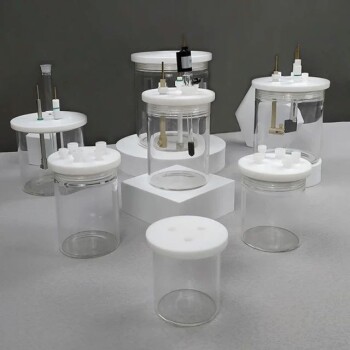
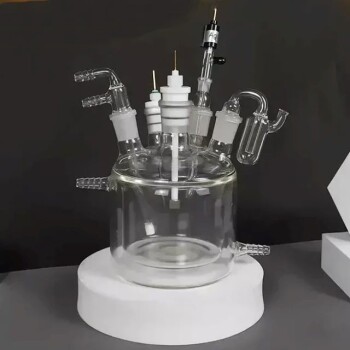
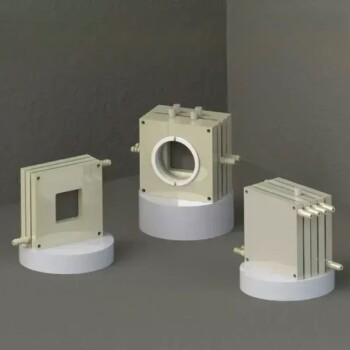
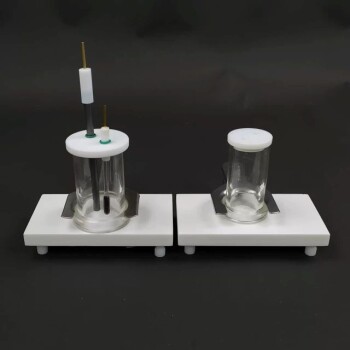
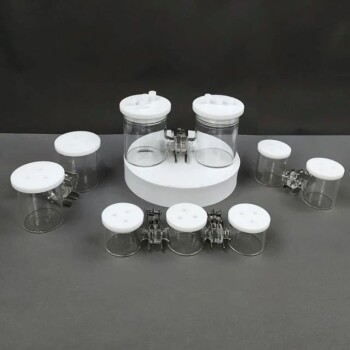
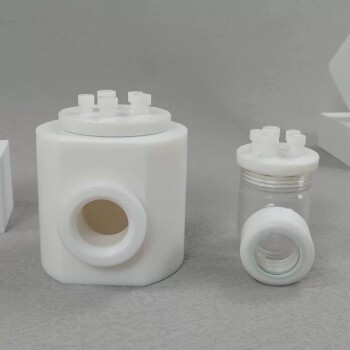
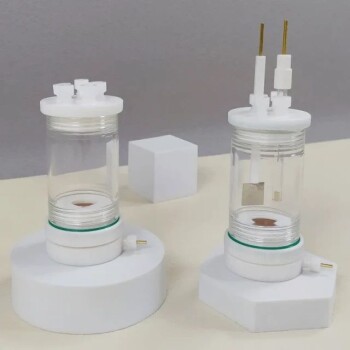
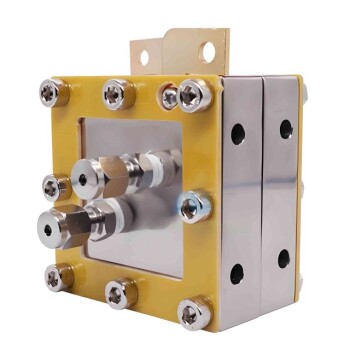
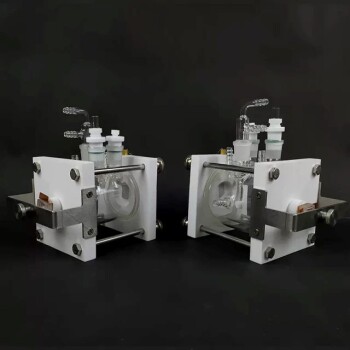
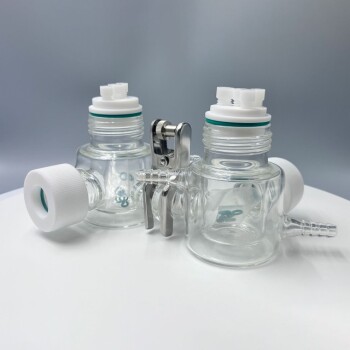
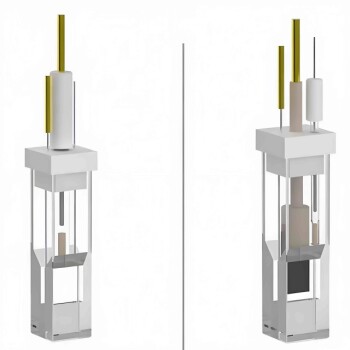
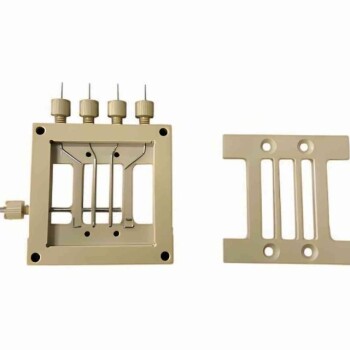
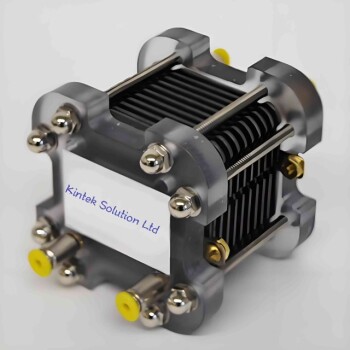
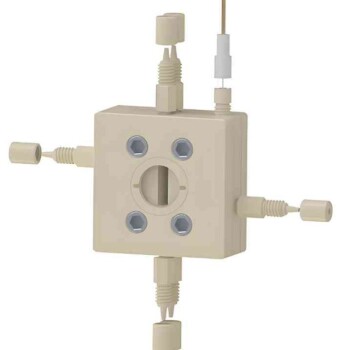
The primary role of an electrolytic cell system in this context is to act as a mechanism for forced hydrogen injection. By utilizing cathodic charging techniques, the system establishes the metal material as a cathode within an electrochemical circuit. This setup uses electrochemical potential to drive hydrogen atoms directly into the metal’s structure, effectively bypassing the slower natural diffusion rates found in passive environments.
By replacing passive diffusion with electrochemical force, electrolytic cells drastically accelerate the onset of hydrogen embrittlement. This allows researchers to simulate the internal degradation caused by high-pressure environments without the safety risks or logistical complexities of using actual high-pressure gas.
The Mechanics of Cathodic Charging
The Metal as the Cathode
In this process, the metal sample being studied does not merely sit in a solution; it becomes an active component of the electrical circuit.
By designating the material as the cathode (the negative electrode), the system creates an environment where positive hydrogen ions are naturally attracted to the metal surface.
Forcible Injection via Electrochemical Potential
The system relies on electrochemical potential rather than simple concentration gradients.
While natural absorption can be slow and dependent on environmental pressure, the electrolytic cell creates a driving force that "pushes" hydrogen atoms into the lattice.
This results in the forcible injection of hydrogen, rapidly increasing the hydrogen concentration within the material's structure.
Strategic Advantages in Research
Accelerating Embrittlement Effects
One of the most distinct advantages of this method is speed.
The electrolytic method significantly accelerates the manifestation of hydrogen embrittlement effects. This allows researchers to observe material failure modes in a fraction of the time it would take under service conditions.
Simulating High-Pressure Environments
Reproducing the conditions of high-pressure hydrogen gas (such as in pipelines or storage tanks) is dangerous and requires expensive infrastructure.
Electrolytic charging serves as an effective proxy, simulating hydrogen loading at high concentrations.
This makes it an essential tool for laboratories where high-pressure gaseous environments are not available or practical to maintain.
Studying Internal Mechanisms
The process is specifically highlighted as a critical tool for studying internal hydrogen embrittlement mechanisms.
Because the hydrogen is driven deep into the structure, researchers can isolate how the element interacts with the metal's internal microstructure, independent of surface corrosion or other environmental factors.
Understanding the Trade-offs
Artificial Acceleration
It is important to recognize that this is an accelerated simulation tool.
Because the system forcibly injects hydrogen, the rate of loading is much faster than what typically occurs in most real-world applications.
Specificity of the Test
The method focuses heavily on internal embrittlement.
While highly effective for understanding internal structural failure, it specifically targets the interaction between hydrogen atoms and the metal lattice, rather than broader environmental interactions.
Making the Right Choice for Your Goal
If you are determining whether to utilize electrolytic pre-charging for your materials testing, consider your specific constraints:
- If your primary focus is rapid material screening: This method allows you to induce and observe embrittlement failure modes quickly, bypassing long incubation periods.
- If your primary focus is safety and accessibility: This system provides a viable alternative to high-pressure gas chambers, allowing you to simulate high-load conditions with standard laboratory safety protocols.
Ultimately, the electrolytic cell is the most efficient method for isolating the specific mechanical effects of internal hydrogen saturation without the logistical burden of gaseous exposure.
Summary Table:
| Feature | Role & Impact in Metal Hydrogen Pre-charging |
|---|---|
| Mechanism | Forced hydrogen injection via cathodic charging |
| Driving Force | Electrochemical potential (bypasses natural diffusion) |
| Primary Function | Simulates high-pressure hydrogen environments safely |
| Research Focus | Internal hydrogen embrittlement mechanisms |
| Key Benefit | Significantly accelerates material failure for rapid screening |
| Safety | Eliminates risks associated with high-pressure gas storage |
Advance Your Material Science with KINTEK Precision
Are you looking to streamline your hydrogen embrittlement research? KINTEK specializes in high-performance laboratory equipment designed for rigorous electrochemical and thermal testing. Our advanced electrolytic cells and electrodes provide the precise control needed for effective cathodic charging, while our high-temperature furnaces and vacuum systems ensure your materials are processed under exact specifications.
From battery research tools to specialized ceramics and crucibles, KINTEK offers a comprehensive portfolio to support every stage of your material analysis. Partner with KINTEK to achieve faster results and safer lab environments.
Contact Our Experts Today to Find the Right Solution for Your Lab
References
- Alexander Ilyushechkin, San Shwe Hla. Material Challenges and Hydrogen Embrittlement Assessment for Hydrogen Utilisation in Industrial Scale. DOI: 10.3390/hydrogen4030039
This article is also based on technical information from Kintek Solution Knowledge Base .
Related Products
- Electrolytic Electrochemical Cell with Five-Port
- Super Sealed Electrolytic Electrochemical Cell
- PTFE Electrolytic Cell Electrochemical Cell Corrosion-Resistant Sealed and Non-Sealed
- Double Layer Five-Port Water Bath Electrolytic Electrochemical Cell
- Electrolytic Electrochemical Cell Gas Diffusion Liquid Flow Reaction Cell
People Also Ask
- How does the design of an electrochemical electrolytic cell influence the coating uniformity? Optimize Your Catalysts
- What is the correct shutdown and disassembly procedure after an experiment? Ensure Safety and Protect Your Equipment
- What are the three essential components that comprise an electrolytic cell? Key Elements of Chemical Synthesis
- How does the design of an electrolytic cell affect the production yield of ferrate(VI)? Optimize Efficiency & Purity
- What is galvanic cell or electrolytic cell? Unlock the Secrets of Electrochemical Power