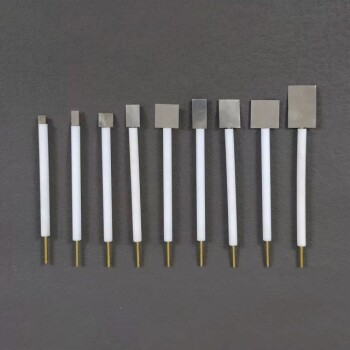
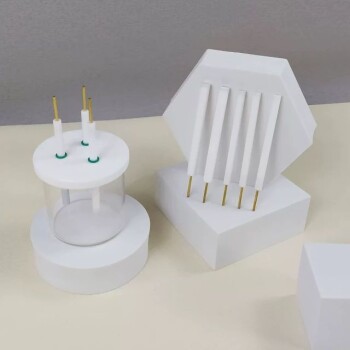
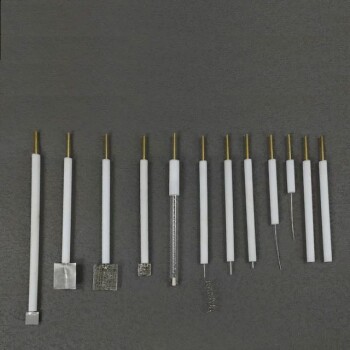
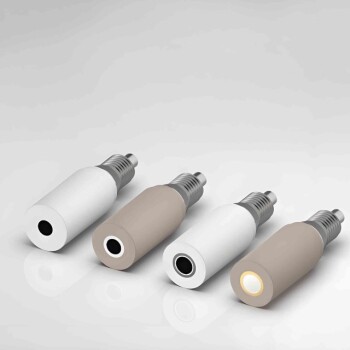
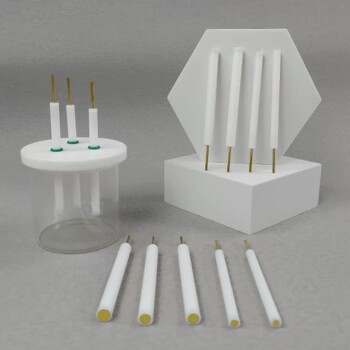
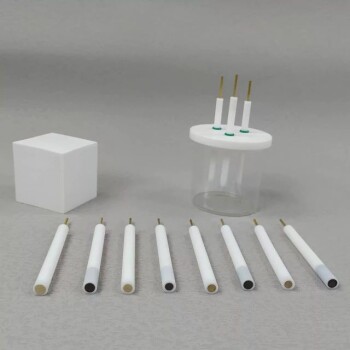
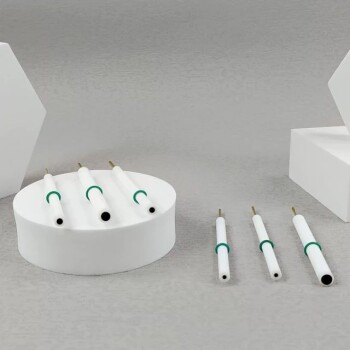
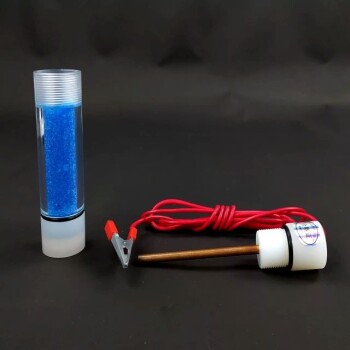
In an electrochemical testing cell used for coating analysis, the platinum electrode functions as the counter (or auxiliary) electrode to complete the current circuit, while the Ag/AgCl electrode serves as the reference electrode to establish a fixed potential baseline. Together, they allow you to isolate and accurately measure the performance of the coating (the working electrode) without interference from the testing equipment itself.
Core Takeaway: The reliability of coating analysis relies on separating current transmission from potential measurement. The platinum electrode bears the electrical load to ensure flow, while the Ag/AgCl electrode remains passive to provide an unshakeable "ruler" against which voltage is measured.
The Role of the Platinum Electrode
The platinum electrode is the workhorse of the three-electrode system. Its primary function is to facilitate the flow of electricity through the cell.
Completing the Current Circuit
The platinum electrode acts as the counter electrode. It pairs with the working electrode (your coating) to close the electrical loop.
This allows the necessary current to pass through the electrolyte, driving the electrochemical reactions required for analysis.
Ensuring Chemical Inertness
Platinum is selected primarily for its high chemical inertness. Even in harsh testing environments, such as strong alkaline solutions, it resists corrosion and reaction.
This ensures that the counter electrode does not dissolve or introduce impurities into the electrolyte, which would skew the test results.
Preventing Interfering Reactions
Because platinum is stable, it ensures that the current flows without generating "interfering reactions."
This stability guarantees that any changes observed in the system are due to the behavior of the coating, not the degradation of the counter electrode.
The Role of the Ag/AgCl Electrode
While the platinum electrode handles the current, the Silver/Silver Chloride (Ag/AgCl) electrode handles the measurement data.
Providing a Stable Potential Standard
The Ag/AgCl electrode provides an extremely stable and reproducible potential benchmark.
It acts as a fixed point of reference. This allows researchers to measure the potential of the working electrode relative to a known constant, rather than a fluctuating variable.
Ensuring Data Accuracy
By maintaining a stable reference, this electrode ensures the accuracy of the potential coordinates on polarization curves.
This precision is critical for objectively evaluating the electrochemical stability of materials, such as Ni–Cr–P coatings or photoanodes.
Critical Technical Considerations
To ensure high-fidelity data, simply having these materials is not enough; their physical configuration and application matter.
Surface Area and Polarization
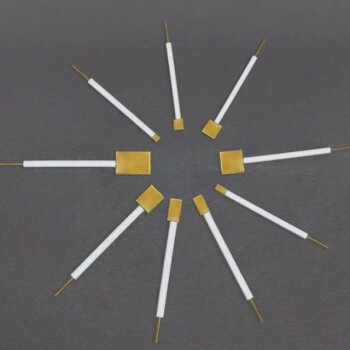
The platinum electrode is often shaped as a mesh or sheet to maximize its surface area.
A larger surface area facilitates the completion of the current circuit without generating electrolytic polarization at the counter electrode, which could otherwise create resistance and alter the data.
Environmental Compatibility
The choice of these specific electrodes allows for testing under actual operating conditions.
For example, the inertness of platinum allows for the acquisition of reliable corrosion kinetic parameters even in aggressive chemical environments where other metals would fail.
Making the Right Choice for Your Goal
When designing your electrochemical cell for coating analysis, ensure your setup aligns with your specific analytical targets.
- If your primary focus is Corrosion Analysis: Ensure your platinum counter electrode has a significantly larger surface area than your coating sample to prevent current bottlenecks.
- If your primary focus is Photo-electric Conversion: Rely on the Ag/AgCl reference to strictly benchmark potentials against the Reversible Hydrogen Electrode (RHE) for precise efficiency calculations.
Ultimately, the accuracy of your coating analysis depends entirely on the stability of your reference and the inertness of your counter electrode.
Summary Table:
| Electrode Type | Primary Role | Key Property | Benefit for Coating Analysis |
|---|---|---|---|
| Platinum (Pt) | Counter / Auxiliary | High Chemical Inertness | Completes current circuit without adding impurities or interference. |
| Ag/AgCl | Reference | Stable Potential Baseline | Provides a fixed voltage 'ruler' for accurate polarization data. |
| Working (Coating) | Sample / Subject | Reaction Interface | Target of study for corrosion resistance or electrochemical performance. |
Elevate Your Electrochemical Research with KINTEK
Don't let inferior components compromise your data. KINTEK specializes in high-performance laboratory equipment, providing the precision electrolytic cells and electrodes (including platinum and Ag/AgCl) required for rigorous coating analysis.
Our extensive portfolio supports every stage of material science, from battery research tools and high-temperature furnaces to high-pressure reactors and crushing systems. Whether you are evaluating corrosion kinetics or photo-electric conversion, KINTEK delivers the reliability your lab demands.
Ready to optimize your testing setup? Contact our technical experts today to find the perfect equipment for your specific application.
References
- Uttam Kumar Chanda, Soobhankar Pati. Effect of Cr content on the corrosion resistance of Ni–Cr–P coatings for PEMFC metallic bipolar plates. DOI: 10.1007/s40243-019-0158-8
This article is also based on technical information from Kintek Solution Knowledge Base .
Related Products
- Platinum Sheet Electrode for Laboratory and Industrial Applications
- Rotating Platinum Disk Electrode for Electrochemical Applications
- Platinum Sheet Electrode for Battery Lab Applications
- Platinum Auxiliary Electrode for Laboratory Use
- RRDE rotating disk (ring disk) electrode / compatible with PINE, Japanese ALS, Swiss Metrohm glassy carbon platinum
People Also Ask
- What is a common use for a platinum sheet electrode? As a Reliable Counter Electrode in Electrochemical Cells
- What is the most critical guideline for immersing a platinum sheet electrode in an electrolyte? Ensure Accurate Electrochemical Measurements
- What is the purity of the platinum sheet in a platinum sheet electrode? The Key to Reliable Electrochemical Data
- What is the expected lifespan of a platinum sheet electrode? Maximize Your Electrode's Service Life
- What are the available specifications for platinum sheet electrodes? Find the Perfect Fit for Your Electrochemical Needs