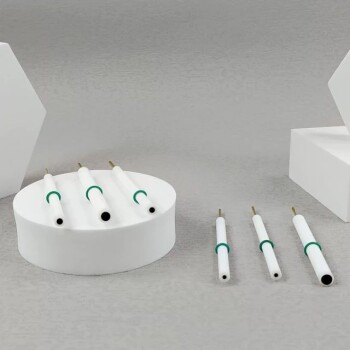
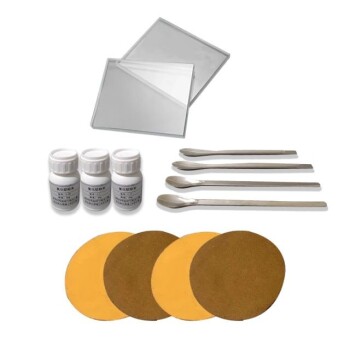
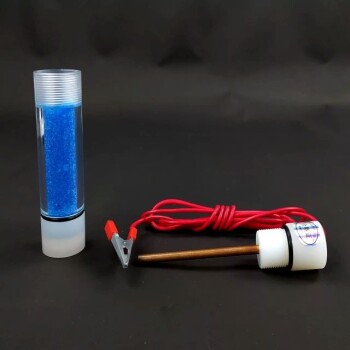
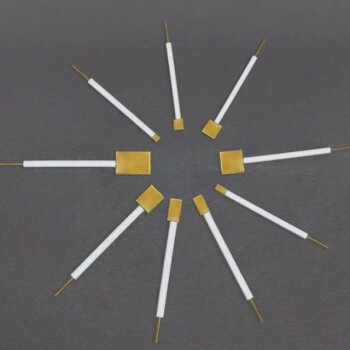
The primary purpose of using polycrystalline disc electrodes is to establish a rigorous, standardized baseline for measuring corrosion. Specifically, these electrodes provide a well-defined and reproducible effective surface area, which is critical for calculating accurate current densities. This standardized geometry ensures that the electric field and fluid dynamics remain uniform, allowing researchers to isolate and precisely evaluate the dissolution rates of metal atoms under specific potentials.
The use of a polycrystalline disc electrode transforms a variable corrosion experiment into a controlled measurement, ensuring that data reflects the metal's intrinsic properties rather than geometric inconsistencies.
The Importance of Geometric Precision
Ensuring Reproducible Surface Areas
In electrochemical studies, the accuracy of your data depends heavily on knowing the exact area of the reaction interface.
Polycrystalline disc electrodes offer a well-defined effective surface area. This definition allows researchers to reproduce experiments with high confidence, ensuring that variations in data are due to chemical changes, not electrode irregularity.
Compatibility with Flow Cell Architecture
Noble metal corrosion studies often require dynamic environments to simulate real-world conditions or remove corrosion products.
The structure of polycrystalline disc electrodes is highly compatible with electrochemical flow cells. Their form factor allows for seamless integration into flow systems, facilitating real-time monitoring of dissolution.
Achieving Uniform Experimental Conditions
Controlling the Electric Field
To accurately measure dissolution rates, the electrical potential applied to the metal must be consistent across its entire surface.
The standardized shape of the disc electrode ensures a uniform distribution of the electric field. This prevents "hot spots" of high current density that could skew corrosion rate calculations.
Managing Fluid Shear Forces
When electrolyte flows over an electrode, it exerts physical force (shear) that can influence mass transport and corrosion mechanisms.
The disc geometry ensures a predictable and uniform distribution of fluid shear forces. This control is essential for accurately evaluating how metal atoms dissolve within specific potential ranges without the interference of chaotic flow patterns.
Understanding the Trade-offs
The Necessity of Standardization
While polycrystalline discs provide excellent reproducibility, their primary "trade-off" is the rigid requirement for geometric standardization.
Failing to use a standardized shape like the disc introduces variables in electric field distribution. Without this uniformity, it becomes nearly impossible to accurately correlate the applied potential with the observed rate of metal dissolution.
Making the Right Choice for Your Goal
To ensure your corrosion study yields valid data, consider how the electrode geometry aligns with your specific analytical needs.
- If your primary focus is quantitative accuracy: Choose polycrystalline discs to ensure the effective surface area is well-defined and reproducible across multiple trials.
- If your primary focus is kinetic analysis: Rely on the disc geometry to maintain uniform electric fields, allowing you to correlate dissolution rates directly to specific potential ranges.
Standardizing your electrode geometry is the first step toward transforming qualitative observations into quantitative, defensible corrosion data.
Summary Table:
| Feature | Benefit for Corrosion Studies |
|---|---|
| Defined Surface Area | Enables accurate calculation of current densities and reproducible results. |
| Uniform Electric Field | Prevents current "hot spots" to ensure consistent dissolution rates. |
| Flow Cell Compatibility | Facilitates seamless integration for real-time monitoring of metal loss. |
| Predictable Fluid Shear | Controls mass transport to isolate chemical mechanisms from physical interference. |
Elevate Your Electrochemical Research with KINTEK
Precise data begins with high-quality instrumentation. KINTEK specializes in advanced laboratory solutions designed for the most demanding research environments. Whether you are studying noble metal corrosion or developing next-generation energy storage, we provide the tools you need for quantitative, defensible results.
Our extensive portfolio includes:
- Electrochemical Excellence: Specialized electrolytic cells, precision electrodes, and battery research consumables.
- Thermal Processing: High-temperature muffle, tube, vacuum, and CVD furnaces.
- Material Preparation: Crushing, milling, and hydraulic presses (pellet, hot, isostatic).
- Laboratory Essentials: High-pressure reactors, autoclaves, and high-purity ceramics or PTFE products.
Ready to standardize your experimental setup and achieve superior accuracy? Contact KINTEK today to consult with our experts on the ideal equipment for your specific application.
References
- Primož Jovanovič, Nejc Hodnik. In situ electrochemical dissolution of platinum and gold in organic-based solvent. DOI: 10.1038/s41529-018-0031-8
This article is also based on technical information from Kintek Solution Knowledge Base .
Related Products
- Rotating Platinum Disk Electrode for Electrochemical Applications
- RRDE rotating disk (ring disk) electrode / compatible with PINE, Japanese ALS, Swiss Metrohm glassy carbon platinum
- Metal Disc Electrode Electrochemical Electrode
- Graphite Disc Rod and Sheet Electrode Electrochemical Graphite Electrode
- Gold Disc Electrode
People Also Ask
- What is the working principle of a platinum disk electrode? A Guide to Precise Electrochemical Analysis
- What are the temperature limitations for a platinum disk electrode? The Critical Factor is the Insulating Body
- What can cause poisoning of a platinum disk electrode and how can it be prevented? Ensure Reliable Electrochemical Data
- How should a platinum disk electrode be polished? Master the Technique for Reliable Electrochemical Data
- How should a platinum disk electrode be used during an experiment? A Guide to Accurate Electrochemical Measurements