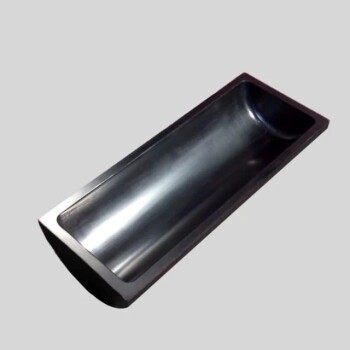
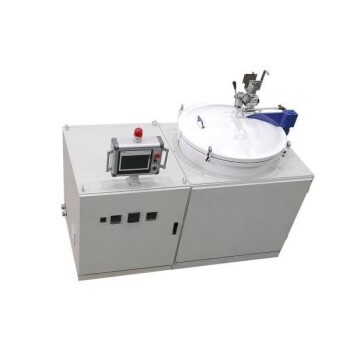
A high-temperature furnace equipped with a graphite heater delivers the critical capacity to generate extreme thermodynamic environments exceeding 1400 °C while sustaining exceptionally high heating rates of 33 °C/s. This specific technical profile is designed to bridge the gap between static laboratory tests and the dynamic, aggressive thermal conditions found in real-world reactor safety scenarios.
The core value of this technology lies in simulation authenticity. By matching the rapid temperature spikes associated with Loss-of-Coolant Accidents (LOCA), this setup ensures that steam oxidation data for materials like zirconium alloys is reliable and applicable to actual safety analyses.
Replicating Extreme Thermal Dynamics
Achieving Rapid Heating Rates
Standard furnaces often struggle to ramp up temperature quickly, which can skew test results for materials that react differently under sudden thermal shock.
A graphite heater configuration allows for heating rates as high as 33 °C/s. This speed is essential for capturing the transient phase of oxidation, rather than just the steady-state behavior.
Exceeding Standard Temperature Limits
Steam oxidation experiments for nuclear applications often require testing materials far beyond their normal operating range.
Graphite heaters enable the furnace to reach temperatures exceeding 1400 °C. This capability allows researchers to push zirconium alloys and other cladding materials to their failure points, revealing how they behave under catastrophic conditions.
Ensuring Data Integrity for Safety Analysis
Simulating Loss-of-Coolant Accidents (LOCA)
The primary application of this technical setup is the accurate simulation of a Loss-of-Coolant Accident (LOCA).
During a LOCA, reactor cores experience a sudden and drastic rise in temperature. To validate that fuel cladding will survive this event, the experimental apparatus must be able to reproduce that specific thermal curve, which this furnace configuration accomplishes.
Precision in Thermodynamic Control
While high heat is necessary, control is equally vital to distinguish between temperature effects and other variables.
Advanced furnaces in this category often feature microcomputer control to ensure high thermal stability, limiting fluctuations to as little as ±0.5 K. This precision ensures that the oxidation reaction is driven by the intended thermodynamic conditions, allowing for accurate sensitivity analysis.
Understanding the Trade-offs
Heater Oxidation Sensitivity
While graphite heaters are excellent for reaching high temperatures quickly, graphite itself is highly susceptible to oxidation.
In a steam oxidation experiment, the heater element must be isolated or protected from the steam environment (often using an inert gas purge or vacuum for the heater zone). If the steam meant for the sample contacts the heater, the heater will degrade rapidly, compromising the equipment.
Complexity of Atmosphere Control
Because of the heater's sensitivity, these furnaces often require more complex gas management systems than standard resistance furnaces.
Operators must carefully manage pressure differentials and seal integrity to ensure the corrosive steam remains confined to the sample chamber and does not leak into the heating element chamber.
Making the Right Choice for Your Goal
To maximize the value of your steam oxidation experiments, align the equipment's capabilities with your specific research objectives:
- If your primary focus is LOCA safety validation: Prioritize the 33 °C/s heating rate capability to ensure you are stressing the material dynamically, not just thermally.
- If your primary focus is kinetic mechanism analysis: Leverage the ±0.5 K thermal stability to isolate specific reaction rates without the noise of temperature drift.
Authentic simulation requires not just reaching the right temperature, but reaching it at the right speed.
Summary Table:
| Feature | Technical Advantage | Research Benefit |
|---|---|---|
| Max Temperature | Exceeds 1400 °C | Tests materials beyond standard failure points |
| Heating Rate | Up to 33 °C/s | Accurately replicates rapid LOCA thermal spikes |
| Thermal Stability | ±0.5 K Precision | Ensures reliable kinetic mechanism analysis |
| Heater Material | High-density Graphite | Enables extreme thermodynamic environments |
Elevate Your Material Research with KINTEK Precision
To achieve authentic simulation in steam oxidation and safety analysis, you need equipment that performs under extreme conditions. KINTEK specializes in advanced laboratory solutions, providing the high-performance high-temperature furnaces—including vacuum, atmosphere, and tube configurations—required for critical nuclear and aerospace testing.
From high-temperature high-pressure reactors to precision crushing and milling systems, our portfolio is designed to meet the rigorous demands of modern material science. Let KINTEK provide the thermal precision your laboratory requires.
Contact Our Technical Experts Today to find the perfect furnace for your LOCA simulation or steam oxidation experiments.
References
- M. S. Syrtanov, Dmitrii V. Sidelev. High-Temperature Steam Oxidation of Accident-Tolerant Cr/Mo-Coated Zr Alloy at 1200–1400 °C. DOI: 10.3390/coatings13010191
This article is also based on technical information from Kintek Solution Knowledge Base .
Related Products
- 2200 ℃ Graphite Vacuum Heat Treat Furnace
- Ultra-High Temperature Graphite Vacuum Graphitization Furnace
- Vertical High Temperature Graphite Vacuum Graphitization Furnace
- Horizontal High Temperature Graphite Vacuum Graphitization Furnace
- Large Vertical Graphite Vacuum Graphitization Furnace
People Also Ask
- How does heat transmit in a vacuum? Mastering Thermal Radiation for Purity & Precision
- Why do you heat treat in a vacuum? Achieve Perfect Surface Finish and Material Integrity
- What is the process of vacuum heat treating? Achieve Superior Hardening with a Clean, Bright Finish
- How does a vacuum heat treat furnace work? Achieve Pristine, Oxide-Free Metal Parts
- What is graphite heating? A Guide to Durable, High-Temp Industrial Furnace Solutions