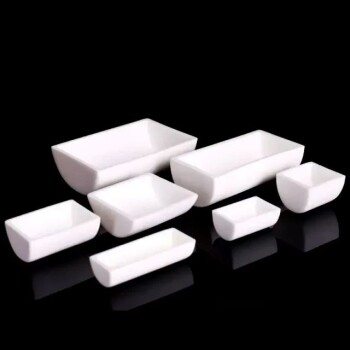
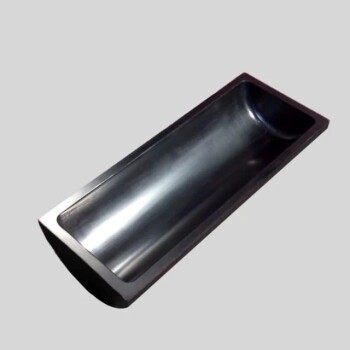
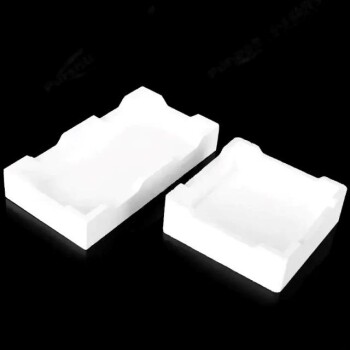
Ceramic combustion boats are the preferred container for high-temperature chlorination roasting because they provide a unique combination of chemical inertness and structural resilience. These materials can withstand highly corrosive atmospheres, such as those containing chlorine and hydrogen chloride gases, without degrading or reacting with the sample. This stability is critical for ensuring the purity of the end products and the accuracy of analytical data, such as metal recovery rates and mass change measurements.
Core Takeaway: Ceramic boats are selected for their ability to maintain absolute chemical and physical integrity in volatile, high-heat environments. By remaining inert, they prevent sample contamination and ensure that experimental results reflect the behavior of the reactants rather than the container.
The Role of Chemical Inertness in Harsh Atmospheres
Resistance to Corrosive Chlorine Gases
During chlorination roasting, samples are often exposed to aggressive gases like chlorine (Cl₂) and hydrogen chloride (HCl). Ceramic materials possess superior chemical stability, allowing them to resist corrosion from these acidic gases even at elevated temperatures where most metals and lower-grade materials would fail.
Prevention of Sample Contamination
A primary requirement for any sample carrier is that it must not react with the precursor powders or the resulting chlorination products. Ceramics ensure that the high purity of catalysts or metal products is maintained by providing a non-reactive surface that does not introduce external impurities into the reaction.
Integrity of Cyanide Tailings Processing
In specific applications like the roasting of cyanide tailings, ceramic boats are essential because they do not interact with the complex mineral components. This neutrality is vital for researchers to obtain precise metal recovery rate measurements, as any reaction between the boat and the sample would skew the final data.
Thermal Integrity Under Extreme Conditions
Withstanding High-Temperature Thresholds
Chlorination roasting often occurs at temperatures ranging from 700°C to 1100°C. High-temperature ceramic boats are designed to support precursor powders and molten slag at these extremes without melting, softening, or losing their structural form.
Superior Thermal Shock Resistance
Processes that require rapid cooling or quenching place immense physical stress on sample containers. Ceramics with high thermal shock stability can be removed from high-temperature zones and cooled quickly without cracking, which is essential for preserving the microscopic features of the carbonized or roasted products.
Precise Positioning within Tube Furnaces
The rigid structure of ceramic boats allows for the precise positioning of reaction sources within the "sweet spot" of a tube furnace. This ensures uniform heating and consistent gas flow over the sample, which is necessary for reproducible experimental results.
Ensuring Precise Analytical Outcomes
Maintaining Mass Change Integrity
For many technical processes, the accuracy of sample mass change (ΔW) measurements is the primary metric for success. Because ceramic crucibles do not gain or lose mass through oxidation or volatilization, any measured change in weight can be confidently attributed to the chemical reactions occurring within the sample itself.
Preserving Catalyst Performance
In the synthesis of materials like cobalt phosphide catalysts, the container must withstand corrosive gases like phosphine. Ceramic boats prevent the introduction of impurities that could "poison" the catalyst, thereby ensuring the integrity of the final product's electrochemical or catalytic properties.
Understanding the Trade-offs
Fragility and Handling
While ceramics are chemically robust, they are inherently brittle. They lack the impact resistance of metal alloys and can shatter if dropped or handled roughly, requiring specialized tools for insertion and extraction from furnaces.
Porosity and Cleaning Challenges
Depending on the specific grade of ceramic (e.g., alumina vs. unglazed porcelain), some boats may have a degree of surface porosity. Over time, this can lead to "memory effects" where trace elements from previous experiments are trapped in the pores, potentially contaminating subsequent samples if a rigorous cleaning protocol is not followed.
Cost vs. Longevity
High-purity alumina or specialized ceramic boats are more expensive than standard quartz or glass alternatives. While they offer a longer lifespan in corrosive environments, the initial investment is higher, making material selection a balance between budget and the required temperature threshold.
How to Apply This to Your Project
Making the Right Choice for Your Goal
- If your primary focus is high-purity catalyst synthesis: Prioritize high-purity alumina ceramic boats to ensure no trace elements migrate from the container into your sample.
- If your primary focus is rapid quenching and microscopic analysis: Select ceramics specifically rated for "high thermal shock resistance" to prevent container failure during sudden temperature shifts.
- If your primary focus is precise mass-change data: Ensure the ceramic boat is pre-fired at a temperature higher than your experimental range to remove any volatiles before the actual test.
The selection of a ceramic combustion boat is ultimately a strategic decision to protect the integrity of your sample and the reliability of your data in the face of extreme thermal and chemical stress.
Summary Table:
| Feature | Benefit in Chlorination Roasting | Key Impact |
|---|---|---|
| Chemical Inertness | Resists corrosive Cl₂ and HCl gases | Prevents sample contamination |
| High-Temp Stability | Withstands 700°C to 1100°C | Maintains structural integrity |
| Thermal Shock Resistance | Endures rapid cooling/quenching | Prevents cracking and sample loss |
| Mass Stability | No oxidation or weight gain/loss | Ensures accurate $\Delta W$ measurements |
| Rigid Structure | Fixed positioning in tube furnaces | Uniform heating and gas flow |
Elevate Your Research Precision with KINTEK
Ensure the integrity of your high-temperature experiments with KINTEK’s premium laboratory solutions. Whether you are performing complex chlorination roasting or advanced material synthesis, we provide the high-purity consumables and precision equipment you need to succeed.
Our Specialized Portfolio Includes:
- Consumables: High-purity ceramic boats, alumina crucibles, and PTFE products.
- High-Temperature Furnaces: Advanced tube, muffle, vacuum, and CVD furnaces designed for uniform heat distribution.
- Processing Equipment: High-pressure reactors, autoclaves, and hydraulic pellet presses for sample preparation.
Don't let container degradation compromise your analytical data. Contact KINTEK today to discover how our high-performance ceramics and furnace systems can optimize your laboratory’s efficiency and accuracy.
References
- Weiwei Wang, Shaochun Hou. Kinetics of simultaneous recovering of Au and Ag from CTs by chloridizing volatilization methods. DOI: 10.37190/ppmp/172522
This article is also based on technical information from Kintek Solution Knowledge Base .
Related Products
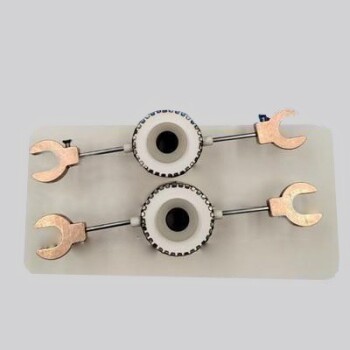
- Aluminized Ceramic Evaporation Boat for Thin Film Deposition
- Ceramic Evaporation Boat Set Alumina Crucible for Laboratory Use
- Alumina Al2O3 Ceramic Crucible Semicircle Boat with Lid for Engineering Advanced Fine Ceramics
- Molybdenum Tungsten Tantalum Special Shape Evaporation Boat
- Hemispherical Bottom Tungsten Molybdenum Evaporation Boat
People Also Ask
- What is the source of evaporation for thin film? Choosing Between Thermal and E-Beam Methods
- Why are high-purity ceramic boats used for lignin activation? Ensure Purity & Thermal Stability
- Why is an alumina boat and Ti3AlC2 powder bed necessary for Ti2AlC sintering? Protect MAX Phase Purity
- Why use an alumina boat for high-temperature carbon activation? Ensure Maximum Material Purity & Thermal Stability
- Why is an alumina boat selected for catalyst precursors? Ensure Sample Purity at 1000 °C