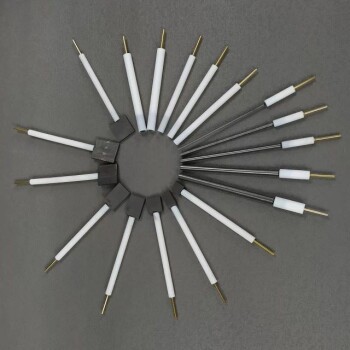
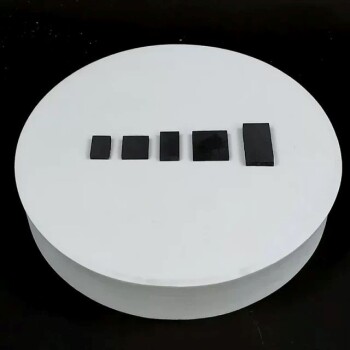
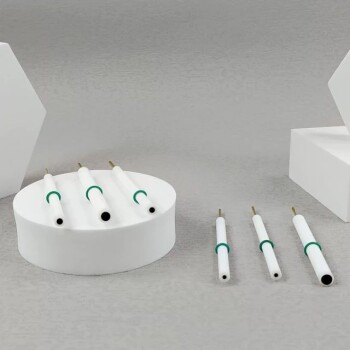
Graphite electrodes are the preferred choice for electrochemical reactions that produce heavy residual deposits primarily due to their mechanical durability and economic efficiency. Unlike precious metal electrodes, graphite can withstand the aggressive physical cleaning required to remove stubborn polymer or salt buildup without incurring prohibitive replacement costs.
When a reaction generates significant waste or deposits, the electrode becomes a high-maintenance component. Graphite allows operators to prioritize rigorous cleaning and operational continuity over the preservation of delicate, expensive hardware.
Resilience Under Physical Stress
Withstanding Frequent Maintenance
Reactions that generate deposits, such as polymers or salts, inevitably foul the electrode surface. To maintain efficiency, these electrodes require frequent, often abrasive, physical cleaning.
Graphite offers superior durability in these scenarios. It can endure the mechanical stress of scraping or scrubbing required to remove hardened deposits, a process that would likely damage or strip the coating off delicate precious metal electrodes.
Tolerance for "High-Loss" Environments
In industrial contexts, the cleaning process itself causes wear and tear. This is considered a "high-loss" process because the electrode material is slowly abraded away along with the deposit.
Graphite is uniquely suited for this because its structural integrity remains functional even as the outer layers are worn down. It is built to be a workhorse rather than a precision instrument in these specific harsh applications.
Economic Viability
Cost-Effectiveness vs. Precious Metals
The primary alternative to graphite—precious metal electrodes—presents a significant financial risk in deposit-heavy applications.
Because graphite is significantly less expensive to manufacture and source, it reduces the financial impact of component wear. Replacing a graphite electrode that has been worn down by repeated cleaning is a fraction of the cost of replacing platinum or gold-plated counterparts.
Scalability for Industry
For industrial-scale operations, the cost of consumables is a critical metric. Using graphite allows facilities to scale up reactions that produce heavy residues without the operational costs becoming unsustainable due to equipment turnover.
Understanding the Trade-offs
Porosity and Absorption
While graphite is robust, it is not without physical limitations compared to solid metals.
The primary trade-off is its porous structure. Unlike the smooth, impermeable surface of a polished metal, graphite may absorb minor amounts of compounds from the reaction mixture. While generally negligible for industrial applications, this absorption capability is an inherent characteristic that must be factored into process design.
Making the Right Choice for Your Goal
If you are designing a process or selecting materials, consider the following regarding deposit management:
- If your primary focus is Operational Longevity: Graphite allows for aggressive cleaning schedules to remove salt or polymer buildup without immediate failure.
- If your primary focus is Cost Control: Graphite mitigates the financial risk associated with the physical wear and eventual replacement of electrodes in high-fouling environments.
Graphite ultimately transforms the electrode from a fragile asset into a durable, cost-efficient consumable capable of surviving the harshest chemical environments.
Summary Table:
| Feature | Graphite Electrodes | Precious Metal Electrodes |
|---|---|---|
| Physical Durability | High; withstands aggressive scraping | Low; coatings can be easily damaged |
| Cost per Unit | Low/Economical | High/Prohibitive |
| Maintenance Style | Abrasive cleaning and replacement | Delicate handling and preservation |
| Industrial Scalability | High due to low consumable cost | Low for high-wear environments |
| Surface Structure | Porous and robust | Smooth and impermeable |
Maximize Your Lab’s Productivity with KINTEK
Don't let electrode fouling stall your progress. KINTEK specializes in providing high-performance laboratory solutions, from high-temperature furnaces and crushing systems to specialized electrolytic cells and electrodes. Our graphite electrodes are designed to endure the most demanding industrial cleaning cycles, ensuring your electrochemical research stays efficient and cost-effective.
Whether you need precision hydraulic presses, high-temperature high-pressure reactors, or durable ceramics and crucibles, our team is ready to equip your facility with the industry's most resilient tools.
Upgrade your electrochemical setup—Contact KINTEK today!
References
- Arthur J. Shih, Marc T. M. Koper. Water electrolysis. DOI: 10.1038/s43586-022-00164-0
This article is also based on technical information from Kintek Solution Knowledge Base .
Related Products
- Graphite Disc Rod and Sheet Electrode Electrochemical Graphite Electrode
- Graphite Vacuum Furnace Negative Material Graphitization Furnace
- High Purity Pure Graphite Crucible for Electron Beam Evaporation
- Glassy Carbon Sheet RVC for Electrochemical Experiments
- Glassy Carbon Electrochemical Electrode
People Also Ask
- Why is a graphite electrode used as a counter electrode? Achieve Pure Electrochemical Reduction with KINTEK
- What is the correct procedure for installing and connecting a graphite electrode during an experiment? Ensure Accurate Electrochemical Results
- What are the potential risks when using a graphite electrode in electrochemical tests? Avoid Decomposition and Contamination
- What are the key precautions for handling graphite electrodes? Ensure Safety & Maximize Performance
- Why are Dimensionally Stable Anodes (DSA) preferred for indium electrowinning? Ensure High-Purity Results.