High-purity graphite rods are the standard choice for the counter electrode in Electrochemical Impedance Spectroscopy (EIS) because they combine exceptional electrical conductivity with chemical inertness. This specific pairing allows the electrode to facilitate the necessary current flow without reacting with the electrolyte or contaminating the test environment with foreign ions.
Core Insight: The primary function of the counter electrode is to complete the circuit without influencing the data. High-purity graphite ensures that the recorded impedance signals strictly reflect the corrosion kinetics of the working electrode (the material being tested), rather than artifacts generated by the counter electrode itself.
The Criticality of Chemical Stability
Preventing Electrolyte Contamination
The most significant advantage of high-purity graphite is its chemical inertness. Unlike metal electrodes that might corrode or dissolve under test conditions, graphite does not react with the electrolyte solution.
Eliminating Interfering Ions
Because the rod remains stable, it does not introduce interfering ions into the electrochemical system. The introduction of foreign ions would alter the solution chemistry, leading to noisy data and inaccurate conclusions regarding the material's performance.
Ensuring Electrical Fidelity
Maintaining a Stable Current Loop
To measure impedance, EIS requires a continuous and stable path for current to flow between the working electrode and the counter electrode. Graphite provides the high electrical conductivity necessary to maintain this loop efficiently.
Consistent Current Distribution
A high-purity graphite rod ensures a stable current distribution across the electrochemical cell. This stability is essential for generating reliable data that serves as a benchmark for evaluating other parameters, such as noise resistance and spectral impedance.
Isolating the True Signal
Focusing on the Interface
The ultimate goal of EIS is to analyze the interface between the coating and the metal substrate. The counter electrode must act solely as a conduit for current, effectively becoming "invisible" to the measurement results.
Accurate Kinetic Reflection
By remaining chemically passive, graphite ensures that the recorded signals accurately reflect the corrosion kinetics occurring at the working electrode. This allows researchers to attribute changes in impedance strictly to the degradation or performance of the coating system.
Common Pitfalls to Avoid
The "High-Purity" Requirement
It is critical to distinguish between generic graphite and high-purity graphite. Lower-grade graphite often contains binders or impurities that can leach into the electrolyte during testing.
The Risk of False Readings
If a low-quality rod is used, the leaching impurities will alter the electrochemical environment. This undermines the inertness of the electrode, causing the EIS results to reflect the contamination rather than the true state of the coating or metal.
Making the Right Choice for Your Goal
To ensure the validity of your electrochemical data, verify your equipment selection against your specific testing objectives:
- If your primary focus is corrosion analysis: Prioritize high-purity graphite to ensure no foreign ions distort the corrosion rate calculations of the working electrode.
- If your primary focus is equipment longevity: Select graphite to avoid the need for frequent electrode replacement, as it will not corrode in aggressive electrolyte solutions.
The integrity of your EIS data relies not just on the sensitivity of your equipment, but on the chemical silence of your counter electrode.
Summary Table:
| Feature | Benefit in EIS Testing | Impact on Data Accuracy |
|---|---|---|
| Chemical Inertness | Prevents electrolyte contamination and side reactions | Eliminates noisy data and interfering ions |
| High Conductivity | Maintains a stable current loop with the working electrode | Ensures consistent and reliable current distribution |
| High-Purity Grade | Absence of binders and leachable impurities | Guarantees signals reflect true material kinetics |
| Durability | Resists corrosion in aggressive electrolytes | Provides long-term stability and cost-efficiency |
Elevate Your Electrochemical Research with KINTEK Precision
Don't let electrode impurities compromise your Electrochemical Impedance Spectroscopy (EIS) results. KINTEK specializes in providing high-performance laboratory equipment designed for the most demanding research environments.
Our high-purity graphite rods and electrolytic cells are engineered to ensure the chemical silence and electrical fidelity your experiments require. Whether you are conducting advanced battery research, corrosion analysis, or material characterization, KINTEK offers a comprehensive range of solutions, including:
- Electrolytic cells and precision electrodes for stable measurements.
- High-temperature furnaces and reactors for material synthesis.
- Battery research tools and essential laboratory consumables.
Ready to achieve superior data accuracy? Contact our technical experts today to find the perfect high-purity components for your laboratory.
References
- Jen Yang Yap, Zakaria Man. Release kinetics study and anti-corrosion behaviour of a pH-responsive ionic liquid-loaded halloysite nanotube-doped epoxy coating. DOI: 10.1039/d0ra01215g
This article is also based on technical information from Kintek Solution Knowledge Base .
Related Products
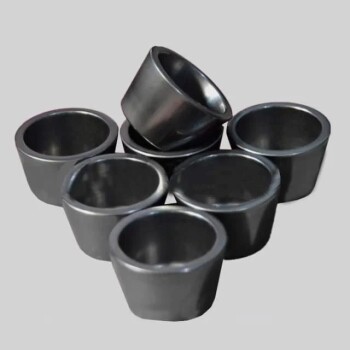
- High Purity Pure Graphite Crucible for Evaporation
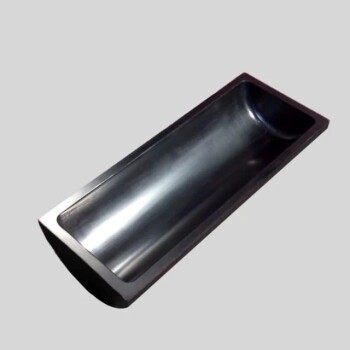
- High Purity Pure Graphite Crucible for Electron Beam Evaporation
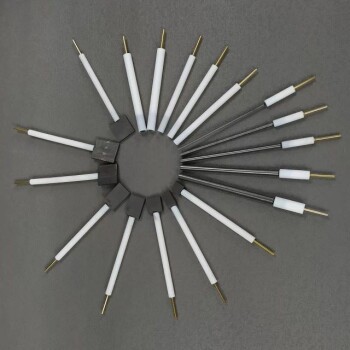
- Graphite Disc Rod and Sheet Electrode Electrochemical Graphite Electrode
- Horizontal High Temperature Graphite Vacuum Graphitization Furnace
- High Purity Alumina Granulated Powder for Engineering Advanced Fine Ceramics
People Also Ask
- Why is a high-purity graphite crucible required for Chromel-TaC composites? Ensure Peak Purity at 1400°C
- Why are high-purity graphite crucibles preferred for sulfide solid electrolytes? Achieve Superior Material Purity
- What role do high-purity graphite crucibles play in molten salt corrosion research? Ensure Reactor-Grade Precision
- Why are high-purity graphite crucibles used for magnesium distillation? Ensure 3N8 Purity & Thermal Stability
- What role does a high-purity graphite crucible play in CaO-MgO-Al2O3-SiO2 system equilibrium experiments? Maximize Accuracy