A high-purity graphite rod is the preferred counter electrode primarily due to its exceptional chemical inertness and electrical conductivity. In three-electrode configurations, particularly during acidic oxygen evolution reactions (OER), it serves to complete the electrical circuit without introducing contaminants. By resisting dissolution, graphite prevents foreign ions from migrating to the working electrode, ensuring that the data collected reflects only the intrinsic activity of the material being tested.
Core Takeaway The counter electrode must act as an invisible facilitator, enabling current flow without participating chemically in the measurement. High-purity graphite is chosen because it eliminates the risk of metal ion contamination, ensuring that the "activity" you measure belongs solely to your catalyst and not to impurities derived from the testing hardware.
The Imperative of Chemical Inertness
Preventing Ion Contamination
The most critical function of the graphite rod is to maintain a sterile chemical environment. Unlike some metal counter electrodes, high-purity graphite does not release metal ions into the electrolyte during operation.
Preserving Surface Integrity
If a counter electrode dissolves, metal ions can migrate through the solution and deposit onto the working electrode. This deposition alters the surface chemistry of your sample. Graphite avoids this interference, ensuring the accurate measurement of the catalyst's intrinsic activity.
Resistance to Corrosive Environments
Graphite exhibits superior stability in harsh conditions, such as acidic OER setups or corrosive saline environments. It does not react with the electrolyte, nor does it produce impurities that could skew test results.
Electrical Performance and Stability
Excellent Conductivity
To function effectively as an auxiliary electrode, the material must allow charge to pass freely. Graphite possesses excellent electrical conductivity, enabling it to facilitate charge exchange efficiently.
Withstanding Current Fluctuations
During electrolysis, the system may experience significant current variations. Graphite rods are physically and electrically robust enough to withstand these fluctuations without degrading.
Uniform Current Distribution
By maintaining a stable current loop with the working electrode, the graphite rod ensures a uniform current distribution. This is essential for reliable polarization testing and consistent data acquisition.
Understanding the Trade-offs
Graphite vs. Metal Electrodes
While noble metals like Platinum are often used for their conductivity, they are not always the optimal choice for every application. In specific anodic polarization processes, even noble metals can face risks of oxidative dissolution.
The Risk of "Phantom" Activity
If a metal counter electrode dissolves, the migrated ions can act as unintentional catalysts on your working electrode. This creates "phantom" activity—readings that look positive but are actually artifacts of contamination. Graphite is chemically distinct from these metals, effectively eliminating this specific variable from your experiment.
Making the Right Choice for Your Goal
Selecting the correct counter electrode is about matching the material properties to your specific electrolyte and sensitivity requirements.
- If your primary focus is measuring intrinsic catalytic activity: Choose high-purity graphite to eliminate the risk of metal ion dissolution and surface contamination.
- If your primary focus is testing in highly corrosive or acidic media: Rely on graphite for its ability to withstand aggressive electrolytes without chemical degradation.
Ultimately, the reliability of your electrochemical data depends as much on the inertness of your counter electrode as it does on the quality of your working sample.
Summary Table:
| Feature | Graphite Rod Benefit | Why It Matters |
|---|---|---|
| Chemical Stability | Exceptional inertness in acidic/corrosive media | Prevents electrolyte contamination and side reactions |
| Conductivity | Excellent electrical charge transfer | Ensures efficient and stable current flow during testing |
| Purity | High-purity carbon structure | Eliminates 'phantom' activity from migrating metal ions |
| Durability | Resists dissolution and degradation | Maintains the integrity of the working electrode surface |
| Cost-Effectiveness | Durable and robust material | Provides a reliable, long-term solution for lab setups |
Elevate Your Electrochemical Accuracy with KINTEK
Don't let 'phantom' activity compromise your research results. KINTEK specializes in premium laboratory equipment and consumables designed for precision. Whether you are conducting OER studies or battery research, our high-purity graphite rods, electrolytic cells, and electrodes provide the chemical inertness your experiments demand.
From high-temperature furnaces and vacuum systems to specialized PTFE products, ceramics, and crucibles, KINTEK is your partner in achieving reproducible data.
Ready to upgrade your lab's performance? Contact us today to find the perfect solution for your application!
References
- Hui Su, Qinghua Liu. Tensile straining of iridium sites in manganese oxides for proton-exchange membrane water electrolysers. DOI: 10.1038/s41467-023-44483-6
This article is also based on technical information from Kintek Solution Knowledge Base .
Related Products
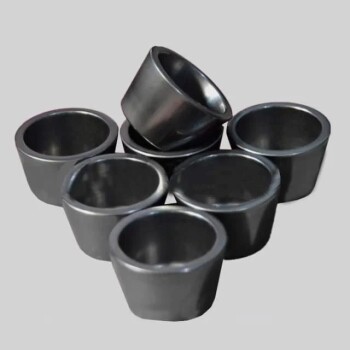
- High Purity Pure Graphite Crucible for Electron Beam Evaporation
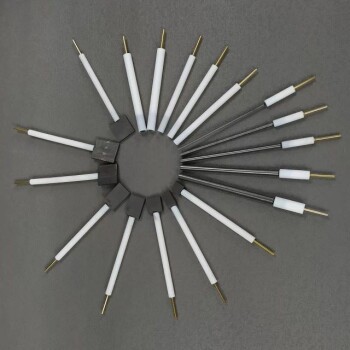
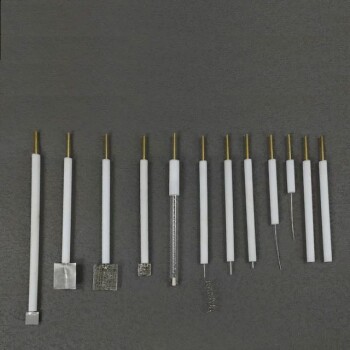
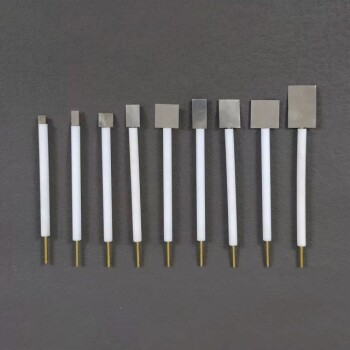
- Graphite Disc Rod and Sheet Electrode Electrochemical Graphite Electrode
- High Purity Pure Graphite Crucible for Evaporation
- Platinum Auxiliary Electrode for Laboratory Use
- High Purity Gold Platinum Copper Iron Metal Sheets
People Also Ask
- What is the container that holds the metal source material called in e-beam evaporation? Ensure Purity and Quality in Your Thin-Film Deposition
- What role do high-purity graphite crucibles play in molten salt corrosion research? Ensure Reactor-Grade Precision
- Why is a high-purity graphite crucible ideal for nitrogen-doped graphene at 1500 °C? Maximize Purity and Stability
- What dual roles do high-purity graphite crucibles play? Expert Insights into Fluoride Salt Testing
- What role does a high-purity graphite crucible play in CaO-MgO-Al2O3-SiO2 system equilibrium experiments? Maximize Accuracy