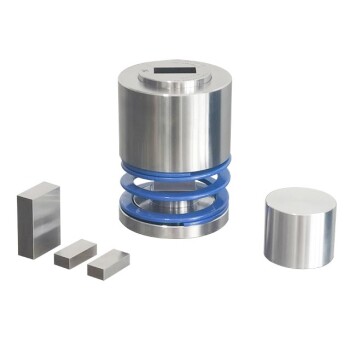
High-pressure sealed systems are strictly required for hydrothermal liquefaction (HTL) because they force water to remain in a liquid or dense fluid state at temperatures significantly exceeding its normal boiling point. By maintaining these subcritical or supercritical conditions, the system transforms water into a highly reactive solvent capable of decomposing biomass without the need for energy-intensive pre-drying.
The sealed, high-pressure environment fundamentally alters the physical properties of water, lowering its viscosity and dielectric constant. This allows it to act simultaneously as a reaction medium and a catalyst, efficiently converting wet biomass into high-energy-density bio-crude or bio-char.
The Physics of Subcritical Water
Preventing Phase Change
In an open system, water turns to steam at 100°C. HTL processes, however, operate at much higher temperatures, typically between 250°C and 450°C.
Maintaining the Liquid State
High-pressure reactors (autoclaves) apply internal pressures ranging from 100 to 350 bar. This immense pressure suppresses the phase change, keeping the water in a superheated liquid or subcritical state despite the extreme heat.
Altering Solvent Properties
Under these specific conditions, water behaves differently than it does at room temperature. Its viscosity and dielectric constant decrease, allowing it to dissolve organic compounds—such as hemicellulose and lignin—that are normally insoluble in standard water.
Chemical Transformation of Biomass
Water as a Reactant
The high-pressure environment enables water to act as more than just a solvent; it becomes an active reactant. It facilitates the degradation and deoxygenation of biopolymers found in the feedstock.
Driving Key Reactions
The pressurized environment supports critical chemical reactions like dehydration and decarboxylation. These reactions are necessary to remove oxygen and upgrade the biomass into high-heating-value bio-oil or bio-char.
Catalytic Effects
In this superheated state, liquid water acts as a catalyst. It efficiently modifies lignin and decomposes biomass structures, often removing alkali metal impurities in the process.
Operational Efficiency and Feedstock Flexibility
Eliminating Pre-Drying
One of the most significant advantages of HTL is the ability to process wet biomass. Because water is the reaction medium, there is no need for energy-intensive pre-drying of the feedstock.
Processing High-Moisture Waste
This makes the process ideal for high-moisture materials like sewage sludge or algae. The sealed system allows these materials to be converted directly, significantly improving the overall energy balance of the operation.
Understanding the Trade-offs: Engineering Challenges
Critical Sealing Requirements
Operating at pressures up to 350 bar creates substantial engineering challenges. Reactors must feature superior sealing performance to prevent dangerous pressure leaks and process failures.
Safety Hazards
The combination of high pressure and high temperature creates a high-energy environment. Any breach in containment can lead to rapid depressurization and safety hazards, necessitating robust design and rigorous safety protocols.
Material Durability
The reactor vessel must be constructed from materials capable of withstanding not only the mechanical stress of high pressure but also the corrosive nature of the hot, chemically active biomass slurry.
Making the Right Choice for Your Goal
If you are designing or selecting a reactor system for biomass conversion, consider your primary objectives:
- If your primary focus is Energy Efficiency: Prioritize systems that can handle the highest moisture content feedstocks (like sludge) to maximize the benefit of eliminating the drying step.
- If your primary focus is Product Quality: Ensure the reactor can stably maintain pressures at the upper end of the spectrum (near 350 bar) to ensure optimal solubility and conversion of organic compounds into bio-crude.
The high-pressure requirement is not merely a constraint; it is the fundamental enabler that turns ordinary water into a powerful chemical engineering tool.
Summary Table:
| Feature | Open System (100°C) | HTL Sealed System (250°C - 450°C) |
|---|---|---|
| Water State | Steam/Vapor | Superheated Liquid / Subcritical Fluid |
| Internal Pressure | 1 bar (Atmospheric) | 100 to 350 bar |
| Biomass Drying | Required (Energy Intensive) | Not Required (Processes Wet Feedstock) |
| Chemical Role | Passive Medium | Active Reactant & Catalyst |
| Solvent Property | High Viscosity/Dielectric | Low Viscosity (Dissolves Organics) |
Maximize Your Bio-Energy Yield with KINTEK
Hydrothermal liquefaction demands uncompromising equipment safety and precision. KINTEK specializes in advanced high-temperature high-pressure reactors and autoclaves engineered to withstand up to 350 bar and 450°C, ensuring stable subcritical conditions for your research.
From processing sewage sludge to developing high-density bio-crude, our robust systems eliminate the need for costly pre-drying and deliver superior chemical transformation. We also provide essential PTFE linings, ceramics, and corrosion-resistant crucibles to support your most challenging HTL workflows.
Ready to upgrade your biomass research? Contact our laboratory experts today to find the perfect reactor system for your goals!
References
- Azwifunimunwe Tshikovhi, Tshwafo Ellias Motaung. Technologies and Innovations for Biomass Energy Production. DOI: 10.3390/su151612121
This article is also based on technical information from Kintek Solution Knowledge Base .
Related Products
- Customizable High Pressure Reactors for Advanced Scientific and Industrial Applications
- Mini SS High Pressure Autoclave Reactor for Laboratory Use
- Stainless High Pressure Autoclave Reactor Laboratory Pressure Reactor
- High Pressure Laboratory Autoclave Reactor for Hydrothermal Synthesis
- Customizable Laboratory High Temperature High Pressure Reactors for Diverse Scientific Applications
People Also Ask
- What is the function of high-pressure reactors in the synthesis of MFI-type zeolites? Master Dry Gel Conversion.
- Graphene Fiber Synthesis: Key High-Pressure Reactor Processing Conditions Explained
- What reactor is used for high pressure reactions? Select the Right Autoclave for Your Lab
- What is the primary function of a high-pressure reactor in NiMoO4 preparation? Optimize Hydrothermal Catalyst Synthesis
- What are the hazards of high pressure reactors? A Guide to Managing Explosive Risks