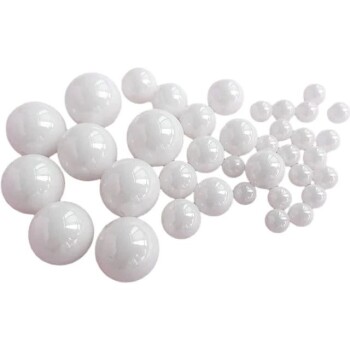
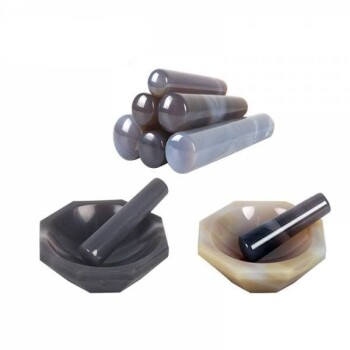
High-purity alumina grinding balls are selected primarily to guarantee chemical purity during the preparation of Al2O3-TiCN/Co-Ni composite powders. Because the matrix of the composite is itself composed of alumina ($Al_2O_3$), utilizing grinding media made of the exact same material ensures that any wear debris generated during the milling process acts as a compatible ingredient rather than a harmful contaminant.
Core Takeaway The physical violence of mechanical alloying makes media wear inevitable. By matching the grinding ball material to the primary component of the composite matrix, you convert potential contamination into harmless compositional integration, thereby preserving the material's mechanical integrity and sintering behavior.
The Principle of "Like-Grinds-Like"
Eliminating Foreign Contaminants
The primary driver for this selection is the prevention of impurity introduction.
In high-energy ball milling, the impact between balls and powder is intense. If you were to use steel or tungsten carbide balls, the process would inevitably introduce iron or tungsten inclusions into the mixture.
By using high-purity alumina balls, you ensure that the only "contaminant" entering the system is more alumina.
Maintaining Chemical Consistency
Since the composite matrix is $Al_2O_3$-based, additional alumina particles from ball wear do not alter the chemical nature of the system.
This "self-compatibility" is critical for advanced ceramics, where even trace amounts of foreign metal can degrade the high-temperature performance or fracture toughness of the final sintered part.
Efficiency and Microstructural Goals
Ensuring High Grinding Efficiency
Despite being chosen for purity, alumina balls also provide the necessary hardness to effectively refine the powder mixture.
The primary reference notes that these balls ensure high grinding efficiency. They are sufficiently hard to break down agglomerates of the harder TiCN and softer metallic Co-Ni phases without suffering excessive degradation themselves.
Facilitating Homogeneous Dispersion
The goal of using a planetary ball mill in this context is to thoroughly mix nano-scale alumina and sub-micron titanium carbonitride (TiCN) with the metallic binder.
The impact forces from the alumina balls break up nanoparticle agglomerates. This ensures a uniform distribution of reinforcements within the matrix, which is a prerequisite for achieving uniform microstructure and mechanical strength in the final product.
Activation for Sintering
Beyond simple mixing, the mechanical impact increases the surface energy of the powder particles.
This energized state creates favorable kinetic conditions for the subsequent solid-state diffusion sintering, allowing the material to densify properly.
Understanding the Trade-offs
Impact Energy vs. Purity
While alumina is efficient, it is less dense than media like Zirconia or Tungsten Carbide.
Heavier balls provide higher impact energy, which can reduce milling time. However, using a heavier, non-matching material would introduce foreign elements that ruin the composite's chemistry.
Therefore, the choice of alumina represents a strategic trade-off: accepting potentially longer milling times or specific energy inputs in exchange for absolute chemical purity.
Wear is Inevitable
It is a common pitfall to assume that "high-purity" media do not wear down.
Wear always occurs due to the shear forces and collisions involved. The engineering decision is not about stopping wear, but ensuring the wear debris does not compromise the final application.
Making the Right Choice for Your Goal
When selecting grinding media for composite powder preparation, align your choice with your primary constraint:
- If your primary focus is Chemical Purity: Select a grinding medium that matches the major component of your composite matrix (e.g., Alumina balls for Alumina matrix) to ensure wear debris is chemically neutral.
- If your primary focus is Particle Refinement Speed: High-density media (like Zirconia or Tungsten Carbide) offer higher kinetic energy, but you must verify that the resulting contamination will not degrade your material properties.
Ultimately, the use of alumina balls in this specific process ensures that the mechanical integrity of the final Al2O3-TiCN/Co-Ni part is dictated by its design, not by accidental impurities.
Summary Table:
| Feature | Alumina Grinding Balls Advantage | Impact on Composite |
|---|---|---|
| Material Compatibility | Matches the $Al_2O_3$ matrix | Eliminates foreign chemical contamination |
| Purity Control | High-purity alumina composition | Preserves mechanical and sintering integrity |
| Grinding Efficiency | High hardness for particle refinement | Ensures uniform dispersion of TiCN and Co-Ni |
| Surface Activation | High-energy mechanical impact | Increases surface energy for better densification |
| Wear Management | Wear debris is compositionally neutral | Converts potential waste into functional matrix material |
Elevate Your Material Purity with KINTEK
Precision in advanced ceramics and powder metallurgy starts with the right media. KINTEK specializes in high-performance laboratory equipment and consumables designed to eliminate contamination and optimize your research outcomes.
Whether you are preparing complex Al2O3-based composites or conducting battery research, we provide the tools you need for success, including:
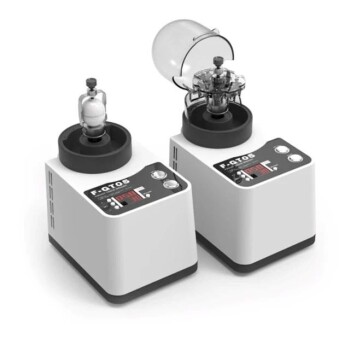
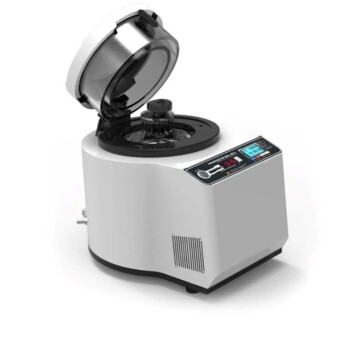
- Premium Grinding & Milling: High-purity alumina, zirconia, and tungsten carbide media, plus planetary crushing systems.
- Advanced Thermal Processing: A full range of muffle, tube, vacuum, and CVD furnaces.
- Laboratory Essentials: High-pressure reactors, hydraulic pellet presses, and precision cooling solutions.
Don't let foreign inclusions compromise your sintering results. Our experts are ready to help you select the ideal grinding media and equipment tailored to your specific material constraints.
Contact KINTEK Today to Optimize Your Lab Workflow
Related Products
- Laboratory Jar Ball Mill with Alumina Zirconia Grinding Jar and Balls
- High Purity Alumina Granulated Powder for Engineering Advanced Fine Ceramics
- Laboratory Jar Mill with Agate Grinding Jar and Balls
- Laboratory Ball Mill Jar Mill with Metal Alloy Grinding Jar and Balls
- Advanced Engineering Fine Ceramics Low Temperature Alumina Granulation Powder
People Also Ask
- What are the primary functions of using a ball mill for BZCY72 powder? Achieve High Purity and Enhanced Sintering
- In what way does a laboratory ball mill affect material properties when modifying PHBV/pulp fiber composites?
- Why is a laboratory ball mill required for ultra-fine fly ash? Unlock Nano-Scale Adsorption Power
- What is the function of a laboratory ball mill in the preparation of AMMCs? Optimize Dispersion & Grain Refinement
- What is the function of a laboratory ball mill in the pretreatment of waste tire char (WTC)? Optimize Material Reactivity