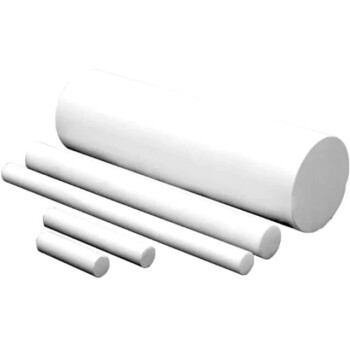
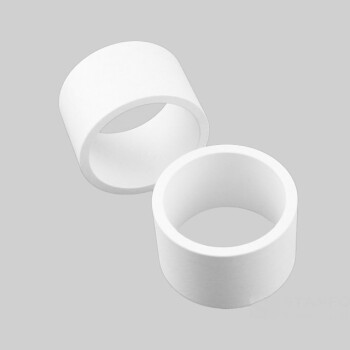
Ceramic insulation materials perform two critical roles in Chemical Vapor Deposition (CVD) reactors: thermal isolation and mechanical stabilization. They function simultaneously as a high-efficiency barrier to shield the external induction coils from heat and as a rigid support structure to maintain the graphite chamber's precise alignment.
In high-temperature CVD environments, ceramic insulation acts as the essential interface that balances thermal containment with geometric precision, ensuring both equipment safety and process uniformity.
Thermal Management and Protection
The first primary function of ceramic insulation is to manage the extreme thermal gradients inherent in the CVD process.
Reducing Heat Conduction
The graphite reaction chamber acts as a susceptor, generating intense heat during the process. Ceramic insulation creates a barrier that significantly reduces the conduction of this heat outward toward the environment.
Protecting the Induction Coils
Induction coils are typically sensitive to external heat and often require cooling. By blocking heat transfer, the ceramic layer prevents the coils from overheating and suffering thermal damage, thereby extending their operational lifespan.
Minimizing Energy Loss
Thermal containment is also an efficiency measure. By keeping the heat confined within the graphite chamber, the system minimizes energy waste, allowing the reactor to maintain high temperatures with lower power consumption.
Mechanical Alignment and Process Stability
The second primary function is structural. The physical placement of the reactor components is as critical as their thermal properties.
Fixing the Chamber Position
Ceramic materials provide the necessary mechanical support to hold the graphite reaction chamber in place. Specifically, they fix the chamber at the exact geometric center of the induction coil assembly.
Ensuring Uniform Inductive Coupling
Induction heating relies on the distance between the coil and the workpiece (the graphite). Precise centering ensures that the inductive coupling is uniform across the entire chamber.
Maintaining a Stable Heating Zone
By preventing physical shifting or misalignment, the insulation guarantees a stable heating zone. This prevents the formation of "hot spots" or uneven temperature gradients that could compromise the deposition quality.
Common Pitfalls to Avoid
While ceramic insulation is vital, misunderstanding its dual role can lead to operational issues.
Overlooking Mechanical Degradation
It is a mistake to view insulation solely as a thermal blanket. If the material degrades mechanically or crumbles, the chamber will shift off-center, leading to uneven heating even if the thermal properties remain intact.
Ignoring Thermal Saturation
If the insulation is insufficient for the reactor's operating temperature, heat will eventually bleed through to the coils. This not only wastes energy but risks catastrophic failure of the induction hardware.
Making the Right Choice for Your System
When evaluating insulation strategies for your CVD reactor, align your focus with your primary operational constraints.
- If your primary focus is Equipment Longevity: Prioritize insulation with superior thermal resistance to minimize heat transfer and maximize the lifespan of your induction coils.
- If your primary focus is Process Uniformity: Prioritize materials with high mechanical rigidity to ensure the graphite chamber remains perfectly centered for consistent inductive coupling.
By treating the insulation as both a thermal shield and a precision mechanical component, you ensure a stable, efficient, and high-quality CVD process.
Summary Table:
| Function Category | Key Role | Impact on CVD Process |
|---|---|---|
| Thermal Management | Heat Shielding | Protects induction coils from overheating and reduces energy loss. |
| Structural Support | Mechanical Alignment | Fixes the graphite chamber at the center for uniform inductive coupling. |
| Process Stability | Temperature Uniformity | Eliminates hot spots and ensures consistent deposition quality. |
| Equipment Safety | Thermal Isolation | Prevents thermal damage to hardware and extends operational lifespan. |
Elevate Your Thin-Film Research with KINTEK Precision
Are you looking to optimize the thermal efficiency and process uniformity of your CVD systems? KINTEK specializes in high-performance laboratory equipment, providing the critical components needed for advanced material synthesis. Whether you are working with CVD/PECVD/MPCVD systems, high-temperature furnaces, or specialized ceramic and graphite consumables, our expert team is here to support your technical requirements.
From high-temperature reactors and vacuum systems to precise crushing and milling tools, KINTEK offers a comprehensive portfolio designed for the rigors of modern research. Ensure your laboratory equipment delivers peak performance and longevity.
Ready to upgrade your lab's capabilities? Contact us today to discuss your project needs and discover our full range of solutions!
References
- Saphina Biira. Design and fabrication of a chemical vapour deposition system with special reference to ZrC layer growth characteristics. DOI: 10.17159/2411-9717/2017/v117n10a2
This article is also based on technical information from Kintek Solution Knowledge Base .
Related Products
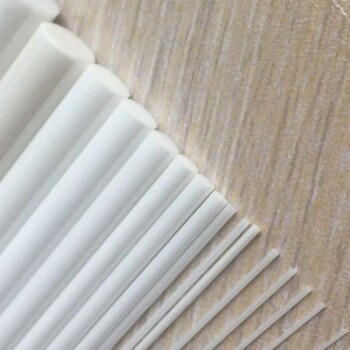
- Engineering Advanced Fine Alumina Al2O3 Ceramic Rod Insulated for Industrial Applications
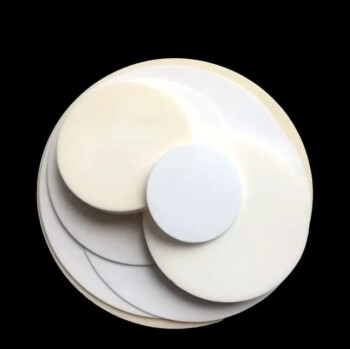
- Zirconia Ceramic Gasket Insulating Engineering Advanced Fine Ceramics
- Engineering Advanced Fine Ceramics Aluminum Oxide Al2O3 Heat Sink for Insulation
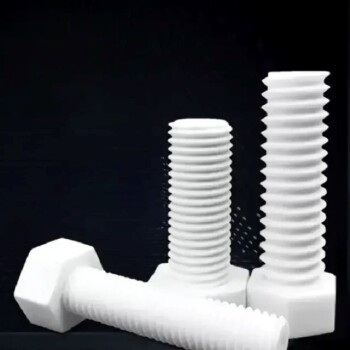
- High Quality Alumina Ceramic Screw for Engineering Advanced Fine Ceramics with High Temperature Resistance and Insulation
- Customer Made Versatile CVD Tube Furnace Chemical Vapor Deposition Chamber System Equipment
People Also Ask
- Why are high-purity alumina rods used in LOCA experiments? Simulating Nuclear Fuel Gap and Steam Starvation
- How is alumina ceramic made? A Guide to Manufacturing Methods and Material Properties
- What ceramics are used for insulation? Choose the Right Material for Thermal or Electrical Needs
- Why are alumina insulation discs used as sample supports in CCPN? Ensure Arcing-Free, Uniform Plasma Nitriding
- How do alumina ceramic tubes address technical challenges in electrochemical devices? Ensure Peak Signal Integrity.