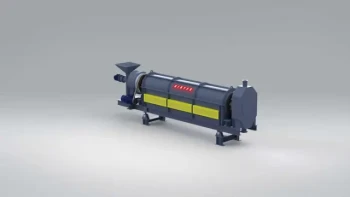
Hydrothermal carbonization (HTC) reactors are the superior choice for high-moisture biomass because they eliminate the need for energy-intensive pre-drying. Unlike traditional pyrolysis, which requires dry feedstock, HTC reactors process wet materials like sludge or food waste directly. This capability significantly reduces the total energy consumption and cost associated with converting waste into usable industrial additives.
Hydrothermal carbonization utilizes specific temperatures and autogenous pressure to drive dehydration and decarboxylation reactions in wet biomass. This process efficiently converts organic waste into hydrochar rich in surface functional groups, offering a sustainable and low-cost route for producing cement additives.
The Efficiency Advantage
Bypassing the Drying Phase
Traditional thermal conversion methods, such as pyrolysis, typically require feedstock with very low moisture content. This necessitates a pre-drying step that is both energy-intensive and costly.
Direct Wet Processing
HTC reactors solve this problem by operating in an aqueous environment. They accept wet feedstocks—specifically sludge and food waste—without any need for prior drying.
Autogenous Pressure Utilization
The process utilizes "autogenous" pressure. This means the pressure creates itself within the sealed reactor as the water heats up, removing the need for external gas pressurization systems.
The Chemical Transformation
Dehydration and Decarboxylation
Inside the reactor, the biomass undergoes two primary chemical reactions: dehydration and decarboxylation.
Dehydration removes water molecules from the chemical structure of the biomass.
Decarboxylation removes carboxyl groups, releasing carbon dioxide. Together, these reactions densify the carbon content of the waste material.
Creating High-Value Hydrochar
The output of this process is a solid material known as hydrochar.
Crucially for the cement industry, this hydrochar retains a structure rich in surface functional groups. These chemical traits make the hydrochar highly effective when used as an additive in cement formulations.
Understanding the Trade-offs
Specific Operational Conditions
While HTC is efficient, it is not a passive process. It requires the maintenance of specific temperature ranges to trigger the necessary chemical reactions effectively.
Feedstock Dependency
The utility of the final hydrochar depends heavily on the input material. While the reactor handles wet waste well, the consistency of the sludge or food waste will dictate the final properties of the cement additive.
Making the Right Choice for Your Goal
If you are evaluating waste-to-value technologies for cement production, consider these factors:
- If your primary focus is Energy Efficiency: Choose HTC to eliminate the massive energy load required to dry wet biomass before processing.
- If your primary focus is Waste Management: Utilize HTC for direct processing of difficult, high-moisture streams like sewage sludge or municipal food waste.
- If your primary focus is Product Chemistry: Leverage HTC to produce hydrochar specifically for its rich surface functional groups, which improve cement additive performance.
By converting wet waste directly into functional hydrochar, HTC transforms a disposal burden into a valuable industrial resource.
Summary Table:
| Feature | Traditional Pyrolysis | Hydrothermal Carbonization (HTC) |
|---|---|---|
| Feedstock Requirement | Dry (low moisture) | Wet (sludge, food waste) |
| Pre-drying Step | Mandatory (High Energy) | Not Required (Direct Processing) |
| Operating Environment | Gas Phase | Aqueous Phase |
| Pressure Source | External Gas | Autogenous Pressure |
| Key Product | Biochar | Hydrochar (Rich in functional groups) |
Elevate Your Sustainable Material Production with KINTEK
Transform high-moisture waste into high-value industrial resources with precision technology. KINTEK specializes in advanced laboratory solutions, including high-temperature high-pressure reactors and autoclaves perfectly suited for hydrothermal carbonization research and production.
Whether you are developing cement additives from sludge or exploring new hydrochar applications, our comprehensive range of high-temperature furnaces, crushing systems, and cooling solutions provides the reliability your lab demands. Our mission is to help researchers and manufacturers streamline waste-to-value processes through superior equipment performance.
Ready to optimize your carbonization process? Contact our experts today to discover how KINTEK can enhance your lab's efficiency and output quality.
References
- Ping Ye, Qijun Yu. The state-of-the-art review on biochar as green additives in cementitious composites: performance, applications, machine learning predictions, and environmental and economic implications. DOI: 10.1007/s42773-024-00423-1
This article is also based on technical information from Kintek Solution Knowledge Base .
Related Products
- High Pressure Laboratory Autoclave Reactor for Hydrothermal Synthesis
- Customizable Laboratory High Temperature High Pressure Reactors for Diverse Scientific Applications
- Electric Rotary Kiln Small Rotary Furnace for Activated Carbon Regeneration
- Customer Made Versatile CVD Tube Furnace Chemical Vapor Deposition Chamber System Equipment
- Electric Rotary Kiln Small Rotary Furnace Biomass Pyrolysis Plant
People Also Ask
- What role does a high-pressure reactor (autoclave) play in the synthesis of NiCuFe-LDH? Master Hydrothermal Growth
- What Role Does a High-Pressure Reactor or Autoclave Play in HA Catalyst Synthesis? Achieve High Surface Area Materials
- What equipment is required for hydrothermal synthesis of Ga0.25Zn4.67S5.08? Optimize Your Semiconductor Production
- What is the function of a high-pressure reactor in the hydrothermal synthesis of boehmite? Expert Process Insights
- What role does an autoclave play in the synthesis of MnO2 nanofibers? Mastering Hydrothermal Growth