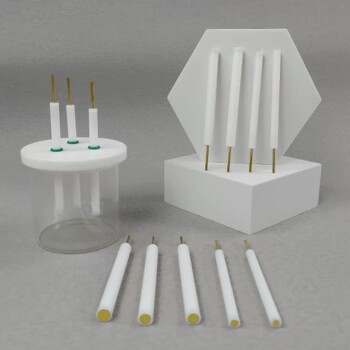
Platinum-coated nickel mesh and foam combine the structural durability of nickel with the superior catalytic efficiency of platinum to maximize hydrogen production. Nickel serves as a highly conductive, corrosion-resistant backbone, while the platinum coating significantly lowers the energy required to split water. The porous mesh or foam geometry further enhances performance by preventing gas bubbles from blocking the electrode surface.
This composite material addresses the "efficiency vs. durability" paradox in electrolysis. By applying a high-performance catalyst (platinum) onto a robust, high-surface-area substrate (nickel), operators achieve lower electrical consumption and higher hydrogen yields than traditional solid electrodes can provide.
The Role of the Substrate: Why Nickel?
Surviving the Alkaline Environment
The primary challenge in alkaline electrolysis is the harsh chemical environment. Nickel is chosen for its exceptional corrosion resistance in these highly alkaline conditions.
Unlike many other transition metals that degrade quickly, nickel maintains its structural integrity over long operational periods. This durability ensures the electrode does not dissolve or contaminate the electrolyte.
Electrical Conductivity
Nickel is an excellent electrical conductor. It acts as an efficient current collector, ensuring that electricity is distributed evenly across the entire electrode.
This minimizes resistance losses within the electrode itself, ensuring that the power supplied is used for the reaction rather than generating waste heat.
The Role of the Catalyst: Why Platinum?
Lowering Activation Energy
While nickel is conductive, it is not the most efficient catalyst for the Hydrogen Evolution Reaction (HER). Platinum is applied as an electrocatalyst because it dramatically lowers the activation energy required to start the reaction.
Reducing Overpotential
In electrolysis, "overpotential" is the excess energy required to drive a reaction beyond the theoretical limit. Platinum significantly reduces this overpotential.
By requiring less voltage to achieve the same reaction rate, platinum-coated electrodes consume less electrical energy, directly improving the system's overall efficiency.
Enhancing Bubble Dynamics
Platinum possesses paramagnetic properties. In specific setups involving magnetic fields, this helps influence the movement of gas bubbles.
This property aids in the precise observation and management of how hydrogen and oxygen bubbles detach from the surface, further optimizing the reaction environment.
The Role of Geometry: Why Mesh or Foam?
Maximizing Active Surface Area
The physical structure of the electrode is just as critical as its chemical composition. Nickel foam or mesh provides a three-dimensional porous structure.
This geometry offers a massive increase in effective surface area compared to a flat plate. More surface area means more "active sites" where the water-splitting reaction can occur simultaneously.
Managing Gas Detachment
A major inefficiency in electrolysis is "bubble shielding," where gas bubbles stick to the electrode and block water from reaching the surface.
The open pores of metallic mesh facilitate the rapid detachment and removal of hydrogen and oxygen bubbles. This ensures the electrolyte constantly wets the surface, maintaining a uniform current distribution and preventing activity loss.
Understanding the Trade-offs
Cost vs. Performance
The primary downside of this composite is the cost of platinum, a precious metal. While nickel is cost-effective and readily available, adding a platinum layer increases the initial capital expenditure (CAPEX).
Engineering Precision
Coating uniformity is critical. If the platinum layer is applied unevenly via spraying, "hot spots" of high current density can occur. This can lead to localized degradation, potentially reducing the lifespan of the electrode despite the high-quality materials used.
Making the Right Choice for Your Goal
The decision to use platinum-coated nickel depends on balancing your operational budget against your efficiency targets.
- If your primary focus is maximum energy efficiency: Choose platinum-coated nickel foam to minimize overpotential and reduce long-term electricity costs (OPEX).
- If your primary focus is initial budget constraints: Consider pure nickel electrodes, accepting that higher overpotential will lead to greater power consumption over time.
- If your primary focus is high current density operations: Prioritize the 3D mesh or foam structure to ensure rapid bubble removal, preventing voltage spikes caused by gas shielding.
By leveraging platinum's catalytic power on a robust nickel scaffold, you transform a standard chemical reaction into a highly optimized, energy-efficient industrial process.
Summary Table:
| Feature | Nickel Substrate Role | Platinum Coating Role | Mesh/Foam Geometry |
|---|---|---|---|
| Function | Structural backbone & conductor | Electrocatalyst | Surface area enhancer |
| Key Benefit | Corrosion resistance in alkali | Lowers activation energy | Promotes bubble detachment |
| Impact | Long-term durability | Higher energy efficiency | Prevents "bubble shielding" |
| Effect | Minimal resistance losses | Reduced overpotential | Maximum active reaction sites |
Maximize Your Hydrogen Production Efficiency with KINTEK
Elevate your electrolysis performance with KINTEK’s premium platinum-coated nickel mesh and foam electrodes. Designed for researchers and industrial operators who demand the highest energy efficiency and durability, our specialized materials ensure lower overpotential and superior bubble dynamics in alkaline environments.
Beyond electrodes, KINTEK provides a comprehensive ecosystem for energy research, including:
- Electrolytic cells and electrodes tailored for precision testing.
- High-temperature high-pressure reactors and autoclaves for advanced chemical processing.
- Battery research tools and high-performance consumables like PTFE and ceramics.
- Crushing, milling, and sieving systems for material preparation.
Don't let inefficient electrodes drive up your energy costs. Contact KINTEK today to discover how our advanced laboratory equipment and consumables can optimize your green energy workflows!
References
- Alessandro Franco, C Giovannini. Recent and Future Advances in Water Electrolysis for Green Hydrogen Generation: Critical Analysis and Perspectives. DOI: 10.3390/su152416917
This article is also based on technical information from Kintek Solution Knowledge Base .
Related Products
- Platinum Sheet Electrode for Laboratory and Industrial Applications
- Platinum Sheet Electrode for Battery Lab Applications
- Rotating Platinum Disk Electrode for Electrochemical Applications
- Platinum Auxiliary Electrode for Laboratory Use
- High Purity Gold Platinum Copper Iron Metal Sheets
People Also Ask
- What is a common use for a platinum sheet electrode? As a Reliable Counter Electrode in Electrochemical Cells
- What is the most critical guideline for immersing a platinum sheet electrode in an electrolyte? Ensure Accurate Electrochemical Measurements
- What is the purity of the platinum sheet in a platinum sheet electrode? The Key to Reliable Electrochemical Data
- What is the expected lifespan of a platinum sheet electrode? Maximize Your Electrode's Service Life
- What are the available specifications for platinum sheet electrodes? Find the Perfect Fit for Your Electrochemical Needs