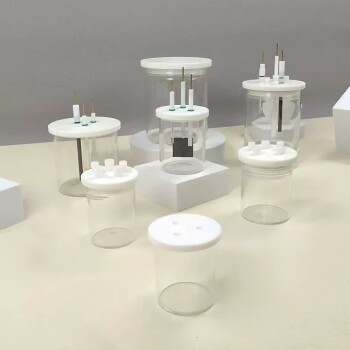
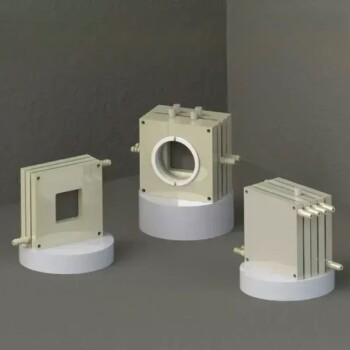
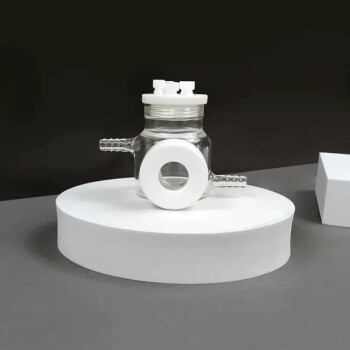
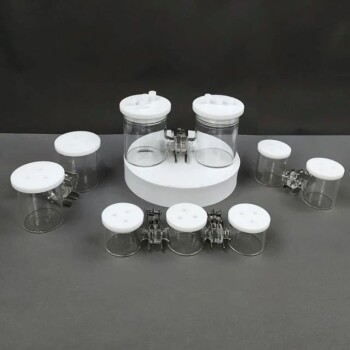
Experimental integrity is the primary driver. PTFE is specified for alkaline Hydrogen Evolution Reaction (HER) components because of its exceptional chemical inertness and resistance to corrosion by strong bases like potassium hydroxide (KOH). Unlike glass or standard metals, PTFE prevents the leaching of impurities that would otherwise compromise the accuracy of electrochemical measurements.
Core Takeaway: Using PTFE ensures that experimental results reflect the true performance of the catalyst material rather than artifacts caused by contamination. Its resistance to alkaline corrosion prevents the release of silicates and metal ions that can poison active sites during long-term water electrolysis.
The Critical Need for Chemical Inertness
Resisting Alkaline Corrosion
Alkaline electrolytes used in HER testing, such as 0.1 M KOH, are chemically aggressive.
PTFE withstands exposure to these strong bases without degrading or reacting. This stability is essential for maintaining a consistent chemical environment throughout the duration of the experiment.
Eliminating Contaminant Leaching
Standard laboratory glassware can leach silicates, and metallic containers can release metal ions when exposed to alkaline solutions.
PTFE components eliminate this risk entirely, ensuring that no external metal impurities or silicates are introduced into the electrolyte. This creates a "blank slate" environment where the only variables are those you intend to test.
Protecting Catalyst Performance
Preventing Active Site Poisoning
The sensitivity of advanced catalysts, such as high-entropy metallic glass nanoparticles, makes them vulnerable to trace contaminants.
Impurities introduced from a non-PTFE container can adsorb onto the catalyst's surface. This effectively "poisons" the active sites, blocking the electrochemical reaction and leading to false performance data.
Ensuring True Stability Data
Long-term water electrolysis testing is designed to measure how a material holds up over time.
By using PTFE to prevent cumulative contamination, researchers can be confident that any observed degradation is intrinsic to the catalyst itself. This allows for a true reflection of the material's electrochemical stability, unclouded by environmental interference.
Common Pitfalls to Avoid
The "Glassware" Assumption
A common error in electrochemical testing is assuming that standard laboratory glass is inert enough for all applications.
In alkaline environments, glass corrosion releases silicates that can mimic or mask catalytic activity. Relying on glass components for HER testing is a frequent cause of unreproducible results or phantom peaks in data.
Component Compatibility
While the cell body is often the focus, the supplementary components must also be considered.
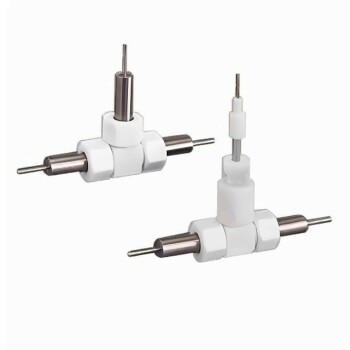
As noted in the supplementary references, PTFE is versatile enough to be fabricated into seals, valves, and chemical pipeline linings. To maintain a contamination-free system, these peripheral components must also be constructed from PTFE, not just the main reaction vessel.
Making the Right Choice for Your Goal
To ensure your HER testing yields publication-grade data, align your material choices with your specific research objectives:
- If your primary focus is Intrinsic Activity: Prioritize PTFE components to prevent silicate or metal ion leaching that could artificially alter the catalytic turnover rate.
- If your primary focus is Long-Term Durability: Use PTFE linings and seals to ensure that performance drops are due to catalyst degradation, not the gradual poisoning of active sites over time.
By eliminating environmental variables through the use of PTFE, you convert your reaction cell from a source of noise into a tool of precision.
Summary Table:
| Feature | Glass/Metal Components | PTFE (Polytetrafluoroethylene) |
|---|---|---|
| Chemical Resistance | Low (leaches silicates/metal ions in bases) | Exceptional (inert to KOH and strong bases) |
| Contamination Risk | High (poisons catalyst active sites) | Zero (maintains a high-purity environment) |
| Data Accuracy | Compromised by experimental noise/artifacts | High (reflects true intrinsic activity) |
| Durability | Degradation over long-term testing | Highly stable for long-term electrolysis |
| Applications | General laboratory use | Precision electrochemical reaction cells |
Elevate Your Electrochemical Research with KINTEK Precision
Don't let impurities compromise your laboratory results. KINTEK specializes in high-performance laboratory equipment and consumables designed for the most demanding research environments. Whether you are conducting HER testing, battery research, or material synthesis, our comprehensive range of PTFE products, electrolytic cells, and electrodes ensures maximum chemical inertness and experimental integrity.
From high-temperature furnaces and hydraulic presses to advanced cooling solutions and specialized crucibles, KINTEK provides the tools needed to eliminate environmental noise and achieve publication-grade data. Contact us today to discuss how our high-purity consumables and cutting-edge laboratory systems can enhance your project's efficiency and accuracy.
References
- Matthew W. Glasscott, Jeffrey E. Dick. Electrosynthesis of high-entropy metallic glass nanoparticles for designer, multi-functional electrocatalysis. DOI: 10.1038/s41467-019-10303-z
This article is also based on technical information from Kintek Solution Knowledge Base .
Related Products
- H-Type Double-Layer Optical Electrolytic Electrochemical Cell with Water Bath
- Electrolytic Electrochemical Cell for Coating Evaluation
- PTFE Electrolytic Cell Electrochemical Cell Corrosion-Resistant Sealed and Non-Sealed
- Electrolytic Electrochemical Cell with Five-Port
- Side Window Optical Electrolytic Electrochemical Cell
People Also Ask
- What is the overall structure of the H-type double-layer optical water bath electrolytic cell? Precision Design for Controlled Experiments
- How is the electrolyte managed in H-type electrolytic cells for specific reactions? Achieve Precise Control and High Purity
- What checks should be performed on the H-type electrolytic cell before use? Ensure Accurate Electrochemical Data
- What is important regarding temperature control for the H-type electrolytic cell? Ensure Precision and Data Integrity
- What is the overall structure of the H-type electrolytic cell? Understanding Dual-Chamber Electrochemical Designs