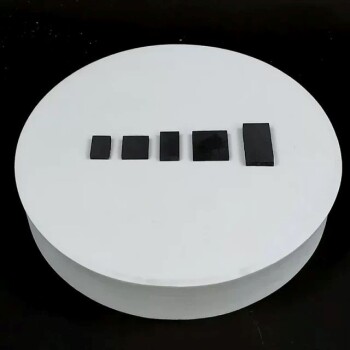
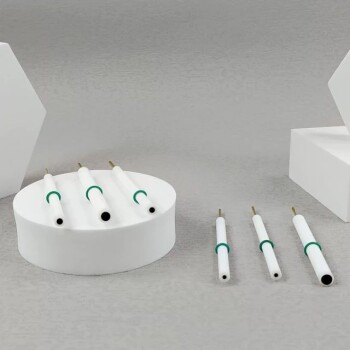
Screen-printed carbon electrodes (SPCEs) are the preferred choice for the electrochemical characterization of PB/PEI nanoparticles because they solve two critical challenges: experimental reproducibility and sample conservation. They provide a maintenance-free, standardized testing platform that requires micro-volumes of reagent, allowing researchers to focus on the electrochemical behavior of the nanoparticles rather than electrode preparation.
SPCEs offer a reliable, fixed-geometry interface that requires only 10 µL of suspension, making them the most efficient tool for analyzing how polymer coatings influence the redox potential and electron transfer of Prussian Blue nanoparticles.
Operational Advantages of SPCEs
Maximizing Sample Efficiency
One of the most significant constraints in nanoparticle research is the quantity of synthesized material available.
Extremely Low Reagent Consumption
SPCEs are designed to function with extremely small sample volumes. The primary reference notes that only 10 µL of suspension is required for characterization.
This capability is vital when working with PB/PEI nanoparticles, as it allows researchers to run multiple characterizations without exhausting their supply of synthesized material.
Eliminating Surface Preparation
Traditional solid electrodes, such as glassy carbon, require rigorous and time-consuming polishing between measurements to ensure a clean surface.
Removing the Polishing Step
SPCEs completely eliminate the need for complex electrode polishing.
This streamlines the workflow significantly, allowing for a "drop-and-measure" approach that accelerates data collection and reduces the likelihood of surface contamination due to human error during cleaning.
Ensuring Analytical Precision
Standardizing the Geometric Area
For electrochemical data to be comparable, the surface area of the electrode must be constant.
Fixed Working Area
SPCEs are manufactured with a precise, fixed working area.
This manufacturing consistency ensures that current density calculations remain reliable across different trials, which is essential when quantifying the redox activity of Prussian Blue.
Analyzing Polymer Coating Effects
A core objective in this research is understanding how the Polyethylenimine (PEI) coating interacts with the Prussian Blue (PB) core.
Facilitating Electron Transfer Studies
SPCEs provide a reliable interface for analyzing the redox potential of the nanoparticles.
This stable baseline allows researchers to accurately detect changes in electron transfer efficiency, helping them isolate exactly how the polymer coating modifies the electrochemical behavior of the nanoparticles.
Understanding the Trade-offs
The Limitation of "No Polishing"
While eliminating polishing is a major workflow advantage, it introduces a limitation regarding reusability.
Because the surface cannot be resurfaced or polished to expose fresh carbon, SPCEs are typically treated as disposable or limited-use sensors.
This makes them excellent for avoiding cross-contamination between different nanoparticle batches, but potentially less cost-effective for high-volume routine testing compared to a single, robust glassy carbon electrode that lasts for years.
Making the Right Choice for Your Goal
To maximize the effectiveness of your electrochemical characterization, match the electrode choice to your specific research constraints.
- If your primary focus is conservation of material: Utilize SPCEs to perform complete characterization using only micro-liters of your nanoparticle suspension.
- If your primary focus is reproducibility: Rely on the fixed working area of the SPCE to eliminate geometric variations that occur with hand-polished electrodes.
By leveraging the operational simplicity of SPCEs, you ensure that your data reflects the true properties of the PB/PEI nanoparticles, not the inconsistencies of your setup.
Summary Table:
| Feature | Traditional Electrodes (e.g., Glassy Carbon) | Screen-Printed Carbon Electrodes (SPCE) |
|---|---|---|
| Sample Volume | High (milliliters) | Ultra-low (~10 µL) |
| Surface Preparation | Time-consuming polishing required | None (Pre-standardized) |
| Reproducibility | Variable (user-dependent polishing) | High (Fixed geometric area) |
| Workflow | Complex & slow | Rapid "Drop-and-Measure" |
| Reusability | Multiple uses with maintenance | Disposable/Limited use (No contamination) |
Elevate Your Electrochemical Research with KINTEK Precision
Are you looking to optimize your nanoparticle characterization? KINTEK specializes in high-performance laboratory equipment and consumables designed for precision and efficiency. From electrolytic cells and electrodes to advanced crushing and milling systems, we provide the tools necessary to ensure your research data is accurate and reproducible.
Whether you are analyzing PB/PEI nanoparticles or developing next-generation battery technologies, our comprehensive portfolio—including high-temperature furnaces, hydraulic presses, and specialized ceramics—is built to meet the rigorous demands of modern laboratories.
Ready to streamline your workflow and conserve valuable samples? Contact us today to discover how KINTEK’s expertise can support your scientific breakthroughs!
References
- Udara Bimendra Gunatilake, Eva Baldrich. Peroxidase (POD) Mimicking Activity of Different Types of Poly(ethyleneimine)-Mediated Prussian Blue Nanoparticles. DOI: 10.3390/nano15010041
This article is also based on technical information from Kintek Solution Knowledge Base .
Related Products
- Glassy Carbon Sheet RVC for Electrochemical Experiments
- Glassy Carbon Electrochemical Electrode
- High Purity Pure Graphite Crucible for Electron Beam Evaporation
People Also Ask
- What is an RVC glassy carbon sheet? A High-Performance Material for Demanding Applications
- What is the applicable potential range for an RVC glassy carbon sheet? Master Your Electrochemical Analysis
- What is the porosity of an RVC glassy carbon sheet? Understanding the Critical Difference Between PPI and Porosity
- What are the key characteristics of RVC glassy carbon sheets? Unlock Superior Electrochemical Performance
- What consideration should be given to ancillary equipment used with RVC glassy carbon sheets? Ensure Reliable Performance and Protect Your Investment