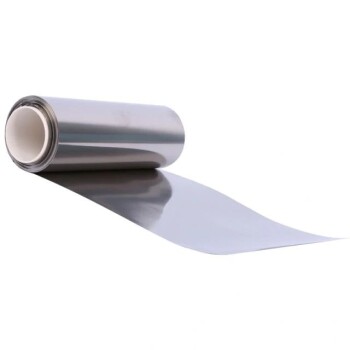
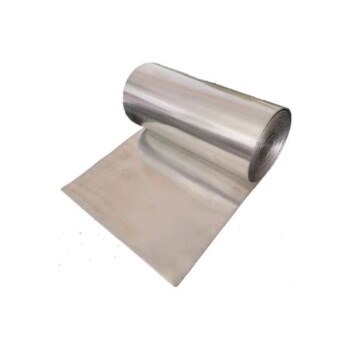
The integrity of LLZ electrolytes depends on chemical isolation during processing. Specialized substrates, such as gold foil or inert ceramic plates, serve as a critical barrier between the electrolyte sample and the crucible. This isolation prevents detrimental chemical reactions that occur at high sintering temperatures, ensuring the material retains its intended electrical properties.
Ideally, a sintering vessel should be invisible to the chemical process. Specialized substrates act as an inert interface, blocking the diffusion of contaminants from the crucible that would otherwise ruin the phase purity and conductivity of the LLZ electrolyte.
The Mechanics of Contamination
Reactivity of Standard Crucibles
Standard crucible materials, particularly alumina, are widely used for their thermal resilience. However, they are not chemically passive when in contact with LLZ (Lithium Lanthanum Zirconate) at high heat.
The Diffusion Problem
Without a protective substrate, the high sintering temperatures drive a chemical reaction between the crucible and the sample. This leads to the diffusion of aluminum elements from the crucible directly into the LLZ structure.
Consequences for Material Performance
Formation of Impurity Phases
The introduction of external elements triggers the formation of unwanted secondary phases. The most notable impurity created during this reaction is La2Zr2O7.
Loss of Stoichiometry
High-performance electrolytes rely on a precise ratio of elements (stoichiometry). Reaction with the crucible disrupts this balance, altering the fundamental chemical makeup of the synthesized material.
Reduction in Ionic Conductivity
The ultimate casualty of this contamination is performance. The presence of impurities and aluminum diffusion creates resistance, significantly impairing the ionic conductivity of the final electrolyte.
Understanding the Pitfalls
The "Inert" Misconception
A common mistake in solid-state synthesis is assuming that a crucible capable of withstanding high heat is also chemically inert. As seen with alumina and LLZ, thermal stability does not guarantee chemical compatibility.
The Risk of Direct Contact
Omitting the isolation layer guarantees degradation. There is no "safe" duration for direct contact during sintering; the reaction is inherent to the materials involved at those temperatures.
Making the Right Choice for Your Goal
Selecting the correct isolation method is about prioritizing the specific properties you need to preserve in your material.
- If your primary focus is Phase Purity: Use inert substrates to block interface reactions and prevent the formation of secondary phases like La2Zr2O7.
- If your primary focus is Ionic Conductivity: Ensure absolute isolation from alumina crucibles to stop aluminum diffusion, which directly degrades electrical performance.
By utilizing specialized substrates, you transform the crucible from a reactive participant into a purely structural vessel, safeguarding the quality of your electrolyte.
Summary Table:
| Feature | Potential Issue (No Substrate) | Benefit of Specialized Substrates |
|---|---|---|
| Chemical Purity | Diffusion of Al elements from alumina crucibles | Blocks contaminant diffusion; maintains phase purity |
| Material Phase | Formation of unwanted La2Zr2O7 phases | Prevents secondary phase formation |
| Stoichiometry | Disrupted elemental ratios | Preserves precise chemical balance |
| Performance | Significant loss in ionic conductivity | Ensures optimal electrical/ionic performance |
Elevate Your Solid-State Battery Research with KINTEK
Don't let crucible contamination compromise your electrolyte's performance. KINTEK specializes in high-performance laboratory equipment designed for precision material synthesis. Whether you need advanced high-temperature furnaces (Muffle, Vacuum, or Atmosphere), durable ceramics and crucibles, or specialized crushing and milling systems, we provide the tools necessary to maintain the highest stoichiometry and phase purity.
From high-pressure reactors to essential laboratory consumables, our expertise ensures your research remains uncontaminated and efficient. Contact us today to optimize your sintering process!
Related Products
- High Purity Gold Platinum Copper Iron Metal Sheets
- High-Purity Titanium Foil and Sheet for Industrial Applications
- High Purity Zinc Foil for Battery Lab Applications
- Electron Beam Evaporation Coating Gold Plating Tungsten Molybdenum Crucible for Evaporation
- Gold Electrochemical Sheet Electrode Gold Electrode
People Also Ask
- What general precaution should be taken regarding the electrolyte? Ensure Your Gold & Platinum Electrodes Stay Inert
- What are the guidelines for using gold or platinum sheets during an experiment? Ensure Precise and Reliable Results
- What is the purity of the gold and platinum sheets used for experiments? Ensuring 99.99% Purity for Reliable Results
- What substances should be avoided to prevent damage to gold or platinum sheets? Protect Your Precious Metals
- What are the main maintenance and care instructions for gold and platinum sheets? Ensure Longevity and Pristine Performance