Alumina ceramic plates function as the critical structural backbone in the preparation of molecular sieve membranes, delivering both mechanical rigidity and a stable interface for chemical growth. They transform fragile molecular sieve materials into robust, high-performance filtration components capable of withstanding industrial processing conditions.
By providing a rigid "skeleton," alumina plates allow molecular sieves to be applied as highly efficient thin films rather than bulk materials. This architecture maintains high adsorption rates while solving the major operational challenge of system pressure drop.
The Physical and Structural Role
Providing Mechanical Strength
Molecular sieves, on their own, often lack the physical robustness required for high-stress industrial environments.
Alumina ceramic plates bridge this gap by offering high mechanical strength, acting as a durable platform that absorbs physical stress and ensures the integrity of the membrane system.
Defining Geometric Shape
The shape of the final membrane is dictated by the support material.
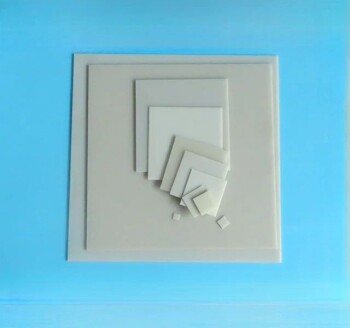
The alumina plate provides a defined, stable geometry, allowing the membrane to be manufactured to precise specifications suitable for specific reactor or filter housing designs.
Enabling Efficient Membrane Growth
Facilitating Seed Attachment
The utility of the alumina plate extends beyond simple physical support to the microscopic level.
The surface of the ceramic is engineered to provide specific attachment sites. These sites are essential for anchoring molecular sieve "seeds," acting as the nucleation points from which the functional layer grows.
Supporting Thin-Film Application
Because the ceramic plate handles the structural load, the active molecular sieve layer does not need to be self-supporting.
This allows the molecular sieve to be grown as a thin film rather than a thick barrier. This thin-film configuration is critical for maintaining high adsorption activity without wasting expensive materials.
Operational Benefits in Gas Processing
Reducing System Pressure Drop
A common challenge in gas processing is the resistance to flow (pressure drop) created by filtration media.
By utilizing an alumina-supported thin film, the system experiences significantly less resistance compared to traditional packed beds. This reduction in pressure drop is vital for maintaining efficiency during high-volume gas processing operations.
Understanding the Trade-offs
Surface Dependency
The success of the membrane is strictly tied to the quality of the alumina interface.
If the microscopic surface of the ceramic does not provide adequate or uniform sites for seed attachment, the molecular sieve layer may fail to grow continuously, compromising the membrane's performance.
Complexity of Preparation
Using a ceramic support introduces a multi-step preparation requirement.
Unlike simple packed beds, this method requires a precise process of seeding and growing the crystal layer onto the plate, necessitating stricter quality control than bulk material applications.
Making the Right Choice for Your Goal
When designing or selecting molecular sieve membranes, consider how the support interacts with your process parameters:
- If your primary focus is High-Volume Throughput: Prioritize alumina-supported thin films to minimize pressure drop and reduce energy costs associated with gas flow.
- If your primary focus is Mechanical Durability: Ensure the alumina ceramic plate is rated for the specific physical stresses and geometry of your reactor vessel.
The synergy between the robust alumina support and the active molecular sieve layer is the key to achieving high-efficiency separation with minimal operational resistance.
Summary Table:
| Feature | Function of Alumina Ceramic Support |
|---|---|
| Structural Role | Acts as a mechanical backbone/skeleton for fragile sieves |
| Geometry | Provides defined shapes for reactor and filter housing compatibility |
| Filtration Efficiency | Enables thin-film growth to minimize system pressure drop |
| Surface Chemistry | Facilitates seed attachment and uniform crystal nucleation |
| Industrial Benefit | Enhances durability under high-stress processing conditions |
Optimize Your Membrane Synthesis with KINTEK Precision
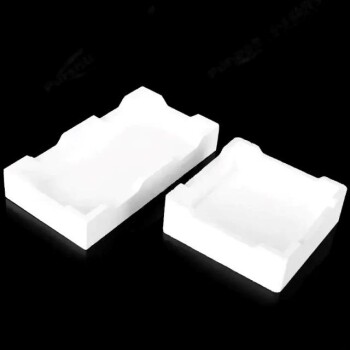
At KINTEK, we understand that high-performance molecular sieve membranes require the highest quality substrates. Whether you are developing thin-film filters or high-volume gas processing systems, our premium alumina ceramic plates and crucibles provide the thermal stability and surface integrity needed for successful membrane growth.
Our extensive portfolio supports your entire lab workflow, featuring:
- High-Temperature Furnaces (Muffle, Tube, Vacuum) for precise ceramic sintering.
- Crushing and Milling Systems for precursor preparation.
- Custom Ceramic Components tailored to your reactor geometry.
Enhance your research efficiency today. Contact our technical experts to find the perfect ceramic supports and laboratory solutions for your specific industrial application.
References
- Honda Wu. Particulate and membrane molecular sieves prepared to adsorb carbon dioxide in packed and staggered adsorber. DOI: 10.2298/ciceq170821007w
This article is also based on technical information from Kintek Solution Knowledge Base .
Related Products
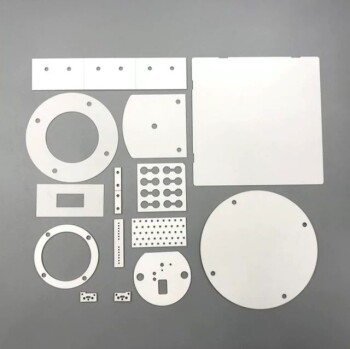
- Custom-Made Alumina Zirconia Special-Shaped Ceramic Plates for Engineering Advanced Fine Ceramics Processing
- High Temperature Wear-Resistant Alumina Al2O3 Plate for Engineering Advanced Fine Ceramics
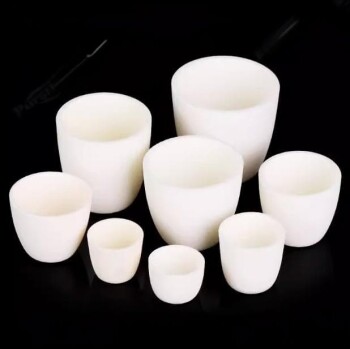
- Arc-Shaped Alumina Ceramic Crucible High Temperature Resistant for Engineering Advanced Fine Ceramics
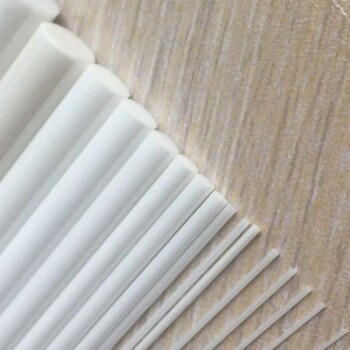
- Engineering Advanced Fine Alumina Al2O3 Ceramic Rod Insulated for Industrial Applications
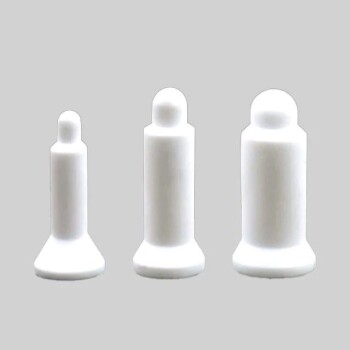
- Engineering Advanced Fine Alumina (Al₂O₃) Ceramic Positioning Pin Straight Bevel for Precision Applications
People Also Ask
- Why are ceramics more resistant to corrosion? Unlock the Secret to Unmatched Chemical Stability
- What are the process advantages of selecting an alumina plate for CuO nanofilm synthesis? Achieve Superior Purity
- How is alumina ceramic made? A Guide to Manufacturing Methods and Material Properties
- What are the applications of zirconia ceramics? Unlock High-Performance Solutions for Extreme Environments
- Why are alumina ceramic discs used as sample supports? Optimize Cathodic Cage Deposition Efficiency