Precision is the defining factor in magnesium powder production. Temperature controllers and thermocouples function as a unified, closed-loop system to regulate the resistance wire heating process in real-time. This combination is essential because it stabilizes metal vapor pressure, which is the direct driver of the evaporation rate.
The synergy between the thermocouple and the temperature controller is the only way to achieve the stable evaporation rate required for high-quality powder. Without this precise thermal regulation, you cannot effectively control the particle size or the uniformity of the final magnesium product.
The Mechanics of Closed-Loop Control
Real-Time Signal Collection
The thermocouple acts as the sensory system for the operation. It resides within the high-temperature environment, constantly collecting temperature data from the heating zone.
This data is not static; it captures fluctuations the instant they occur.
The Feedback Response
The temperature controller acts as the decision-making brain. It receives the real-time signals from the thermocouple and compares them against the setpoint.
If the temperature deviates even slightly, the controller adjusts the power to the resistance wires. This closed-loop control ensures that the system self-corrects immediately, rather than drifting over time.
Why Temperature Stability Determines Quality
Controlling Vapor Pressure
The fundamental physics of evaporation rely on the relationship between heat and pressure.
A constant temperature is required to maintain a specific metal vapor pressure. If the temperature fluctuates, the vapor pressure becomes unstable, leading to an erratic evaporation process.
Defining Particle Size
The evaporation rate is the primary variable that dictates the physical properties of the magnesium powder.
By locking in the temperature, you lock in the evaporation rate. This consistency is the only way to ensure the particle size meets specific requirements.
Ensuring Distribution Uniformity
Beyond just average size, the quality of powder is measured by how consistent the particles are with one another.
Accurate thermal control prevents spikes or drops in evaporation. This results in distribution uniformity, ensuring the final batch of ultrafine magnesium powder is homogeneous.
The High-Temperature Context
Managing Reactive Elements
This precise control happens within a harsh environment where molten metallic magnesium is held in a corundum crucible.
While the crucible provides chemical stability to prevent impurities, it relies on the thermal control system to maintain the correct state of the magnesium.
The Role of Stability
The entire system functions to keep the highly active magnesium liquid at a precise evaporation point.
Without the interplay of the controller and thermocouple, the inherent stability provided by the crucible would be wasted on an uncontrolled evaporation process.
Common Pitfalls to Avoid
The Danger of Open-Loop Systems
Attempting to control resistance heating without real-time feedback leads to inevitable quality issues.
Without the continuous loop between the thermocouple and controller, the evaporation rate will drift. This drift causes significant variance in particle size, rendering the powder unsuitable for high-precision applications.
Thermal Lag and Reaction Time
A common oversight is failing to account for the speed of the feedback loop.
If the thermocouple signals are delayed, or the controller response is sluggish, the vapor pressure will oscillate. This oscillation creates a "layered" effect in the product, where particle sizes vary within the same batch.
Optimizing Your Evaporation Process
To achieve the best results in magnesium powder production, align your control strategy with your specific quality metrics.
- If your primary focus is Particle Uniformity: Prioritize a high-speed temperature controller with a sensitive thermocouple to minimize thermal drift and lock in evaporation rates.
- If your primary focus is Process Repeatability: Ensure your closed-loop parameters are tuned effectively so that the vapor pressure remains identical across multiple production runs.
Mastering the feedback loop between your sensor and your controller is the definitive step toward producing consistent, high-purity ultrafine magnesium powder.
Summary Table:
| Feature | Component | Role in Magnesium Production |
|---|---|---|
| Sensing | Thermocouple | Real-time temperature data collection in high-heat zones. |
| Regulation | Temperature Controller | Adjusts power to resistance wires based on setpoint feedback. |
| Physics | Vapor Pressure | Stabilized by temperature consistency to ensure steady evaporation. |
| Quality | Particle Size | Controlled by precise evaporation rates to ensure uniformity. |
Elevate Your Powder Production with KINTEK Precision
Consistency in magnesium powder production starts with superior thermal regulation. KINTEK provides the advanced laboratory equipment necessary for high-precision materials research and production. From high-stability high-temperature furnaces (muffle, vacuum, and atmosphere models) to specialized corundum crucibles and temperature sensors, our tools are designed to provide the closed-loop control your process demands.
Whether you are refining particle size or scaling up production, KINTEK offers a comprehensive range of:
- High-Temperature Furnaces & Reactors
- Crushing and Milling Systems
- Hydraulic Pellet Presses
- Precision Cooling Solutions
Ready to achieve superior distribution uniformity? Contact our laboratory experts today to discover how KINTEK can optimize your evaporation and thermal processing workflows.
Related Products
- Laboratory Small Constant Temperature Heated Magnetic Stirrer Heater and Stirrer
- Double-Layer Water Bath Electrolytic Electrochemical Cell
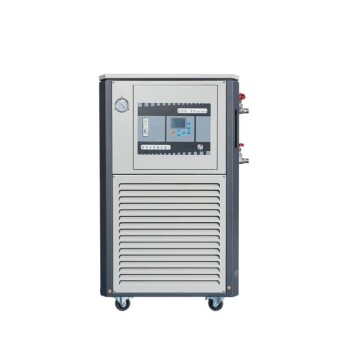
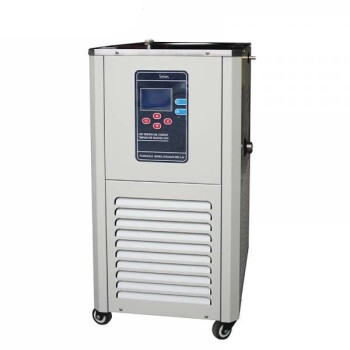
- 100L Heating Chilling Circulator Cooling Water Bath Circulator for High and Low Temperature Constant Temperature Reaction
- 10L Heating Chilling Circulator Cooling Water Bath Circulator for High and Low Temperature Constant Temperature Reaction
- 5L Heating Chilling Circulator Cooling Water Bath Circulator for High and Low Temperature Constant Temperature Reaction
People Also Ask
- What role does a magnetic stirrer with heating play in ZnO nanoparticle synthesis? Precision Control for Quality Results
- What role does a constant temperature heating magnetic stirrer play in MFC-HAp synthesis? Achieve Material Homogeneity
- What is the function of a laboratory magnetic stirrer in Ni–Cr–P electrodeposition? Optimize Ion Transport & Coating
- Why is a laboratory magnetic stirrer required for benzoic acid esters? Boost Reaction Speed & Yield with High RPM
- What role does a laboratory magnetic stirrer play in TiO2 and TiO2-Ag sol preparation? Master Chemical Kinetics