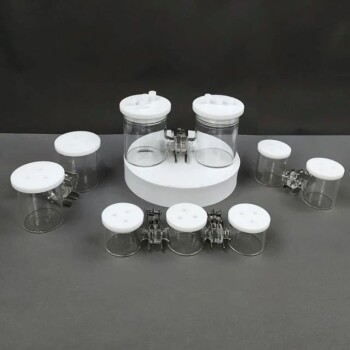
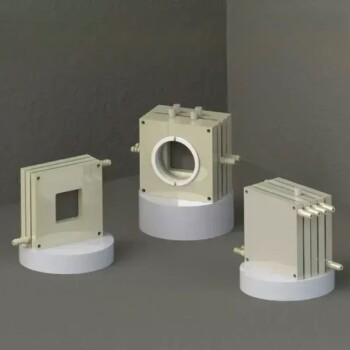
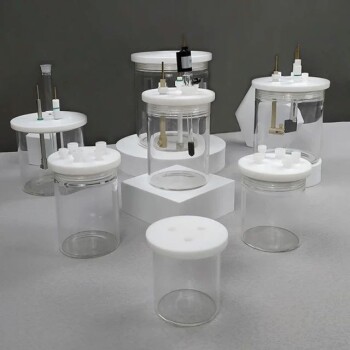
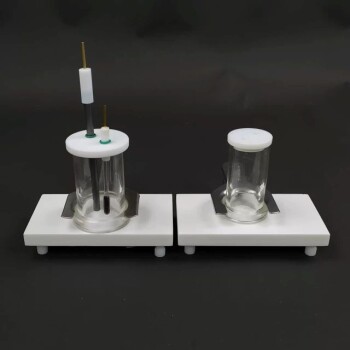
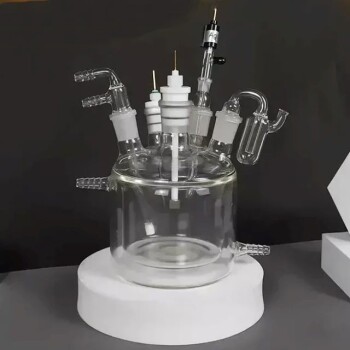
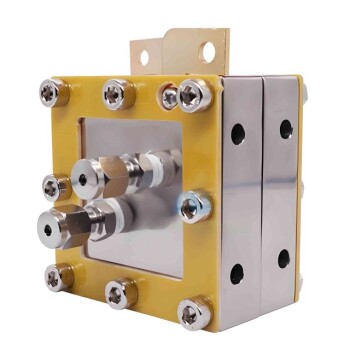
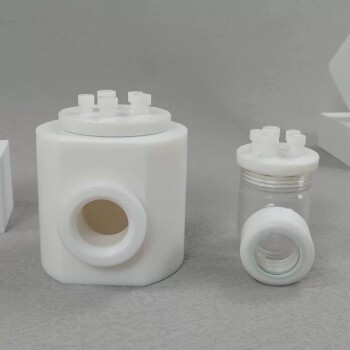
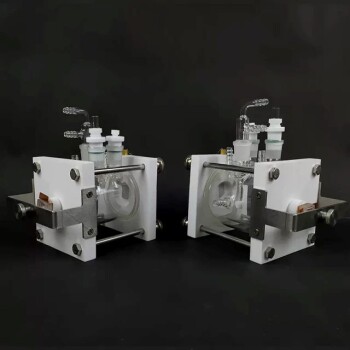
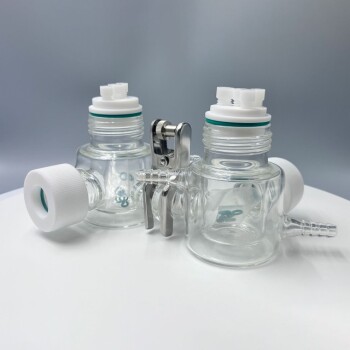
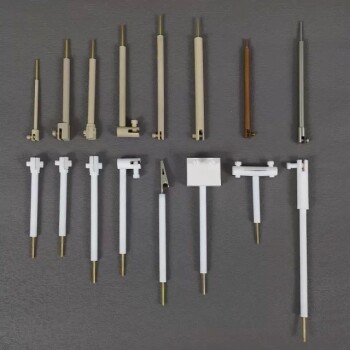
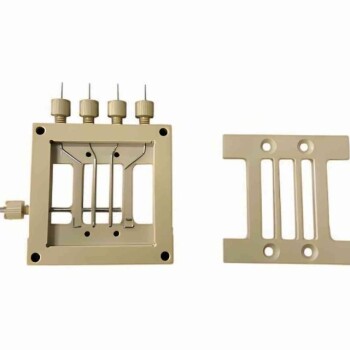
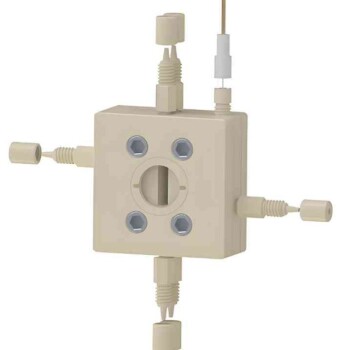
The configuration of the electrolytic cell and electrode system is the fundamental engine of graphene production. It provides the controlled ionic environment and precise electric field required to drive ions into the graphite lattice. This configuration determines the physical and chemical properties of the resulting graphene, including its flake size, defect density, and overall quality.
To achieve high-quality graphene, the electrolytic cell must act as a high-precision reactor that balances ionic conduction with electrical force. The configuration is critical because it dictates the intercalation speed and expansion stress, which ultimately defines the material’s performance in industrial applications.
The Role of the Electrolytic Cell in Environment Control
Establishing the Ionic Conduction Environment
The electrolytic cell serves as the vessel that maintains a stable electrochemical environment for the electrolyte solution. It ensures that ions, such as intercalation ions, are uniformly distributed and available for the exfoliation process.
Regulating Fluid Dynamics and Reaction Stability
A well-designed cell allows for the precise regulation of fluid dynamics, which influences how ions move toward the graphite surface. This stability is essential for preventing localized over-reactions that can lead to excessive oxidation or non-uniform exfoliation.
Supporting Integrated Electrode Systems
Beyond being a simple container, the cell structure allows the working electrode to maintain sufficient contact with the electrolyte and counter-electrodes. This integration is vital for facilitating the direct electron transfer and anodic oxidation required for successful layer separation.
Precision Engineering via the Electrode System
The Mechanics of Ion Intercalation
The electrode system, typically comprising a graphite working electrode, a platinum counter electrode, and a reference electrode, applies a targeted electric field. This field drives electrolyte ions into the interlayer spaces of the graphite, creating the expansion stress necessary to overcome van der Waals forces.
Tuning Physical Properties through Electrical Parameters
By utilizing high-precision potentiostat or galvanostat controls, operators can adjust current and voltage with extreme accuracy. This control allows for the "tuning" of the graphene’s defect density, oxidation degree, and grain size, which are critical for application-specific needs.
Impact on Material Performance
The precision of the electrode configuration directly impacts the anti-corrosion consistency and antimicrobial effectiveness of graphene-based composites. Accurate voltage application ensures that the graphene nanosheets are exfoliated to the desired thickness without compromising their structural integrity.
Understanding the Trade-offs
Yield vs. Material Quality
Increasing the applied voltage can accelerate the rapid exfoliation of graphite, leading to higher production yields. However, this often comes at the cost of higher defect density and increased oxidation, which may impair the electrical conductivity of the final product.
Intercalation Speed vs. Structural Integrity
While high expansion stress facilitates faster separation of layers, it can also lead to the fragmentation of nanosheets. Smaller grain sizes may be beneficial for certain coatings but can be detrimental if the goal is to maintain the high aspect ratio of the graphene flakes.
Equipment Complexity vs. Process Control
Implementing a three-electrode system with a reference electrode provides the highest level of process transparency and repeatability. The trade-off is a more complex and expensive setup compared to simpler two-electrode configurations, which may suffice for less demanding applications.
Making the Right Choice for Your Goal
To optimize your electrochemical exfoliation process, align your configuration with the intended use of the graphene.
- If your primary focus is high-performance anti-corrosion coatings: Prioritize low-defect density by using precise voltage control and a stable three-electrode system to maintain structural integrity.
- If your primary focus is large-scale industrial throughput: Focus on electrolytic cell designs that optimize fluid dynamics and higher current densities to maximize exfoliation speed.
- If your primary focus is antimicrobial or silver-graphene composites: Utilize a cell configuration that allows for the simultaneous reduction of metal precursors and in situ growth on the graphene substrate.
Mastering the synergy between the electrolytic environment and electrical parameters is the only way to transform raw graphite into a high-value, engineered nanomaterial.
Summary Table:
| Component/Factor | Primary Function | Impact on Graphene Quality |
|---|---|---|
| Electrolytic Cell | Maintains stable ionic environment & fluid dynamics | Ensures uniform exfoliation and prevents localized over-oxidation. |
| Electrode System | Drives ion intercalation via precise electric fields | Dictates expansion stress, layer thickness, and structural integrity. |
| Precision Control | Regulates voltage and current (Potentiostat) | Tunes defect density, grain size, and electrical conductivity. |
| System Complexity | Three-electrode vs. Two-electrode setup | Provides process transparency and repeatability for high-grade material. |
Elevate Your Nanomaterial Research with KINTEK Precision
Achieving high-quality graphene requires more than just chemistry—it requires the highest level of engineering precision. At KINTEK, we specialize in providing researchers and industrial manufacturers with the advanced tools necessary to master electrochemical processes.
Our comprehensive portfolio is designed to meet the rigorous demands of modern laboratories, featuring:
- Advanced Electrolytic Cells & Electrodes: Engineered for stable ionic conduction and precise field application.
- High-Temperature & Pressure Systems: Including muffle, tube, and vacuum furnaces, alongside high-pressure reactors and autoclaves.
- Material Processing Tools: Precision hydraulic presses, crushing/milling systems, and sieving equipment for consistent sample preparation.
- Specialized Research Consumables: High-purity PTFE products, ceramics, and crucibles to ensure contamination-free results.
Whether you are focusing on anti-corrosion coatings, battery research, or antimicrobial composites, KINTEK provides the reliability and expertise you need to scale your innovation.
Ready to optimize your exfoliation process? Contact our technical experts today to find the perfect equipment configuration for your laboratory goals!
References
- Tao Liu, Xiaosong Jiang. Recent progress on corrosion mechanisms of graphene-reinforced metal matrix composites. DOI: 10.1515/ntrev-2022-0566
This article is also based on technical information from Kintek Solution Knowledge Base .
Related Products
- H Type Electrolytic Cell Triple Electrochemical Cell
- Electrolytic Electrochemical Cell Gas Diffusion Liquid Flow Reaction Cell
- Electrolytic Electrochemical Cell with Five-Port
- Super Sealed Electrolytic Electrochemical Cell
- PTFE Electrolytic Cell Electrochemical Cell Corrosion-Resistant Sealed and Non-Sealed
People Also Ask
- What is a H type cell? A Guide to Divided Electrochemical Cells for Accurate Experiments
- How should the electrolyte be prepared and added to the H-type electrolytic cell? Best Practices for Purity and Safety
- What is the technical necessity of using an H-type electrolytic cell for NO3RR tests? Protect Your Ammonia Yields
- How does the design of an H-type electrolytic cell benefit the neutral water electrolysis process for metal recovery?
- What is the primary function of an H-type electrolytic cell in NitRR? Ensure Accurate Product Yields