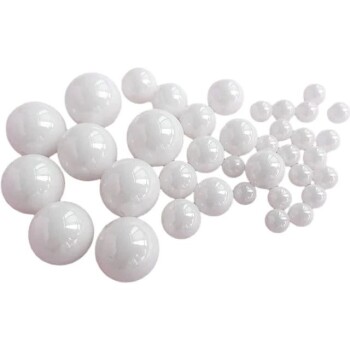
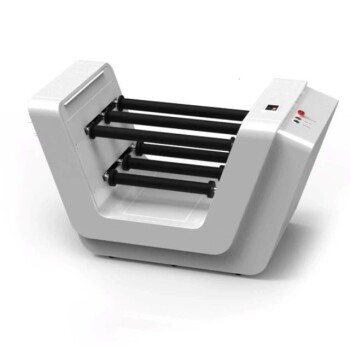
Zirconia grinding media is the definitive choice for LiFePO4 (LFP) processing because it solves the dual challenges of contamination control and energy efficiency. Its exceptional hardness and chemical stability prevent the introduction of metallic impurities that degrade battery performance, while its high density provides the necessary impact energy to effectively pulverize hard raw materials.
Core Insight: The primary driver for using zirconia over alternative media like stainless steel is chemical inertness. In battery chemistry, even trace amounts of metallic contamination (such as iron filings) can ruin phase purity and cause electrochemical failure, making zirconia’s wear resistance essential for product integrity.
Preserving Electrochemical Purity
Eliminating Metallic Impurities
The most critical risk in grinding LiFePO4 precursors is contamination. Traditional grinding media, such as stainless steel, inevitably wear down during the milling process.
This wear introduces metallic contaminants, specifically iron or chromium filings, into the powder mixture. Zirconia is chemically inert, ensuring that no foreign metals are introduced that could alter the phase purity of the final material.
Preventing Side Reactions
High purity is not just a specification; it is a functional requirement. Metallic impurities can trigger unwanted side reactions during the battery's electrochemical cycling.
By using zirconia jars and balls, you ensure the electrochemical stability of the LiFePO4. This directly protects the material from performance degradation and helps maintain the correct chemical stoichiometric ratio.
Maximizing Grinding Efficiency
The Advantage of High Density
LiFePO4 raw materials can be hard and difficult to break down effectively. Light-weight ceramics often lack the mass required to crush these particles efficiently.
Zirconia has a high density, which translates into greater kinetic energy during the milling process. This provides high-impact energy to the powder, accelerating the breakdown of particles and promoting necessary structural changes, such as amorphization.
Superior Wear Resistance
Ball milling often requires long durations of high-speed impact to achieve the desired particle size.
Zirconia possesses extreme hardness and wear resistance. This ensures the media retains its shape and mass over long cycles, maintaining consistent grinding efficiency without shedding "media sludge" into your product.
Understanding the Trade-offs
Cost vs. Performance
Zirconia is significantly more expensive than standard steel or alumina grinding media.
However, this upfront cost is generally viewed as a necessary investment for battery-grade materials. The cost of a failed batch of LiFePO4 due to iron contamination far outweighs the savings on grinding media.
Handling and Brittleness
While zirconia is hard, it is a ceramic and therefore brittle compared to metal.
Care must be taken during handling to avoid dropping the jars or balls on hard surfaces, which can cause cracking. Unlike steel, which dents, zirconia may fracture under specific types of mechanical shock outside of the milling environment.
Making the Right Choice for Your Goal
To ensure you select the correct configuration for your project:
- If your primary focus is Electrochemical Performance: You must use high-purity zirconia to absolutely prevent metallic iron contamination that causes short circuits or capacity loss.
- If your primary focus is Processing Speed: Utilize high-density zirconia balls (rather than lower-density alumina) to maximize impact energy and reduce total milling time.
Ultimately, zirconia is not just a grinding tool; it is a quality assurance mechanism that safeguards the phase purity and longevity of your LiFePO4 cathode material.
Summary Table:
| Feature | Zirconia Media | Stainless Steel | Impact on LiFePO4 Processing |
|---|---|---|---|
| Chemical Purity | Inert & Non-metallic | Risks Metal Contamination | Prevents short circuits and capacity loss |
| Density | High (~6.0 g/cm³) | High (~7.8 g/cm³) | Provides high-impact energy for hard powders |
| Wear Resistance | Excellent | Moderate to Low | Maintains consistent particle size distribution |
| Media Hardness | Very High | High | Ensures long-term durability without media sludge |
| Cost-Benefit | Higher initial cost | Lower initial cost | Protects high-value battery-grade material batches |
Elevate Your Battery Material Processing with KINTEK
Don't let metallic contamination compromise your LiFePO4 performance. KINTEK specializes in high-performance laboratory solutions designed for precision and durability. Our high-density zirconia grinding jars and balls ensure the highest phase purity for your cathode materials, while our comprehensive range of crushing and milling systems, high-temperature furnaces, and planetary ball mills provides the power you need for superior particle size reduction.
From battery research tools and consumables to high-pressure reactors and PTFE products, KINTEK is your trusted partner in advanced material science. Contact us today to discover how our specialized equipment can optimize your laboratory workflow and safeguard your product integrity!
Related Products
- Laboratory Jar Ball Mill with Alumina Zirconia Grinding Jar and Balls
- Precision Machined Zirconia Ceramic Ball for Engineering Advanced Fine Ceramics
- Laboratory Jar Mill with Agate Grinding Jar and Balls
- Laboratory Ball Mill Jar Mill with Metal Alloy Grinding Jar and Balls
- Laboratory Ten-Body Horizontal Jar Mill for Lab Use
People Also Ask
- What are the primary functions of using a ball mill for BZCY72 powder? Achieve High Purity and Enhanced Sintering
- In what way does a laboratory ball mill affect material properties when modifying PHBV/pulp fiber composites?
- Why is a laboratory ball mill required for ultra-fine fly ash? Unlock Nano-Scale Adsorption Power
- What is the function of a laboratory ball mill in the preparation of AMMCs? Optimize Dispersion & Grain Refinement
- What is the function of a laboratory ball mill in the pretreatment of waste tire char (WTC)? Optimize Material Reactivity