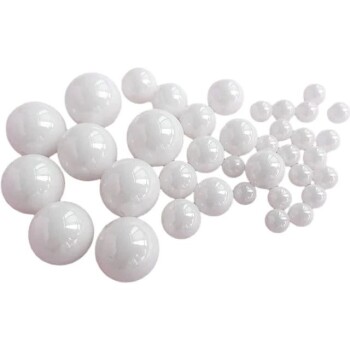
The preferred choice of zirconia (zirconium oxide) grinding jars and balls for preparing NaTaCl6 and Na3PS4 solid-state electrolyte powders stems from a critical balance of high density and chemical inertness. This material combination generates the necessary impact force to synthesize the electrolyte while completely eliminating the risk of metallic contamination that would degrade electrochemical performance.
Core Takeaway Solid-state electrolytes like NaTaCl6 and Na3PS4 require high-energy milling to achieve specific structural properties but are highly sensitive to impurities. Zirconia is the industry standard because its high density delivers the required kinetic energy for synthesis, while its chemical stability prevents the introduction of fatal metallic contaminants like iron or chromium.
The Role of Density in Mechanochemical Synthesis
Generating Impact Kinetic Energy
Preparing electrolytes like NaTaCl6 and Na3PS4 often requires mechanochemical synthesis to achieve amorphization or alloying. This process relies on the transfer of significant kinetic energy from the grinding media to the powder.
Why Zirconia Outperforms Lighter Materials
Zirconia is a high-density ceramic. High-density grinding balls carry more momentum than lighter alternatives (like agate or alumina) when moving at the same speed. This provides the sufficient impact force needed to pulverize precursors and drive the chemical reactions required to form the final electrolyte phase.
Ensuring Electrochemical Purity
Eliminating Metallic Contamination
The most significant threat to solid-state electrolytes is metallic impurity. Traditional stainless steel jars and balls introduce iron and chromium particles due to abrasive wear during milling. Even trace amounts of these metals can cause side reactions or internal short circuits in a battery cell.
Chemical Inertness and Stability
Zirconia is chemically inert and offers superior wear resistance. It does not react with the highly reactive sulfide (Na3PS4) or chloride (NaTaCl6) precursors. By using zirconia, you ensure that the powder remains free of conductive contaminants, preserving the material's high ionic conductivity and electrochemical stability.
Protecting Moisture-Sensitive Materials
Solid-state electrolytes are frequently sensitive to air and moisture. Zirconia’s stability ensures it does not act as a catalyst for degradation or introduce oxides that could react with the moisture-sensitive electrolyte powder during the long durations of high-energy milling.
Common Pitfalls and Considerations
The "Steel" Mistake
A common error in electrolyte preparation is defaulting to stainless steel milling media due to its lower cost and availability. While steel is dense enough to mill the powder, the metallic abrasion is inevitable. For electrolytes like NaTaCl6 and Na3PS4, this contamination is often fatal to performance, rendering the material unusable for high-precision electrochemical testing.
Understanding Wear Products
No grinding media is completely immune to wear. However, the advantage of zirconia is that if minute amounts of zirconia dust are introduced into the mixture, they are electrically insulating and chemically stable. Unlike conductive metal particles, trace zirconia is far less likely to interfere with the electrolyte's function or cause shorting.
Making the Right Choice for Your Goal
When selecting milling equipment for solid-state battery research, the material choice dictates the validity of your results.
- If your primary focus is Ionic Conductivity: Choose zirconia to prevent metallic impurities that impede ion flow and degrade performance.
- If your primary focus is Synthesis Efficiency: Choose zirconia (specifically high-density variants) to maximize impact energy and reduce the milling time required to achieve amorphization.
- If your primary focus is Electrochemical Stability: Avoid stainless steel entirely; use zirconia to ensure no conductive contaminants trigger side reactions during cycling.
For NaTaCl6 and Na3PS4, zirconia is not just an option; it is a prerequisite for obtaining reliable, high-purity data.
Summary Table:
| Feature | Zirconia (ZrO2) | Stainless Steel | Agate/Alumina |
|---|---|---|---|
| Density | High (5.68 - 6.0 g/cm³) | High (7.7 - 8.0 g/cm³) | Low to Medium |
| Contamination Risk | Minimal (Insulating) | High (Conductive Metal) | Low (Silica/Alumina) |
| Chemical Inertness | Excellent | Prone to Oxidation | Good |
| Impact Energy | High - ideal for synthesis | High | Low - inefficient |
| Best For | Solid-state electrolytes | General materials | Soft powders |
Elevate Your Solid-State Battery Research with KINTEK
Don't let metallic contamination compromise your ionic conductivity results. KINTEK specializes in premium laboratory equipment designed for the most sensitive materials. Whether you are synthesizing NaTaCl6, Na3PS4, or other advanced solid-state electrolytes, our high-density zirconia grinding jars and balls provide the perfect balance of kinetic energy and chemical purity.
Our comprehensive range for battery research includes:
- High-performance crushing and milling systems (including zirconia, alumina, and agate options).
- High-pressure reactors and autoclaves for advanced synthesis.
- Precision hydraulic presses for pellet preparation.
- Glovebox-compatible furnace systems (tube, muffle, and vacuum).
Ensure the integrity of your research today. Contact our technical experts at KINTEK to find the ideal milling solution and consumables for your specific electrolyte chemistry!
Related Products
- Laboratory Jar Ball Mill with Alumina Zirconia Grinding Jar and Balls
- Precision Machined Zirconia Ceramic Ball for Engineering Advanced Fine Ceramics
- Laboratory Jar Mill with Agate Grinding Jar and Balls
- Laboratory Ball Mill Jar Mill with Metal Alloy Grinding Jar and Balls
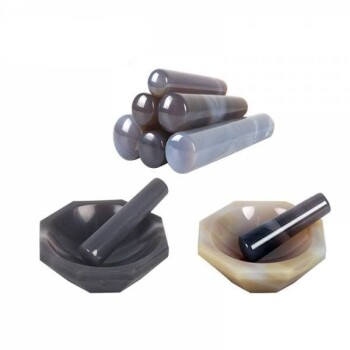
- Nature Agate Mortar and Pestle for Grinding and Mixing
People Also Ask
- What are the primary functions of using a ball mill for BZCY72 powder? Achieve High Purity and Enhanced Sintering
- In what way does a laboratory ball mill affect material properties when modifying PHBV/pulp fiber composites?
- Why is a laboratory ball mill required for ultra-fine fly ash? Unlock Nano-Scale Adsorption Power
- What is the function of a laboratory ball mill in the preparation of AMMCs? Optimize Dispersion & Grain Refinement
- What is the function of a laboratory ball mill in the pretreatment of waste tire char (WTC)? Optimize Material Reactivity