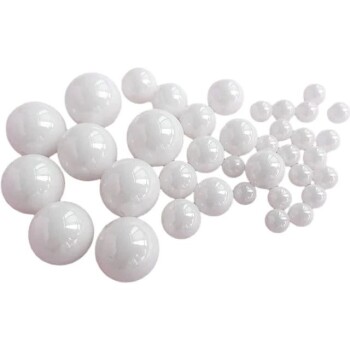
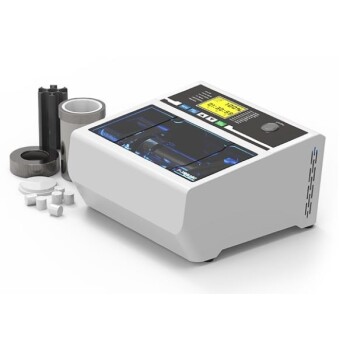
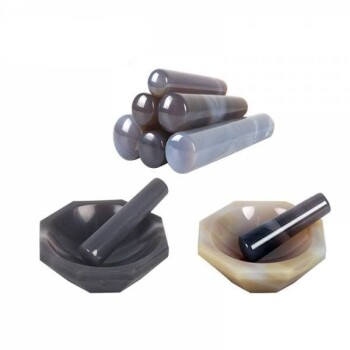
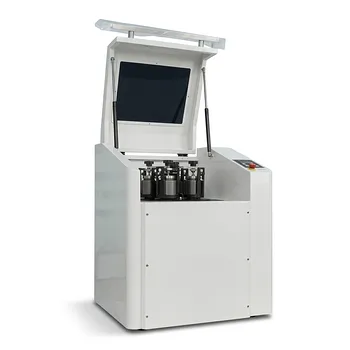
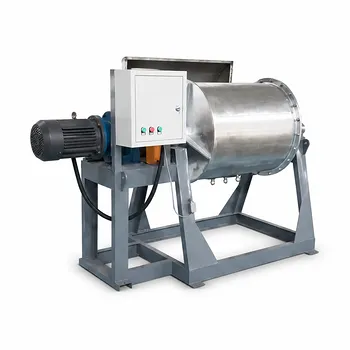
Zirconia milling jars and grinding balls are the industry standard for $FeVTaO_6$ synthesis because of their unique combination of mechanical toughness and chemical stability. By utilizing zirconia’s extreme hardness and wear resistance, researchers can effectively eliminate the introduction of metallic or ceramic impurities that typically occur during high-energy ball milling. This ensures the final $FeVTaO_6$ product achieves maximum phase purity while maintaining the efficient transfer of grinding energy required to drive the mechanochemical reaction.
The mechanochemical synthesis of $FeVTaO_6$ relies on the precise balance of high-energy impact and material purity; zirconia satisfies both by providing a durable, non-reactive environment that preserves the chemical integrity of the complex oxide lattice.
The Role of Mechanical Integrity in $FeVTaO_6$ Synthesis
Maximizing Energy Transfer Through High Hardness
The synthesis of $FeVTaO_6$ requires significant kinetic energy to induce the necessary lattice distortions and solid-phase reactions between precursors. Zirconia’s extreme hardness allows the grinding balls to deliver intense impacts without deforming. This ensures that the energy from the milling machine is efficiently converted into the chemical work needed to form the tri-rutile structure.
Mitigating Abrasive Wear and Contamination
During prolonged high-energy milling, standard media often shed microscopic particles due to abrasive wear. Zirconia’s superior wear resistance minimizes the loss of media material even at high rotational speeds. This is critical for $FeVTaO_6$, as even trace amounts of foreign debris can alter the stoichiometric balance and degrade the material's properties.
Facilitating High-Speed Processing
The structural integrity of zirconia allows it to withstand high centrifugal forces, often exceeding 400 to 550 rpm. This capability is essential for achieving the molecular-level mixing required for complex oxides. By maintaining its shape and surface finish under stress, zirconia ensures consistent milling performance throughout the synthesis cycle.
Chemical Stability in High-Energy Environments
Preventing Side Reactions with $ZrO_2$ Inertness
Mechanochemical synthesis often generates localized heat and high pressure at the points of impact. Zirconia is chemically inert, meaning it will not react with iron, vanadium, or tantalum precursors during the process. This stability prevents the formation of unintended secondary phases, ensuring a clean transformation into the target $FeVTaO_6$ compound.
Maintaining Phase Purity in Sensitive Systems
The electronic and magnetic properties of $FeVTaO_6$ are highly sensitive to the presence of metallic contaminants like iron from steel jars or alumina from lower-grade ceramics. Using zirconia consumables provides a non-metallic environment that is particularly important for air-sensitive or high-purity electronic ceramics. It allows for the production of nanopowders that meet strict experimental specifications.
Understanding the Trade-offs
The Cost-to-Performance Ratio
Zirconia is significantly more expensive than stainless steel or alumina media. While the initial investment is higher, the extended lifespan and reduced risk of failed batches due to contamination often justify the cost in precision synthesis. However, for low-requirement bulk processing, the expense may be a limiting factor.
Density and Impact Force
While zirconia is dense, it is less dense than tungsten carbide. In specific applications requiring the absolute maximum impact force, tungsten carbide might be faster, but it carries a much higher risk of metallic contamination. Zirconia represents the "sweet spot" for most researchers, offering sufficient density with far better chemical cleanliness.
Thermal Shock Sensitivity
Although zirconia is incredibly tough, it can be sensitive to rapid temperature fluctuations. In extremely high-energy milling setups where cooling is insufficient, users must be cautious of thermal stress that could lead to cracking in the milling jars.
How to Apply This to Your Project
When selecting your milling setup for $FeVTaO_6$ or similar complex oxides, your choice should align with your specific purity and energy requirements.
- If your primary focus is maximum chemical purity: Always prioritize zirconia (YSZ) media to eliminate metallic debris and ensure a clean solid-state reaction.
- If your primary focus is reducing synthesis time: Opt for high-density zirconia balls and utilize higher RPM settings, as the material's hardness can handle the increased kinetic energy.
- If your primary focus is long-term durability: Inspect zirconia jars regularly for micro-cracks, especially after high-heat cycles, to ensure the structural integrity of your milling environment.
By choosing zirconia, you are investing in a controlled chemical environment that translates directly into more reliable and reproducible material data.
Summary Table:
| Key Property | Benefit for Synthesis | Impact on Final Product |
|---|---|---|
| Extreme Hardness | Efficient energy transfer | Drives necessary solid-phase reactions |
| Superior Wear Resistance | Minimal media erosion | Eliminates metallic and ceramic impurities |
| Chemical Inertness | Non-reactive environment | Prevents unintended secondary phases |
| High Structural Integrity | Supports speeds >400 RPM | Ensures consistent, molecular-level mixing |
Elevate Your Material Synthesis with KINTEK Precision
Achieve uncompromising purity in your mechanochemical processes with KINTEK’s high-performance laboratory solutions. We specialize in providing the tools essential for advanced research, from crushing and milling systems and zirconia grinding media to high-temperature furnaces (muffle, vacuum, CVD) and hydraulic presses.
Whether you are synthesizing complex oxides like $FeVTaO_6$, developing battery technologies, or conducting high-pressure reactions, KINTEK offers a comprehensive range of equipment—including high-temperature high-pressure reactors, centrifuges, and specialized ceramics—designed to ensure reproducible, high-quality results.
Ready to optimize your lab's efficiency? Contact our technical experts today!
References
- E. Filipek, Maciej Zubko. New FeVTaO6 compound—synthesis, structure and selected properties. DOI: 10.1007/s10853-023-09168-x
This article is also based on technical information from Kintek Solution Knowledge Base .
Related Products
- Laboratory Jar Ball Mill with Alumina Zirconia Grinding Jar and Balls
- Laboratory Jar Mill with Agate Grinding Jar and Balls
- Laboratory Ball Mill Jar Mill with Metal Alloy Grinding Jar and Balls
- Precision Machined Zirconia Ceramic Ball for Engineering Advanced Fine Ceramics
- Laboratory Four-Body Horizontal Jar Mill
People Also Ask
- What are the primary functions of using a ball mill for BZCY72 powder? Achieve High Purity and Enhanced Sintering
- In what way does a laboratory ball mill affect material properties when modifying PHBV/pulp fiber composites?
- Why is a laboratory ball mill required for ultra-fine fly ash? Unlock Nano-Scale Adsorption Power
- What is the function of a laboratory ball mill in the preparation of AMMCs? Optimize Dispersion & Grain Refinement
- What is the function of a laboratory ball mill in the pretreatment of waste tire char (WTC)? Optimize Material Reactivity