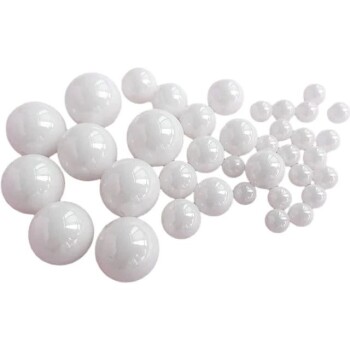
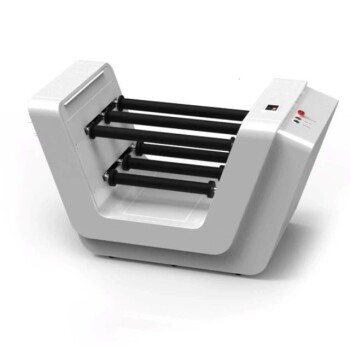
The primary purpose of using a ball mill with zirconia media is to achieve aggressive physical refinement while maintaining absolute chemical purity. This specific setup uses high-energy mechanical impact to thoroughly mix the BZCY72 powder with a 1 wt% Zinc Oxide (ZnO) sintering aid. Simultaneously, the wear-resistant zirconia components prevent the introduction of metallic contaminants that would otherwise degrade the electrolyte's performance.
Core Insight Utilizing zirconia grinding media transforms the preparation of BZCY72 from a simple mixing step into a critical quality control process. It enables the creation of a highly active, uniform powder necessary for dense sintering, while acting as a barrier against the metallic impurities that commonly ruin electrochemical stability.
Mechanisms of Physical Refinement
Achieving Homogeneity with Sintering Aids
The ball mill does not merely blend the powders; it forces a deep, uniform distribution of components.
In the case of BZCY72, this is critical for integrating the 1 wt% Zinc Oxide (ZnO) sintering aid. The high-energy impact ensures the ZnO is evenly dispersed throughout the electrolyte matrix, which is a prerequisite for successful sintering in later stages.
Enhancing Sintering Activity
The mechanical force of the milling process significantly refines the powder particles.
By breaking down the raw material, the process increases the specific surface area of the powder. This elevated surface area directly translates to improved sintering activity, allowing the particles to bond more effectively during heat treatment.
Ensuring Microstructural Uniformity
A consistent electrolyte structure begins with a consistent powder.
The milling process eliminates agglomeration—clumps of particles that cause defects. This ensures that the final electrolyte possesses a uniform microstructure, which is essential for consistent ionic conductivity and mechanical strength.
The Role of Zirconia in Contamination Control
Preventing Metallic Contamination
Standard stainless steel grinding media sheds microscopic metallic particles (such as iron or chromium) due to wear.
Zirconia is chemically inert and prevents this metallic introduction. Keeping the BZCY72 powder free of these impurities is vital, as metallic contaminants can trigger side reactions or cause performance degradation during electrochemical cycling.
Leveraging Extreme Hardness
Zirconia is selected for its superior hardness and wear resistance.
The material can withstand the long durations and high-energy impacts of the milling process without degrading. This ensures that the grinding media itself does not break down and pollute the electrolyte powder with heterogeneous impurities.
Understanding the Trade-offs
Impact Energy vs. Material Density
While zirconia is dense and hard, it interacts differently than metallic media.
Zirconia provides sufficient impact energy to refine the powder and promote necessary phase changes (such as amorphization in some contexts). However, because it avoids the "smearing" effect of softer metals, it relies entirely on brittle fracture and impact to reduce particle size.
Cost and Sensitivity
High-purity zirconia media represents a higher upfront investment compared to standard steel balls.
However, this cost is a necessary trade-off for BZCY72 preparation. The sensitivity of this electrolyte to contamination means that using cheaper, less wear-resistant media would likely result in a batch of powder that is technically unusable for high-performance applications.
Making the Right Choice for Your Goal
To maximize the quality of your BZCY72 electrolyte, align your processing parameters with your specific requirements:
- If your primary focus is densification: Ensure the milling duration is sufficient to thoroughly disperse the ZnO sintering aid, as this directly controls the final density of the ceramic.
- If your primary focus is electrochemical purity: Prioritize the inspection of your zirconia jars and balls for cracks before use to ensure no debris contaminates the mixture during high-energy impact.
- If your primary focus is microstructure: Monitor the particle size distribution after milling to verify that agglomerates have been fully broken down before moving to the sintering phase.
The correct application of zirconia ball milling is the single most effective step to ensure your BZCY72 powder is both chemically pure and physically primed for sintering.
Summary Table:
| Feature | Function in BZCY72 Preparation | Benefit to Electrolyte |
|---|---|---|
| Zirconia Media | High wear resistance & chemical inertness | Prevents metallic contamination (Fe, Cr) |
| High-Energy Impact | Physical refinement and de-agglomeration | Increases surface area and sintering activity |
| Mixing Action | Uniform distribution of 1 wt% ZnO aid | Ensures dense sintering and uniform microstructure |
| Mechanical Force | Breaking down raw particle clusters | Enhances ionic conductivity and mechanical strength |
Elevate Your Materials Research with KINTEK Precision
Don't let impurities compromise your electrochemical performance. KINTEK specializes in advanced laboratory equipment and consumables designed for high-performance ceramic synthesis. Whether you are preparing BZCY72 electrolyte powders or developing next-generation batteries, our comprehensive range of products ensures absolute control over your process:
- Crushing & Milling Systems: High-purity zirconia jars and grinding balls to eliminate metallic contamination.
- High-Temperature Solutions: Muffle, tube, and vacuum furnaces for precise sintering and phase control.
- Sample Preparation: Hydraulic pellet presses, isostatic presses, and high-quality crucibles.
- Specialized Equipment: High-temperature high-pressure reactors, autoclaves, and electrolytic cells for rigorous testing.
Achieve superior density and chemical purity in your research today. Contact KINTEK for a customized solution and see how our expertise in laboratory consumables can optimize your results.
References
- Shay A. Robinson, Truls Norby. Comparison of Cu and Pt point-contact electrodes on proton conducting BaZr0.7Ce0.2Y0.1O3−. DOI: 10.1016/j.ssi.2017.02.014
This article is also based on technical information from Kintek Solution Knowledge Base .
Related Products
- Laboratory Jar Ball Mill with Alumina Zirconia Grinding Jar and Balls
- Laboratory Ball Mill Jar Mill with Metal Alloy Grinding Jar and Balls
- Laboratory Jar Mill with Agate Grinding Jar and Balls
- Precision Machined Zirconia Ceramic Ball for Engineering Advanced Fine Ceramics
- Laboratory Four-Body Horizontal Jar Mill
People Also Ask
- In what way does a laboratory ball mill affect material properties when modifying PHBV/pulp fiber composites?
- Why is a laboratory ball mill required for ultra-fine fly ash? Unlock Nano-Scale Adsorption Power
- What is the function of a laboratory ball mill in the preparation of AMMCs? Optimize Dispersion & Grain Refinement
- What is the function of a laboratory ball mill in the pretreatment of waste tire char (WTC)? Optimize Material Reactivity
- Why is a laboratory ball mill used in Co-Ni catalyst research? Optimize CO2 Conversion with Precise Milling