Knowledge Why is a benchtop mechanical shaker or stirring device required before initiating photocatalytic degradation experiments?
Author avatar

Tech Team · Kintek Solution

Updated 2 days ago

Why is a benchtop mechanical shaker or stirring device required before initiating photocatalytic degradation experiments?


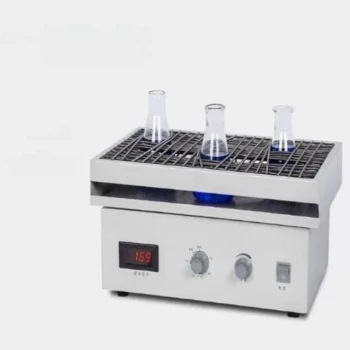
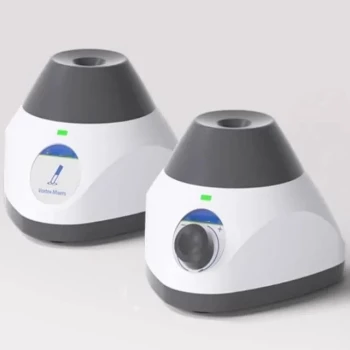
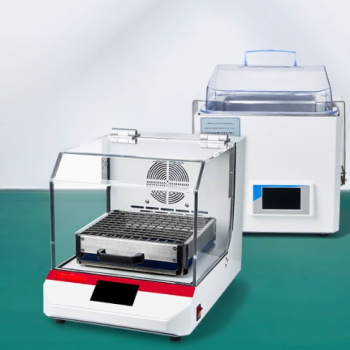
A benchtop mechanical shaker or stirring device is essential before initiating photocatalytic degradation to achieve adsorption-desorption equilibrium between the catalyst and the target pollutant. By agitating the mixture under dark conditions, you ensure that the active sites on the catalyst surface are fully saturated with dye molecules before any light triggers the chemical reaction.

Core Takeaway The primary purpose of pre-experiment stirring is to isolate physical adsorption from chemical degradation. Without this step, the initial drop in pollutant concentration would be falsely attributed to photocatalytic activity, resulting in scientifically inaccurate degradation rates.

The Necessity of Adsorption-Desorption Equilibrium

Defining the Baseline

Before a photocatalytic reaction can be accurately measured, the system must reach a stable state. You must mix the nanoparticles with the dye solution (such as methylene blue) in the absence of light.

Saturating Active Sites

The catalyst surface contains specific "active sites" where the reaction occurs. Physical agitation ensures the pollutant molecules have sufficient contact time to physically adhere to these sites.

Isolating Variables

If you activate the light source immediately, the catalyst will simultaneously adsorb the dye and degrade it. This makes it impossible to distinguish how much pollutant was destroyed versus how much simply stuck to the catalyst surface.

Optimizing Hydrodynamics and Contact

Eliminating Mass Transfer Limitations

Diffusion alone is often too slow to transport pollutant molecules to the catalyst surface effectively. Mechanical stirring creates forced convection, removing liquid-phase mass transfer resistance and ensuring molecules reach the nanofiber or particle surface.

Preventing Agglomeration and Sedimentation

Nanopowders, such as titanium dioxide, naturally tend to clump together or settle at the bottom of the reactor. Continuous agitation keeps the catalyst in a uniform suspension state.

Maximizing Effective Surface Area

By preventing sedimentation, stirring ensures the maximum possible surface area is exposed to the solution. This guarantees that the light-receiving area is not compromised by particle clustering.

Common Pitfalls and Trade-offs

The Risk of "False Efficiency"

If you skip the dark adsorption phase, your initial data points will show a rapid decrease in concentration. This is often misinterpreted as highly efficient degradation, leading to inflated and unreproducible performance metrics.

Shear Force Considerations

While vigorous stirring is necessary, it is important to maintain a constant shear force. This prevents the accumulation of reaction products or passivation films on the alloy surface, which could otherwise block active sites and slow the reaction over time.

Making the Right Choice for Your Experiment

To ensure your data withstands peer review and reflects true chemical kinetics, follow these guidelines:

  • If your primary focus is determining True Reaction Kinetics: You must stir in the dark until the concentration stabilizes (equilibrium) to subtract the adsorption effect from your final calculation.
  • If your primary focus is Catalyst Durability: Ensure your stirring speed prevents sedimentation but does not mechanically degrade or pulverize the catalyst structure over long durations.

Establish a stable physical baseline in the dark to ensure your light-phase data represents true chemical potential.

Summary Table:

Feature Purpose in Pre-Experiment Phase Benefit to Research Accuracy
Adsorption-Desorption Reaches equilibrium between catalyst & pollutant Isolates physical adsorption from chemical degradation
Mechanical Agitation Eliminates mass transfer resistance Ensures pollutant molecules reach catalyst active sites
Suspension Control Prevents catalyst agglomeration & sedimentation Maintains maximum effective surface area and light exposure
Dark Environment Establishes a stable concentration baseline Prevents 'False Efficiency' by excluding light-triggered reactions

Elevate Your Photocatalytic Research with KINTEK Precision

Achieving accurate, peer-review-ready results starts with the right environment. KINTEK specializes in high-performance laboratory equipment designed to optimize your experimental workflows. Whether you need reliable benchtop mechanical shakers, magnetic stirrers, or sophisticated photocatalytic reactors, our solutions ensure perfect catalyst suspension and uniform mass transfer.

From high-temperature furnaces and high-pressure autoclaves to essential PTFE consumables and ceramics, KINTEK provides the tools researchers need for consistent, reproducible data.

Ready to refine your experimental setup? Contact our laboratory specialists today to find the perfect equipment for your specific research needs.

Related Products

People Also Ask

Related Products

Custom PTFE Teflon Parts Manufacturer Laboratory High Temperature Mixing Paddle Mixer

Custom PTFE Teflon Parts Manufacturer Laboratory High Temperature Mixing Paddle Mixer

The PTFE mixing paddle mixer is a versatile and robust tool designed for laboratory use, particularly in environments requiring high resistance to chemicals and extreme temperatures. Crafted from high-quality PTFE, this mixer boasts several key features that enhance its functionality and durability.

Custom PTFE Teflon Parts Manufacturer for Magnetic Stirring Bar

Custom PTFE Teflon Parts Manufacturer for Magnetic Stirring Bar

The PTFE magnetic stirring bar, made from high-quality PTFE, offers exceptional resistance to acids, alkalis, and organic solvents, coupled with high-temperature stability and low friction. Ideal for laboratory use, these stirring bars are compatible with standard flask ports, ensuring stability and safety during operations.

Laboratory Single Horizontal Jar Mill

Laboratory Single Horizontal Jar Mill

KT-JM3000 is a mixing and grinding instrument for placing a ball milling tank with a volume of 3000ml or less. It adopts frequency conversion control to realize timing, constant speed, direction change, overload protection and other functions.

Laboratory Jar Mill with Agate Grinding Jar and Balls

Laboratory Jar Mill with Agate Grinding Jar and Balls

Grind your materials with ease using Agate Grinding Jars with Balls. Sizes from 50ml to 3000ml, perfect for planetary and vibration mills.

High Energy Planetary Ball Mill for Laboratory Horizontal Tank Type Milling Machine

High Energy Planetary Ball Mill for Laboratory Horizontal Tank Type Milling Machine

KT-P4000H uses the unique Y-axis planetary motion trajectory, and utilizes the collision, friction and gravity between the sample and the grinding ball to have a certain anti-sinking ability, which can obtain better grinding or mixing effects and further improve the sample output.

High Energy Vibratory Ball Mill for Lab Use

High Energy Vibratory Ball Mill for Lab Use

The high-energy vibrating ball mill is a high-energy oscillating and impacting multifunctional laboratory ball mill. The table-top type is easy to operate, small in size, comfortable and safe.

High Energy Planetary Ball Mill Milling Machine for Laboratory

High Energy Planetary Ball Mill Milling Machine for Laboratory

The biggest feature is that the high energy planetary ball mill can not only perform fast and effective grinding, but also has good crushing ability

Custom PTFE Teflon Parts Manufacturer for PTFE Mesh F4 Sieve

Custom PTFE Teflon Parts Manufacturer for PTFE Mesh F4 Sieve

PTFE mesh sieve is a specialized test sieve designed for particle analysis in various industries, featuring a non-metallic mesh woven from PTFE filament. This synthetic mesh is ideal for applications where metal contamination is a concern . PTFE sieves are crucial for maintaining the integrity of samples in sensitive environments, ensuring accurate and reliable results in particle size distribution analysis.

Vacuum Hot Press Furnace Machine for Lamination and Heating

Vacuum Hot Press Furnace Machine for Lamination and Heating

Experience clean and precise lamination with Vacuum Lamination Press. Perfect for wafer bonding, thin-film transformations, and LCP lamination. Order now!

Laboratory Planetary Ball Mill Rotating Ball Milling Machine

Laboratory Planetary Ball Mill Rotating Ball Milling Machine

KT-P400E is a desktop multi-directional planetary ball mill with unique grinding and mixing capabilities. It offers continuous and intermittent operation, timing, and overload protection, making it ideal for various applications.

Benchtop Laboratory Freeze Dryer for Lab Use

Benchtop Laboratory Freeze Dryer for Lab Use

Premium benchtop laboratory freeze dryer for lyophilization, preserving samples with ≤ -60°C cooling. Ideal for pharmaceuticals & research.

Custom PTFE Teflon Parts Manufacturer for Hollow Cleaning Basket and Rack Carrier

Custom PTFE Teflon Parts Manufacturer for Hollow Cleaning Basket and Rack Carrier

The PTFE hollow cleaning flower basket is a specialized laboratory tool designed for efficient and safe cleaning processes. Made from high-quality polytetrafluoroethylene (PTFE), this basket offers exceptional resistance to acids, alkalis, and organic solvents, ensuring durability and reliability in various chemical environments.

CVD Diamond Cutting Tool Blanks for Precision Machining

CVD Diamond Cutting Tool Blanks for Precision Machining

CVD Diamond Cutting Tools: Superior Wear Resistance, Low Friction, High Thermal Conductivity for Non-Ferrous Materials, Ceramics, Composites Machining

Custom PTFE Teflon Parts Manufacturer Corrosion Resistant Cleaning Rack Flower Basket

Custom PTFE Teflon Parts Manufacturer Corrosion Resistant Cleaning Rack Flower Basket

The PTFE cleaning rack, also known as the PTFE flower basket cleaning flower basket, is a specialized laboratory tool designed for the efficient cleaning of PTFE materials. This cleaning rack ensures thorough and safe cleaning of PTFE items, maintaining their integrity and performance in laboratory settings.

Stainless Steel Quick Release Vacuum Chain Three-Section Clamp

Stainless Steel Quick Release Vacuum Chain Three-Section Clamp

Discover our stainless steel quick release clamp vacuum clamp, Ideal for high vacuum applications, Strong connections, reliable sealing, Easy installation, and durable design.

Small Vacuum Heat Treat and Tungsten Wire Sintering Furnace

Small Vacuum Heat Treat and Tungsten Wire Sintering Furnace

The small vacuum tungsten wire sintering furnace is a compact experimental vacuum furnace specially designed for universities and scientific research institutes. The furnace features a CNC welded shell and vacuum piping to ensure leak-free operation. Quick-connect electrical connections facilitate relocation and debugging, and the standard electrical control cabinet is safe and convenient to operate.

Precision Machined Zirconia Ceramic Ball for Engineering Advanced Fine Ceramics

Precision Machined Zirconia Ceramic Ball for Engineering Advanced Fine Ceramics

zirconia ceramic ball have the characteristics of high strength, high hardness, PPM wear level, high fracture toughness, good wear resistance, and high specific gravity.

Platinum Sheet Electrode for Battery Lab Applications

Platinum Sheet Electrode for Battery Lab Applications

Platinum sheet is composed of platinum, which is also one of the refractory metals. It is soft and can be forged, rolled and drawn into rod, wire, plate, tube and wire.

Custom PTFE Teflon Parts Manufacturer for Centrifuge Tube Racks

Custom PTFE Teflon Parts Manufacturer for Centrifuge Tube Racks

The precision-made PTFE test tube racks are completely inert and, due to the high temperature properties of PTFE, these test tube racks can be sterilized (autoclaved) without any problems.

RRDE rotating disk (ring disk) electrode / compatible with PINE, Japanese ALS, Swiss Metrohm glassy carbon platinum

RRDE rotating disk (ring disk) electrode / compatible with PINE, Japanese ALS, Swiss Metrohm glassy carbon platinum

Elevate your electrochemical research with our Rotating Disk and Ring Electrodes. Corrosion resistant and customizable to your specific needs, with complete specifications.


Leave Your Message