The preference is dictated by structural integrity. Tungsten powder possesses extreme hardness and strength, creating significant inter-particle friction that resists standard compaction methods. Cold Isostatic Pressing (CIP) is preferred because it applies pressure uniformly from all directions via a liquid medium, overcoming this friction to ensure consistent density and prevent defects.
The extreme hardness of tungsten creates internal friction that leads to uneven density when pressed from a single direction. Cold Isostatic Pressing solves this by applying omnidirectional hydraulic pressure, ensuring the uniform density required to prevent cracking or deformation during sintering.
The Challenge of Tungsten Powder
High Hardness and Resistance
Tungsten is a refractory metal known for its exceptional hardness and mechanical strength.
While these properties are desirable in the final product, they make the raw powder difficult to process. The particles resist deformation and rearrangement under pressure.
The Friction Problem
When tungsten powder is compressed, significant friction generates between the individual particles and the die walls.
This friction acts as a brake, absorbing the applied force and preventing it from transmitting evenly throughout the entire volume of the powder.
The Failure of Uniaxial Pressing
Creating Density Gradients
In a uniaxial press, force is applied from a single axis (usually top and bottom).
Because of the high friction described above, the pressure drops off rapidly as it moves toward the center of the part. This results in density gradients—areas where the powder is tightly packed near the punch, but loosely packed in the center.
Consequences During Sintering
The "green body" (the pressed but unbaked part) may look solid, but these internal density differences are ticking time bombs.
During the subsequent sintering process, areas of different densities shrink at different rates. This differential shrinkage causes internal stress, leading to warping, deformation, or cracking in the final tungsten component.
Why Cold Isostatic Pressing (CIP) is the Solution
The Power of Omnidirectional Force
CIP replaces the rigid die and punch with a flexible mold submerged in a high-pressure liquid.
Unlike a uniaxial press, the liquid medium transmits pressure equally and simultaneously from every direction.
Overcoming Friction
Because the pressure surrounds the part entirely, it effectively counters the inter-particle friction of the tungsten.
The powder is compressed inwardly from all sides, forcing particles into a tightly packed arrangement that a single-axis force cannot achieve.
Ensuring Uniformity
The result is a green body with superior density uniformity.
With the density consistent throughout the part, the material shrinks evenly during sintering. This eliminates the risk of deformation and ensures the final component retains its intended shape and structural integrity.
Understanding the Trade-offs
Process Complexity
While CIP produces superior tungsten parts, it is a more complex operation than uniaxial pressing.
It involves managing high-pressure fluid systems and flexible tooling, rather than simple rigid dies.
Dimensional Tolerances
CIP produces excellent internal structure, but the external dimensions are often less precise than rigid die compaction.
This means CIP components frequently require additional machining after sintering to achieve the final net shape.
Making the Right Choice for Your Goal
To select the correct processing method for your tungsten application, consider the following principles:
- If your primary focus is structural integrity: Prioritize Cold Isostatic Pressing to guarantee uniform density and eliminate the risk of internal cracking.
- If your primary focus is complex geometry: Use CIP to consolidate the billet, but plan for post-sintering machining to achieve precise final dimensions.
Uniform density in the green stage is the single most critical factor in preventing failure during the sintering of tungsten.
Summary Table:
| Feature | Uniaxial Pressing | Cold Isostatic Pressing (CIP) |
|---|---|---|
| Pressure Direction | Single axis (top/bottom) | Omnidirectional (all sides) |
| Density Uniformity | Low (creates gradients) | High (highly consistent) |
| Friction Management | High wall friction issues | Minimal friction interference |
| Sintering Outcome | Risk of warping/cracking | Even shrinkage, high integrity |
| Tooling | Rigid metal dies | Flexible molds |
| Post-Processing | Minimal machining | Often requires final machining |
Elevate Your Powder Metallurgy with KINTEK Precision
Don't let density gradients compromise your tungsten components. KINTEK specializes in advanced laboratory equipment, providing industry-leading cold isostatic presses (CIP) and isostatic hydraulic systems designed to overcome the challenges of refractory metals. Whether you are developing high-performance tungsten alloys or precision ceramic parts, our range of crushing, milling, and isostatic pressing solutions ensures your green bodies achieve the structural integrity required for perfect sintering.
Ready to optimize your material density? Contact KINTEK today to discover how our high-pressure technology can transform your research and production outcomes.
References
- Samuel Omole, Alborz Shokrani. Advanced Processing and Machining of Tungsten and Its Alloys. DOI: 10.3390/jmmp6010015
This article is also based on technical information from Kintek Solution Knowledge Base .
Related Products
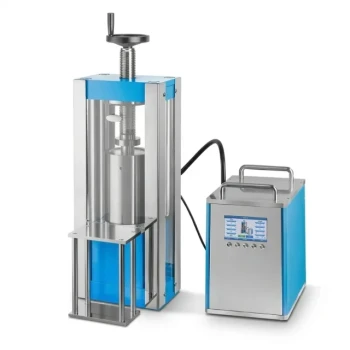
- Electric Split Lab Cold Isostatic Press CIP Machine for Cold Isostatic Pressing
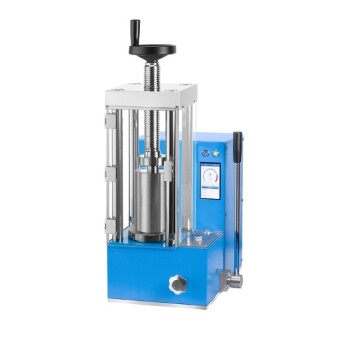
- Electric Lab Cold Isostatic Press CIP Machine for Cold Isostatic Pressing
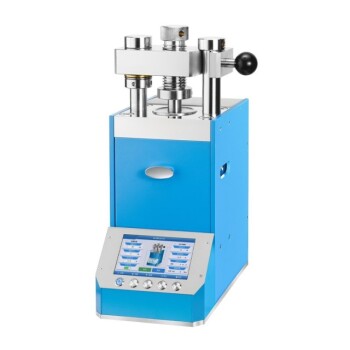
- Automatic Lab Cold Isostatic Press CIP Machine Cold Isostatic Pressing
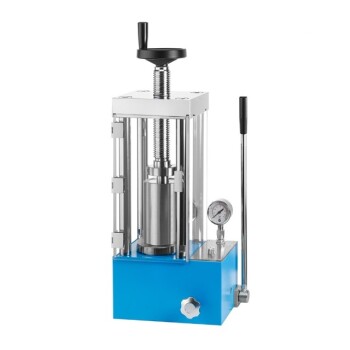
- Manual Cold Isostatic Pressing Machine CIP Pellet Press
- Warm Isostatic Press for Solid State Battery Research
People Also Ask
- How is isostatic pressing equipment utilized to integrate lithium metal anodes during solid-state battery assembly?
- How does isostatic pressing equipment enhance lithium metal anode contact? Optimize Your Solid-State Battery Assembly
- What is the meaning of isostatic pressing? Achieve Uniform Density in Complex Parts
- What is isostatic pressing method for ceramics? Achieve Uniform Density for Complex Parts
- What role does cold isostatic pressing play in the formation of feed rods for single crystal growth? Ensure Stability.