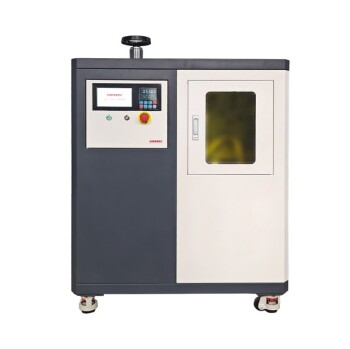
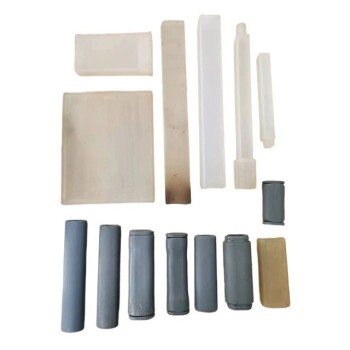
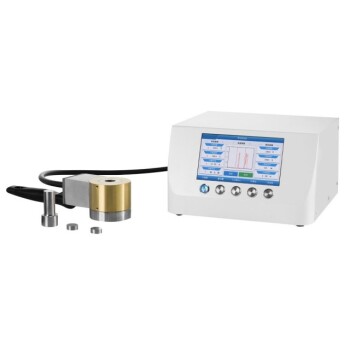
Cold Isostatic Pressing (CIP) offers superior densification by applying uniform, isotropic pressure via a liquid medium, reaching levels as high as 500 MPa. While uniaxial pressing applies force from a single direction—often leading to structural distortion—CIP compacts the material from all sides simultaneously. This maintains the geometric integrity of the electrolyte, ensuring a high-density structure without the thinning or elongation defects common in uniaxial methods.
The Core Insight: The fundamental advantage of CIP over uniaxial techniques is the elimination of density gradients. By decoupling densification from directional mechanical stress, CIP allows you to achieve maximum theoretical density and microstructural uniformity, which are critical for preventing dendrite penetration in solid-state batteries.
The Mechanics of Uniform Densification
Isotropic vs. Directional Pressure
The defining feature of a CIP is its use of a liquid medium to transmit pressure. Unlike uniaxial pressing, which relies on a rigid ram to crush powder from top to bottom, CIP applies equal force from every direction (isostatically). This ensures that the consolidation of the powder is consistent throughout the entire volume of the material.
Preventing Structural Deformation
Primary sources indicate that uniaxial pressing often causes vertical elongation and thinning of the polymer or ceramic matrix. Because the pressure is directional, the material tends to spread or distort. CIP avoids this entirely; it increases density while preserving the original geometric shape and aspect ratio of the electrolyte film.
Elimination of Density Gradients
Friction between the powder and the die walls during uniaxial pressing creates zones of uneven density (density gradients). CIP eliminates die-wall friction. This results in a "green body" (unfired part) with uniform density distribution, which is essential for ensuring uniform shrinkage during any subsequent sintering or calcination phases.
Impact on Battery Performance
Enhanced Ionic Conductivity
The uniformity achieved by CIP directly correlates to performance. By removing density gradients, you ensure the chemical reaction and connectivity between particles are consistent. This homogeneity lowers grain boundary resistance, facilitating smoother ion transport through the ceramic or polymer electrolyte.
Inhibition of Lithium Dendrites
A critical failure mode in solid-state batteries is the growth of lithium dendrites through pores in the electrolyte. CIP significantly reduces internal porosity and increases relative density. A denser, pore-free microstructure physically blocks dendrite penetration, preventing short circuits and extending battery life.
Preservation of Fragile Matrices
For composite electrolytes involving polymer matrices, mechanical integrity is paramount. High directional pressure from uniaxial pressing can damage the polymer structure. CIP compresses the material without introducing shear stresses that would otherwise tear or deform the delicate polymer matrix.
Understanding the Trade-offs
Thermal Consolidation Differences
It is important to note the distinction in temperature. The user asked about hot uniaxial pressing. While heat aids in diffusion and bonding, uniaxial hot pressing is still limited by its mechanics.
- CIP (Cold): Creates a mechanically superior, uniform "green" part that typically requires a separate heating (sintering) step to fully fuse.
- Uniaxial Hot Pressing: Attempts to densify and fuse simultaneously. While efficient in time, it locks in the structural defects (gradients and stress) inherent to directional pressing.
Making the Right Choice for Your Goal
To select the correct densification method for your solid-state electrolyte project, consider the following technical priorities:
- If your primary focus is microstructural uniformity: Choose CIP to eliminate density gradients and ensure consistent ionic conductivity across the entire electrolyte.
- If your primary focus is geometric complexity: Choose CIP for its ability to process shapes with long aspect ratios or complex geometries that would crack under uniaxial pressure.
- If your primary focus is dendrite resistance: Choose CIP to achieve the maximum possible reduction in porosity, creating a physical barrier against short circuits.
Ultimately, CIP dissociates the densification process from mechanical deformation, allowing you to achieve a denser, safer electrolyte without compromising its structural shape.
Summary Table:
| Feature | Cold Isostatic Pressing (CIP) | Uniaxial Hot Pressing |
|---|---|---|
| Pressure Direction | Isotropic (Uniform from all sides) | Directional (Top-down/Uniaxial) |
| Pressure Medium | Liquid (Water or Oil) | Rigid Die/Piston |
| Density Distribution | Highly uniform; no gradients | Uneven; high density near piston |
| Geometric Integrity | Preserves shape and aspect ratio | Risk of thinning and elongation |
| Porosity & Dendrites | Maximum reduction; high resistance | Potential pores; higher risk |
| Microstructure | Homogeneous grain boundaries | Inconsistent grain connectivity |
Elevate Your Battery Research with KINTEK Precision
Unlock the full potential of your solid-state electrolyte development with KINTEK’s advanced Cold Isostatic Pressing (CIP) systems. Our specialized laboratory equipment ensures your materials achieve maximum theoretical density and uniform microstructure—critical factors for preventing lithium dendrite growth and enhancing ionic conductivity.
Why partner with KINTEK?
- Comprehensive Laboratory Solutions: From isostatic and hydraulic presses to high-temperature furnaces and battery research tools, we provide the full ecosystem for material science.
- Technical Expertise: We understand the delicate balance of polymer and ceramic matrices, offering solutions like vacuum furnaces and glovebox-compatible tools to protect your sensitive samples.
- Reliability & Performance: Our equipment is designed for precision, helping you eliminate structural defects and achieve consistent, repeatable results.
Ready to achieve superior densification for your next-generation batteries? Contact KINTEK today for a consultation and let our experts find the perfect pressing solution for your lab.
Related Products
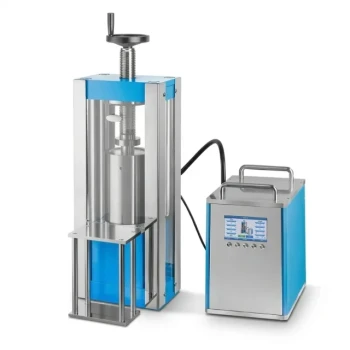
- Electric Split Lab Cold Isostatic Press CIP Machine for Cold Isostatic Pressing
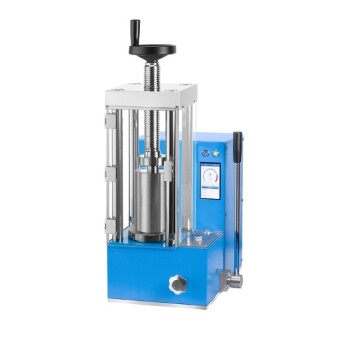
- Electric Lab Cold Isostatic Press CIP Machine for Cold Isostatic Pressing
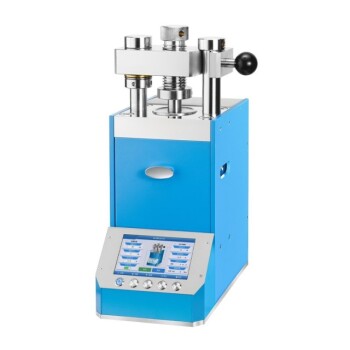
- Automatic Lab Cold Isostatic Press CIP Machine Cold Isostatic Pressing
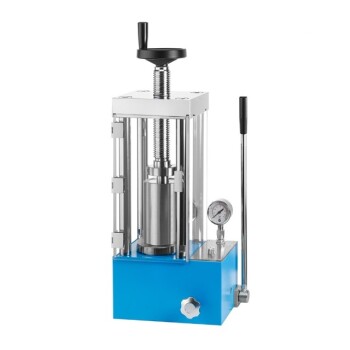
- Manual Cold Isostatic Pressing Machine CIP Pellet Press
- Warm Isostatic Press for Solid State Battery Research
People Also Ask
- How is isostatic pressing equipment utilized to integrate lithium metal anodes during solid-state battery assembly?
- How does isostatic pressing equipment enhance lithium metal anode contact? Optimize Your Solid-State Battery Assembly
- What is the meaning of isostatic pressing? Achieve Uniform Density in Complex Parts
- What is isostatic pressing method for ceramics? Achieve Uniform Density for Complex Parts
- What role does cold isostatic pressing play in the formation of feed rods for single crystal growth? Ensure Stability.