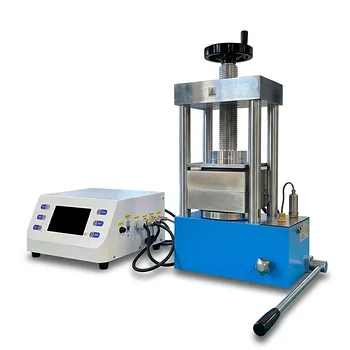
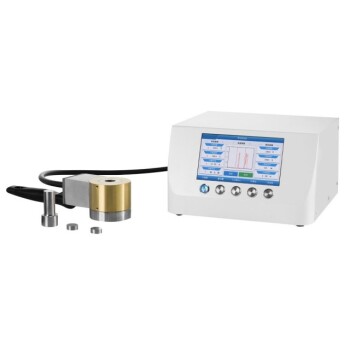
Cold Isostatic Pressing (CIP) significantly enhances battery performance by applying extreme, uniform pressure to the final assembly. This process eliminates microscopic voids within the LiFePO4 composite electrode and at the critical interface with the solid electrolyte, directly solving the contact limitations inherent in solid-state designs.
Core Takeaway Solid-state batteries often suffer from poor contact between particles, creating high resistance. CIP acts as a mechanical densification step that maximizes the active contact area, drastically lowering interfacial impedance and unlocking superior lithium-ion diffusion for better rate performance.
Eliminating Microscopic Voids
The Mechanics of Isotropic Pressure
Unlike uniaxial pressing, which applies force from a single direction, CIP utilizes a liquid medium to apply equal pressure from all directions. This isotropic force effectively collapses microscopic voids and air pockets that naturally occur during the initial forming of powder-based electrodes.
Densifying the Composite Structure
The primary physical result of CIP is high-density compaction. By forcing the LiFePO4 composite materials closer together, the process creates a denser, more cohesive structure. This densification is critical for establishing the continuous pathways necessary for electron and ion movement.
Optimizing the Electrode-Electrolyte Interface
Maximizing Active Contact Area
The most significant challenge in solid-state batteries is the physical gap between the solid electrode and the solid electrolyte. CIP forces these two distinct materials to conform to one another perfectly. This maximizes the active contact area, ensuring that ions can move freely between components without encountering physical barriers.
Lowering Interfacial Impedance
By eliminating voids at the boundary layer, CIP directly reduces interfacial impedance. High impedance is a primary cause of power loss and heat generation; reducing it ensures that the energy stored in the LiFePO4 electrode is accessible and efficiently transferred.
Enhancing Electrochemical Performance
Improving Lithium-Ion Diffusion
The densification achieved through CIP improves the efficiency of lithium-ion diffusion. With tighter particle packing and fewer voids to navigate, lithium ions can traverse the electrode and electrolyte structure with less resistance.
Boosting Rate Performance
The combination of low impedance and efficient diffusion results in improved rate performance. This means the battery can charge and discharge more quickly without significant voltage drop, making the LiFePO4 chemistry more viable for high-power applications.
Understanding the Trade-offs
Dimensional and Shape Constraints
While CIP is excellent for complex shapes, the physical size of the part is limited by the pressure vessel's dimensions. Additionally, parts must be designed with the understanding that height-to-diameter ratios and overall geometry are constrained by the vessel capacity.
Processing Complexity and Cost
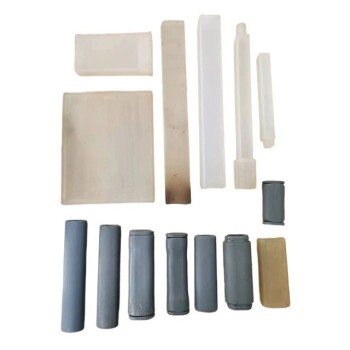
CIP involves encapsulating parts in flexible molds (like latex or urethane) and submerging them in a liquid medium. This adds steps to the manufacturing line compared to simple mechanical pressing. It may also require post-process machining or finishing to achieve final net-shape tolerances.
Making the Right Choice for Your Goal
To maximize the value of CIP in your assembly process, align the technique with your specific performance targets:
- If your primary focus is High Power Output: Prioritize CIP parameters that maximize pressure to ensure the lowest possible interfacial impedance for improved rate performance.
- If your primary focus is Component Longevity: Use CIP to ensure uniform density, which minimizes internal stresses and reduces the risk of cracking or distortion during subsequent cycling.
- If your primary focus is Complex Geometries: Leverage CIP's isotropic nature to achieve uniform density in parts with large aspect ratios (greater than 2:1) that uniaxial pressing cannot handle.
CIP is not just a shaping tool; it is a critical performance-enhancing step that bridges the gap between theoretical capacity and real-world efficiency.
Summary Table:
| Feature | Impact on LiFePO4 Batteries | Benefit to Performance |
|---|---|---|
| Isotropic Pressure | Uniform density across complex shapes | Reduced internal stress & cracking |
| Void Elimination | Collapses microscopic air pockets | Enhanced lithium-ion diffusion |
| Interface Optimization | Maximizes electrode-electrolyte contact | Lowered interfacial impedance |
| High-Density Compaction | Tighter particle packing | Superior rate performance & power |
| Structural Cohesion | Continuous electron/ion pathways | Improved cycle life & efficiency |
Elevate Your Battery Research with KINTEK Precision
Maximize the potential of your solid-state designs with KINTEK’s advanced isostatic pressing solutions. Whether you are optimizing LiFePO4 composite electrodes or perfecting solid electrolyte interfaces, our industry-leading isostatic presses (cold and hot) provide the uniform density required for superior electrochemical performance.
Beyond pressing, KINTEK offers a full suite of laboratory essentials including high-temperature furnaces, battery research tools, and specialized consumables. Don't let interfacial impedance limit your innovation—partner with the experts in material densification.
Contact KINTEK today to find the perfect CIP solution for your lab!
Related Products
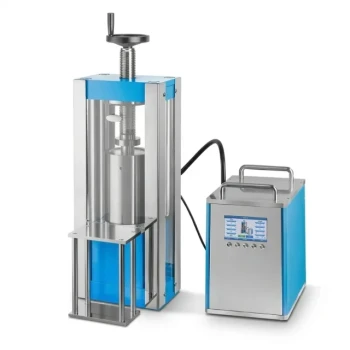
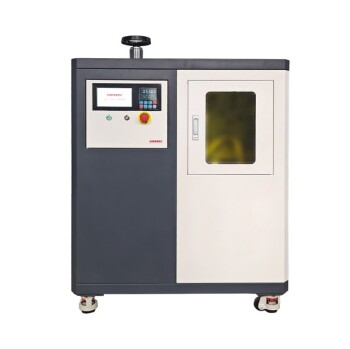
- Electric Split Lab Cold Isostatic Press CIP Machine for Cold Isostatic Pressing
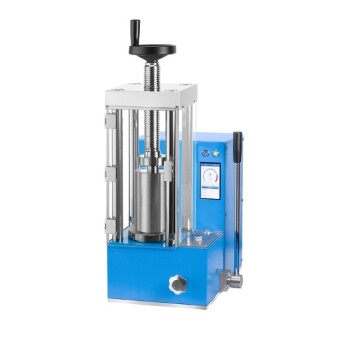
- Electric Lab Cold Isostatic Press CIP Machine for Cold Isostatic Pressing
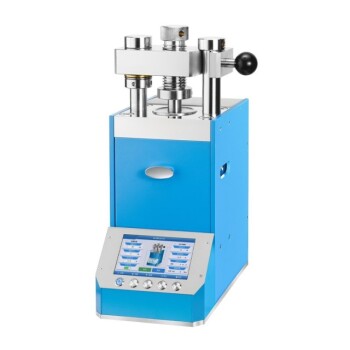
- Automatic Lab Cold Isostatic Press CIP Machine Cold Isostatic Pressing
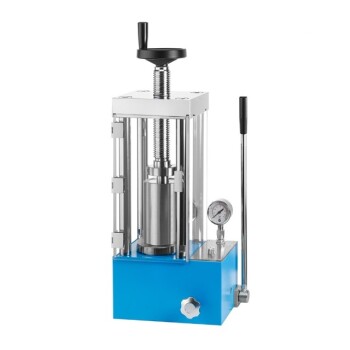
- Manual Cold Isostatic Pressing Machine CIP Pellet Press
- Warm Isostatic Press for Solid State Battery Research
People Also Ask
- How is isostatic pressing equipment utilized to integrate lithium metal anodes during solid-state battery assembly?
- How does isostatic pressing equipment enhance lithium metal anode contact? Optimize Your Solid-State Battery Assembly
- What is the meaning of isostatic pressing? Achieve Uniform Density in Complex Parts
- What is isostatic pressing method for ceramics? Achieve Uniform Density for Complex Parts
- What role does cold isostatic pressing play in the formation of feed rods for single crystal growth? Ensure Stability.