Cold Isostatic Pressing (CIP) is the superior method for achieving microstructural integrity in W-TiC composites. Unlike standard die pressing, which utilizes unidirectional force, CIP employs a high-pressure liquid medium to apply force from all directions. This isotropic approach eliminates the density gradients that commonly cause defects in Tungsten-Titanium Carbide green bodies.
Core Takeaway Standard die pressing often results in uneven density zones due to friction and single-axis pressure. CIP solves this by applying uniform, omnidirectional pressure, ensuring the powder rearranges continuously to prevent warping, cracking, and non-uniform shrinkage during the sintering process.
The Mechanics of Density and Uniformity
Eliminating Density Gradients
Standard die pressing is unidirectional. This creates friction between the powder and the die walls, leading to significant density variations within the green body.
CIP uses a liquid medium to apply equal pressure from every angle. For W-TiC composites, this ensures a highly uniform rearrangement of particles, effectively removing the internal density gradients that plague die-pressed parts.
Prevention of Sintering Defects
The uniformity achieved during the pressing stage dictates the success of the sintering stage. Because CIP creates a homogeneous green body, it prevents non-uniform shrinkage.
This is critical for W-TiC, as it mitigates the risk of deformation or micro-cracking when the material is subjected to high temperatures.
Achieving High Relative Density
CIP equipment can apply pressures reaching up to 230 MPa. This forces ceramic powder particles to pack much more tightly than is possible with die pressing.
This high-densification pretreatment reduces internal pores and increases the relative density of the green body. This creates a solid foundation for achieving near-theoretical density (e.g., 98%) during final processing.
Advantages in Geometry and Strength
Superior Green Strength
Compacts produced via CIP exhibit significantly higher structural integrity before sintering.
In many cases, the green strength of a CIP-formed part is up to 10 times greater than that of a die-compacted counterpart. This makes handling and machining the green body safer and easier.
Complex Shapes and Aspect Ratios
Die pressing is generally limited to simple shapes with low aspect ratios due to friction and ejection constraints.
CIP overcomes these limits, allowing for the production of parts with high length-to-diameter ratios (long rods/tubes) while maintaining uniform density along the entire length. It also enables the creation of complex geometries, including threaded shapes and undercuts.
Understanding the Trade-offs
The Necessity of "Pre-shaping"
While CIP offers superior density, it is often a secondary or distinct step compared to the rapid forming of die pressing.
References suggest a workflow where uniaxial pressing may provide the "initial shape," followed by CIP to maximize density and eliminate gradients. This implies that for the highest quality W-TiC parts, relying solely on simple die pressing is insufficient; the isotropic pressure of CIP is required to correct the inherent defects of unidirectional compaction.
Making the Right Choice for Your Goal
To maximize the quality of your Tungsten-Titanium Carbide components, align your manufacturing method with your specific structural requirements:
- If your primary focus is Microstructural Integrity: Use CIP to eliminate density gradients and prevent the micro-cracking and warping that occur during sintering.
- If your primary focus is Complex Geometry: Choose CIP to manufacture parts with undercuts, threads, or high length-to-diameter ratios that standard dies cannot ejection.
- If your primary focus is Green Body Durability: Implement CIP to achieve green strengths up to 10 times higher than standard die pressing, reducing handling breakage.
By leveraging the isotropic pressure of CIP, you transform a standard powder compact into a defect-free, high-density component ready for reliable performance.
Summary Table:
| Feature | Standard Die Pressing | Cold Isostatic Pressing (CIP) |
|---|---|---|
| Pressure Direction | Unidirectional (Single-axis) | Omnidirectional (Isotropic) |
| Density Uniformity | Low (gradients caused by friction) | High (uniform particle arrangement) |
| Green Strength | Low | High (up to 10x greater) |
| Shape Capability | Simple geometries only | Complex shapes, long rods, and tubes |
| Sintering Outcome | High risk of warping/cracking | Minimal shrinkage & high relative density |
Elevate Your Material Integrity with KINTEK
Don't let density gradients and sintering defects compromise your research or production. KINTEK specializes in advanced laboratory solutions, offering high-performance Cold Isostatic Pressing (CIP) systems alongside our comprehensive range of high-temperature furnaces and hydraulic presses. Whether you are working with Tungsten-Titanium Carbide or other advanced ceramics, our equipment ensures the microstructural integrity and high relative density your projects demand.
Ready to achieve superior compaction? Contact us today to find the perfect CIP solution for your lab!
References
- Eiichi Wakai. Titanium/Titanium Oxide Particle Dispersed W-TiC Composites for High Irradiation Applications. DOI: 10.31031/rdms.2022.16.000897
This article is also based on technical information from Kintek Solution Knowledge Base .
Related Products
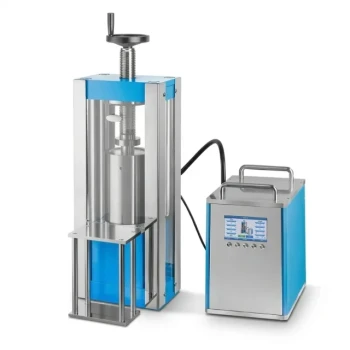
- Electric Split Lab Cold Isostatic Press CIP Machine for Cold Isostatic Pressing
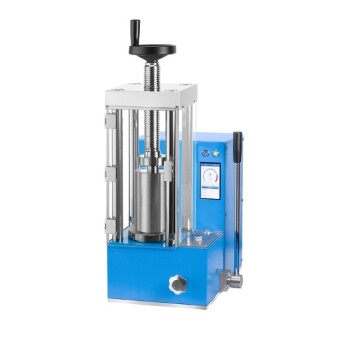
- Electric Lab Cold Isostatic Press CIP Machine for Cold Isostatic Pressing
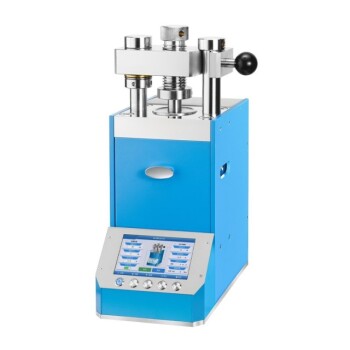
- Automatic Lab Cold Isostatic Press CIP Machine Cold Isostatic Pressing
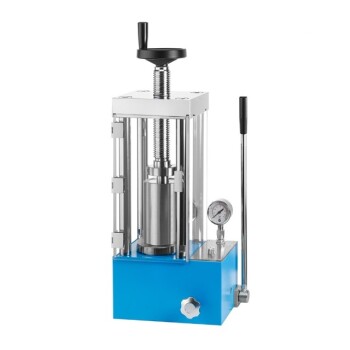
- Manual Cold Isostatic Pressing Machine CIP Pellet Press
- Isostatic Molding Pressing Molds for Lab
People Also Ask
- How is isostatic pressing equipment utilized to integrate lithium metal anodes during solid-state battery assembly?
- How does isostatic pressing equipment enhance lithium metal anode contact? Optimize Your Solid-State Battery Assembly
- What is the meaning of isostatic pressing? Achieve Uniform Density in Complex Parts
- What is isostatic pressing method for ceramics? Achieve Uniform Density for Complex Parts
- What role does cold isostatic pressing play in the formation of feed rods for single crystal growth? Ensure Stability.