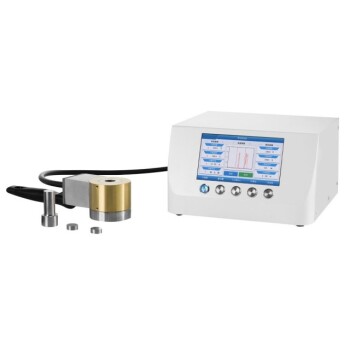
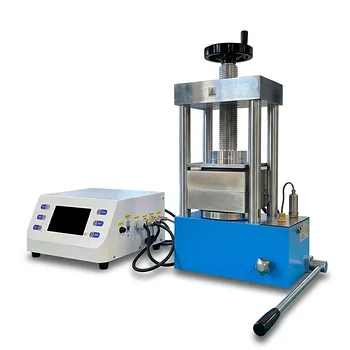
The application of Cold Isostatic Pressing (CIP) is a critical post-assembly step required to enforce intimate physical contact between the lithium metal anode and the sulfide solid-state electrolyte (Li3PS4-LiI). By applying uniform fluid pressure, typically around 80 MPa, the process forces the malleable lithium to plastically deform and fill microscopic voids on the electrolyte surface, thereby drastically reducing interfacial resistance.
Core Takeaway Solid-state electrolytes cannot "wet" the anode like liquid electrolytes do, resulting in poor natural contact and high impedance. CIP leverages the plasticity of lithium metal to physically close these gaps, creating a continuous interface essential for stable electrochemical cycling and high current density performance.
The Mechanics of Interface Engineering
The Solid-Solid Contact Challenge
In liquid batteries, the electrolyte naturally flows into the porous structure of the electrode, ensuring perfect contact. In solid-state batteries, you are pressing two solid surfaces together.
Without intervention, these surfaces only touch at high points (asperities). This leaves significant microscopic voids between the lithium and the Li3PS4-LiI pellet.
These voids act as insulators, preventing ion flow and creating localized hot spots of high resistance.
Inducing Plastic Deformation
To solve the void problem, you must mechanically force the materials to merge. Lithium metal is relatively soft.
When subjected to high pressures (referenced as 71 to 80 MPa), the metallic lithium undergoes plastic deformation.
Instead of springing back, the lithium flows like a very viscous fluid. It fills the surface irregularities and pores of the harder sulfide electrolyte pellet.
Uniformity via Isostatic Pressure
A standard hydraulic press applies force from only one direction (uniaxial). This can create stress gradients that might crack the brittle sulfide electrolyte pellet.
CIP uses fluid to apply pressure equally from all directions (isostatic). This ensures the lithium is pressed uniformly into the electrolyte surface without introducing shear stresses that could damage the delicate pellet.
Impact on Battery Performance
Reduction of Interfacial Resistance
The primary electrochemical benefit of CIP is the reduction of interface impedance.
By maximizing the active contact area between the Li and the Li3PS4-LiI, ions can move freely across the boundary.
References indicate that this process allows the battery to withstand significantly higher critical current densities (e.g., 12.5 mA cm-2) that would otherwise cause failure in a poorly contacted cell.
Ensuring Cycling Stability
The interface formed by simple assembly is fragile. It can degrade quickly as the battery expands and contracts during operation.
The intimate contact formed by CIP is more robust. It eliminates the initial voids that serve as nucleation sites for failure, ensuring stable performance during subsequent electrochemical cycling tests.
Process Trade-offs and Considerations
Complexity of Preparation
While CIP creates a superior interface, it introduces process complexity compared to uniaxial pressing.
As noted in the supplementary data, the tool (or battery assembly) must be sealed perfectly in a flexible or rigid bung using liquid-proof tape.
Any leak in this closure allows the hydraulic fluid to contaminate the battery chemistry, ruining the sample immediately.
Pressure Calibration
Applying pressure is a balancing act. You must reach the threshold for plastic deformation (approx. 71-80 MPa) to be effective.
However, the specific pressure must be calculated based on the materials used. Insufficient pressure leaves voids; excessive pressure could theoretically damage the electrolyte structure if the isostatic environment is not perfectly maintained.
Making the Right Choice for Your Goal
Whether you are focusing on fundamental research or high-performance prototyping, the CIP step dictates the quality of your data.
- If your primary focus is Cycle Life Stability: Use CIP to eliminate microscopic voids, as these are the primary drivers of resistance growth and interface degradation over time.
- If your primary focus is High Current Density: Rely on the plastic deformation induced by CIP to maximize the active surface area, preventing voltage dropouts at higher amp loads.
Skipping the CIP step in solid-state battery assembly effectively leaves the critical anode-electrolyte interface undefined, rendering subsequent performance data unreliable.
Summary Table:
| Feature | Effect of CIP on Solid-State Batteries |
|---|---|
| Pressure Type | Isostatic (Uniform fluid pressure, approx. 80 MPa) |
| Mechanism | Plastic deformation of soft Lithium metal |
| Interface Goal | Eliminates microscopic voids; ensures intimate contact |
| Key Benefit | Drastic reduction in interfacial resistance (Impedance) |
| Performance Impact | Enables higher critical current density & cycling stability |
| Safety | Prevents electrolyte cracking compared to uniaxial pressing |
Elevate Your Battery Research with KINTEK Precision
Achieving the perfect solid-state interface requires more than just pressure—it requires precision and reliability. KINTEK specializes in high-performance laboratory equipment, providing the advanced Cold Isostatic Presses (CIP) and isostatic hydraulic systems essential for eliminating interfacial resistance in solid-state battery assembly.
From high-temperature furnaces and crushing systems to specialized battery research tools and consumables, our comprehensive portfolio supports every stage of your material science workflow. Whether you are developing Li-sulfide electrolytes or high-capacity anodes, KINTEK delivers the durability and accuracy your lab demands.
Ready to optimize your electrochemical performance? Contact KINTEK experts today to find the perfect CIP solution for your lab!
Related Products
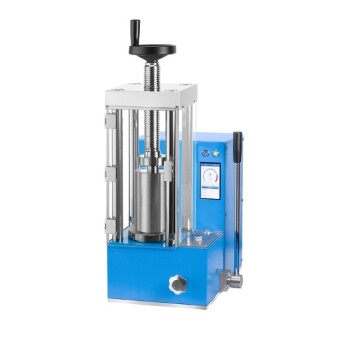
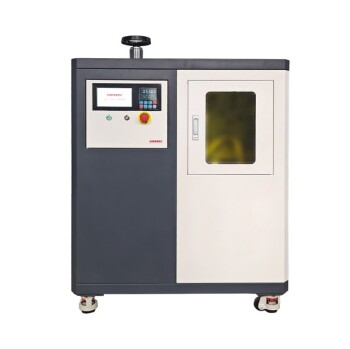
- Electric Lab Cold Isostatic Press CIP Machine for Cold Isostatic Pressing
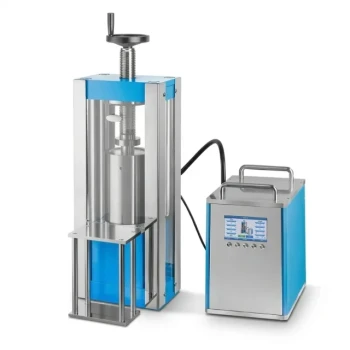
- Electric Split Lab Cold Isostatic Press CIP Machine for Cold Isostatic Pressing
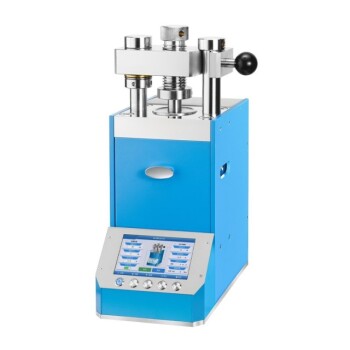
- Automatic Lab Cold Isostatic Press CIP Machine Cold Isostatic Pressing
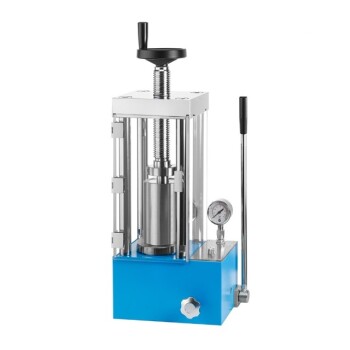
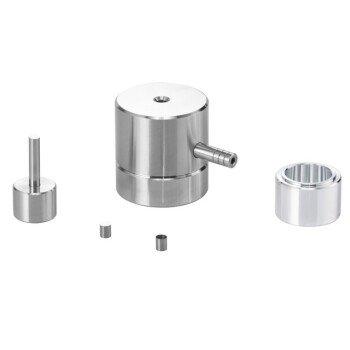
- Manual Cold Isostatic Pressing Machine CIP Pellet Press
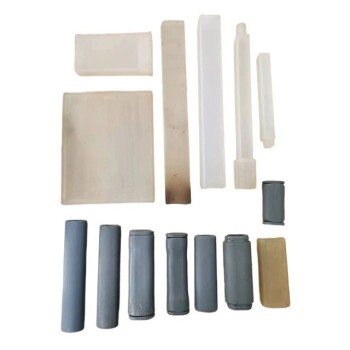
- Isostatic Molding Pressing Molds for Lab
People Also Ask
- What role does cold isostatic pressing play in the formation of feed rods for single crystal growth? Ensure Stability.
- What is isostatic pressing method for ceramics? Achieve Uniform Density for Complex Parts
- In what ways does Cold Isostatic Pressing (CIP) enhance LiFePO4 battery performance? Boost Density and Conductivity
- How does Cold Isostatic Pressing (CIP) benefit SiC ceramic reactors? Achieve Flawless Material Integrity
- Why is a cold isostatic press advantageous for Argyrodite sulfide solid-state batteries? Achieve Optimal Densification