All Questions
Why Does The Use Of An Isostatic Press For Lsgm Green Bodies Lead To A Reduction In Sintering Temperature? Enhance Density
Learn how isostatic pressing lowers LSGM sintering temperatures by 50-100°C through uniform particle density and optimized atomic diffusion.
Why Use Cold Isostatic Pressing (Cip) After Dry Pressing For Gd2O2S:tb Ceramics? Achieve Maximum Density And Uniformity.
Discover why CIP is vital for Gd2O2S:Tb ceramics. Eliminate density gradients, remove micro-voids, and prevent sintering cracks for high-density results.
What Role Does Cold Isostatic Pressing Play In The Formation Of Feed Rods For Single Crystal Growth? Ensure Stability.
Learn how cold isostatic pressing (CIP) ensures density uniformity and stability in feed rods, critical for high-quality single crystal growth.
Why Is 800 Mpa Required For Tinipdcu Alloy Green Bodies? Master High-Density Compaction For Superior Material Strength
Learn why 800 MPa is critical for TiNiPdCu alloy green bodies. Understand how high-pressure compaction ensures density, diffusion, and metal strength.
What Are The Key Advantages Of Using A Cold Isostatic Press (Cip) For Strontium Titanate? Achieve Uniform Density
Discover how Cold Isostatic Pressing (CIP) ensures uniform density and prevents cracking in Strontium Titanate ceramic green bodies.
What Role Does A Cold Isostatic Press (Cip) Play In The Preparation Of Ce:ggag Ceramic Rods? Superior Densification
Learn how Cold Isostatic Pressing (CIP) achieves uniform density and prevents cracks in Ce:GGAG ceramic rods for high-performance applications.
Why Is A Cold Isostatic Press Required For Forming Eu:gap And Eu:glap Ceramic Rods? Ensure Structural Homogeneity
Learn why Cold Isostatic Pressing is essential for Eu:GAP/Eu:GLAP rods to ensure high density, structural uniformity, and stable crystal growth.
What Roles Do Laboratory Hydraulic Presses And Isostatic Presses Play In Llzo Molding? Optimize Battery Density
Discover how laboratory hydraulic and isostatic presses enhance LLZO solid-state electrolyte density and ionic conductivity for battery research.
How Is Isostatic Pressing Equipment Utilized To Integrate Lithium Metal Anodes During Solid-State Battery Assembly?
Learn how isostatic pressing creates perfect lithium-electrolyte interfaces, reduces impedance, and suppresses dendrites in solid-state batteries.
For Which Types Of Components And Materials Is Semi-Isostatic Pressing Particularly Suitable? Optimize Your Production
Discover why semi-isostatic pressing is the ideal choice for mass-producing cylindrical ceramics like alumina and zirconia with high precision.
Why Is Semi-Isostatic Pressing Used For Ceramics? Unlock Uniform Density And Superior Precision
Learn how semi-isostatic pressing eliminates density gradients to ensure mechanical strength and dimensional accuracy in ceramic parts.
What Types Of Materials Are Used For Canisters In The Hip Process? Optimized Choices For Material Densification
Learn why mild steel, stainless steel, and nickel are the preferred materials for Hot Isostatic Pressing (HIP) canisters to ensure part integrity.
What Is The Historical Background Of The Hot Isostatic Pressing (Hip) Process? From Nuclear Roots To Industry Standard
Explore the history of Hot Isostatic Pressing (HIP), from its 1950s invention at Battelle to its critical role in nuclear, aerospace, and medical sectors.
What Are The Advantages Of The Isostatic Pressing Process? Achieve High Density And Complex Geometries
Learn how isostatic pressing delivers uniform density, low internal stress, and the ability to create complex shapes for superior material performance.
What Are The Applications Of Isostatic Pressing Technology? Achieve Superior Material Density And Uniformity
Explore how isostatic pressing transforms advanced alloys and high-performance ceramics like zirconia and alumina through uniform pressure.
What Is Zirconia Ceramic Cold Isostatic Pressing (Cip)? Achieve Uniform Density And Superior Material Integrity
Learn how Zirconia CIP uses isotropic pressure to create high-density green bodies with uniform density and reduced internal stress for ceramics.
Why Is A Cold Isostatic Press (Cip) Required For Nasicon? Achieve Maximum Green Density And Ionic Conductivity
Learn why Cold Isostatic Pressing is essential for NaSICON green bodies to eliminate density gradients and ensure uniform sintering performance.
What Is The Function Of A Cold Isostatic Press (Cip) In The Fabrication Of Pouch-Type All-Solid-State Batteries?
Learn how Cold Isostatic Pressing (CIP) eliminates interfacial impedance and densifies solid-state battery layers for superior performance.
What Role Does An Industrial-Grade High-Pressure Manual Screw Pump Play In An Hhip System? Achieve Precise Densification
Learn how high-pressure manual screw pumps stabilize HHIP systems, managing 300-350 MPa to eliminate porosity and ensure material densification.
How Does A Cold Isostatic Press (Cip) Contribute To The Fabrication Of He-O-Miec And Llzto? Expert Densification Guide
Learn how Cold Isostatic Pressing (CIP) achieves 98% relative density and eliminates gradients in HE-O-MIEC and LLZTO solid-state electrolytes.
How Does Isostatic Pressing Equipment Enhance Lithium Metal Anode Contact? Optimize Your Solid-State Battery Assembly
Learn how isostatic pressing induces lithium creep to eliminate voids, lower impedance, and suppress dendrites in solid-state battery manufacturing.
How Does A Cold Isostatic Press (Cip) Facilitate Lpscl/Llzo Interfaces? Unlock Superior Solid-State Battery Bonds
Learn how Cold Isostatic Pressing (CIP) uses 350 MPa isotropic pressure to create mechanically interlocked sulfide-oxide electrolyte interfaces.
How Does Cold Isostatic Press (Cip) Technology Help In Suppressing Lithium Dendrite Growth? Enhance Battery Safety.
Learn how Cold Isostatic Press (CIP) suppresses lithium dendrite growth by densifying electrolytes and increasing mechanical puncture strength.
In What Ways Does Cold Isostatic Pressing (Cip) Enhance Lifepo4 Battery Performance? Boost Density And Conductivity
Learn how Cold Isostatic Pressing (CIP) eliminates voids, lowers interfacial impedance, and optimizes LiFePO4 electrode-electrolyte contact.
What Is The Purpose Of Using A Sealed Laminated Bag In Cip For Battery Components? Ensure Purity And High Density.
Learn how sealed laminated bags protect solid-state battery samples from contamination and ensure uniform pressure during Cold Isostatic Pressing.
What Advantages Does A Cold Isostatic Press (Cip) Offer For Solid-State Batteries? Superior Density & Uniformity
Discover why Cold Isostatic Pressing (CIP) outperforms uniaxial pressing for all-solid-state battery electrolytes by eliminating density gradients.
What Role Does Isostatic Pressing Play In Sic Production? Ensure Precision For Large-Scale Ceramic Heat Exchangers
Learn how Isostatic Pressing provides structural integrity, uniform density, and dimensional accuracy for Silicon Carbide reactors and plates.
What Is The Significance Of The Cold Isostatic Press (Cip)? Optimize Lithium-Filled Llzo Composite Anode Preparation
Discover how Cold Isostatic Pressing (CIP) enables deep infiltration of lithium into LLZO ceramics while protecting delicate structural integrity.
What Is The Significance Of Using A Cold Isostatic Press (Cip) To Achieve Pressureless Sintering In Llzo? Enhance Density
Learn how Cold Isostatic Pressing (CIP) enables high-density pressureless sintering in LLZO solid-state electrolytes by maximizing particle contact.
What Are The Advantages Of Using A Cold Isostatic Press (Cip)? Achieve High Density In Ceramic Pellets
Learn why Cold Isostatic Pressing (CIP) is superior to uniaxial pressing for fabricating high-density, defect-free composite ceramic pellets.
Why Is A Cold Isostatic Press (Cip) Preferred For Sulfide Solid Electrolytes? Maximize Your Ionic Conductivity
Learn why CIP is essential for sulfide solid electrolyte pellets, offering isotropic pressure to eliminate voids and boost ionic conductivity.
Why Is A Cold Isostatic Press (Cip) Used For Copper Composite Powders? Enhance Sintering Efficiency And Density
Learn how Cold Isostatic Pressing (CIP) creates high-density green compacts for copper powders, ensuring uniform structure and faster sintering.
Why Use Cold Isostatic Press (Cip) For Mgal2O4 After Dry Pressing? Achieve Flawless Transparency
Learn how Cold Isostatic Pressing (CIP) eliminates density gradients and defects in MgAl2O4 green bodies to enable high-performance transparency.
How Does A Cold Isostatic Press Contribute To The Formation Of Tzc Molybdenum Alloy Green Bodies? Key Densification Tips
Learn how Cold Isostatic Pressing (CIP) achieves 83% relative density and eliminates defects in TZC molybdenum alloy green bodies.
What Role Does An Industrial-Grade Omnidirectional Press Play In The Preparation Of Ultra-Fine Grained Vt6 Titanium?
Learn how omnidirectional presses use multi-axial forging and SPD to refine VT6 titanium alloy grain size to 0.25μm for superior strength.
What Advantages Does Cold Isostatic Pressing (Cip) Offer For Nickel-Alumina Composites? Enhance Density & Strength
Learn how Cold Isostatic Pressing (CIP) eliminates density gradients and improves structural integrity for nickel-alumina composite formation.
What Role Does A Cold Isostatic Press (Cip) Play In Aluminum Matrix Composites? Achieve 90% Density For Better Hot Pressing
Learn how Cold Isostatic Pressing (CIP) creates 90% dense green bodies, reducing vacuum hot press cycles and enabling precision machining.
Purpose Of Cip In C-Llzo Ceramic Pellets? Achieve >90% Density & Superior Uniformity With Cold Isostatic Pressing
Discover why Cold Isostatic Pressing (CIP) is vital for c-LLZO ceramics, ensuring high green density, uniform structure, and optimized sintering.
How Does An Isostatic Press Compare To A Uniaxial Press For Li3Ps4 & Na3Ps4? Find The Optimal Densification Method
Compare isostatic and uniaxial pressing for sulfide electrolytes. Learn why uniaxial hydraulic presses are sufficient for Li3PS4 and Na3PS4 density.
What Are The Advantages Of Using A Cold Isostatic Press For Perovskite Solar Cells? Unlock High-Pressure Performance
Learn why Cold Isostatic Pressing (CIP) outperforms flat-plate presses for flexible and large-area perovskite solar cells via uniform densification.
What Is The Role Of A Cold Isostatic Press (Cip) In C-Psc Lamination? Enhance Solar Efficiency Without Heat
Learn how Cold Isostatic Pressing (CIP) creates high-performance electrode interfaces in carbon-based perovskite solar cells at room temperature.
How Do Industrial Hip Furnaces Facilitate Diffusion Bonding? Achieve Perfect Joints For Dissimilar Metals
Learn how Hot Isostatic Pressing (HIP) uses simultaneous high heat and uniform pressure to create seamless, high-integrity diffusion bonds.
Why Use An Isostatic Or High-Precision Hydraulic Press For Li/Llzo/Li Batteries? Master Solid-State Interfaces
Learn how high-pressure and isostatic pressing solve the solid-solid interface problem in Li/LLZO/Li batteries by reducing interfacial impedance.
Why Is A Cold Isostatic Press (Cip) Required After Li/Li3Ps4-Lii/Li Battery Assembly? Optimize Your Solid-State Interface
Learn how Cold Isostatic Pressing (CIP) eliminates interfacial resistance and prevents voids in Li/Li3PS4-LiI/Li solid-state batteries.
Why Is A Cold Isostatic Press (Cip) Required For Llztbo? Enhance Density And Structural Integrity
Learn why Cold Isostatic Pressing is essential for LLZTBO granules to eliminate density gradients and achieve 95%+ relative density.
How Does A Cold Isostatic Press (Cip) Address Yag Ceramic Density? Achieve Uniform High-Density Green Bodies
Learn how Cold Isostatic Pressing (CIP) eliminates density gradients and micro-defects in YAG ceramics to prevent sintering cracks and deformation.
Why Is A Cold Isostatic Press Preferred Over A Uniaxial Press For Tungsten Powder? Achieve Uniform Powder Compaction
Learn why Cold Isostatic Pressing (CIP) is essential for tungsten powder to eliminate density gradients and prevent sintering defects.
What Is The Impact Of Using A Cold Isostatic Press Or High-Pressure Die On Assb Assembly? Optimize Battery Performance
Learn how cold isostatic pressing (CIP) reduces interfacial resistance and ensures structural integrity in all-solid-state battery (ASSB) assembly.
How Does The Microstructural Characterization Of Gas-Atomized Powders Guide Hip? Optimize Material Integrity
Learn how microstructural analysis of gas-atomized powders guides particle selection in HIP to prevent brittle phases and enhance durability.
How Does Cold Isostatic Pressing (Cip) Benefit Sic Ceramic Reactors? Achieve Flawless Material Integrity
Learn how Cold Isostatic Pressing (CIP) ensures uniform density and structural integrity in Silicon Carbide (SiC) reactor components.
How Does A Cold Isostatic Press Improve Microhardness Uniformity? Achieving Consistency In Tic10/Cu-Al2O3 Composites
Learn how Cold Isostatic Pressing (CIP) eliminates density gradients to improve microhardness uniformity in high-performance metal matrix composites.
What Is The Benefit Of Using A Cold Isostatic Press For The Secondary Treatment Of Tic10/Cu-Al2O3? Boost Density Now!
Learn how Cold Isostatic Pressing (CIP) eliminates density gradients and closes residual pores in TiC10/Cu-Al2O3 composites for peak performance.
What Advantages Does Cip Equipment Offer For W-Tic Composites? Achieve High-Density, Defect-Free Materials
Discover how Cold Isostatic Pressing (CIP) eliminates density gradients and warping in W-TiC green bodies compared to standard die pressing.
What Is The Specific Function Of A Cold Isostatic Press In The Sintering Process Of Lifepo4? Maximize Battery Density
Learn how Cold Isostatic Pressing (CIP) eliminates density gradients and voids in LiFePO4 to boost ionic conductivity and battery performance.
Why Is A Cold Isostatic Press (Cip) Required After Uniaxial Pressing? Maximize Llzo Density & Performance
Learn why Cold Isostatic Pressing (CIP) is essential to eliminate density gradients and enhance the quality of LLZO solid electrolyte green bodies.
Why Use Cold Pressing For Li10Snp2S12 Electrolyte Pellets? Preserving Stability In Sulfide Electrolytes
Learn why cold pressing is superior to high-temperature sintering for Li10SnP2S12 fabrication, focusing on ductility and thermal stability.
How Does A Laboratory Isostatic Press Contribute To The Fabrication Of Lagp Solid-State Electrolyte Pellets?
Learn how isostatic pressing enhances LAGP pellet fabrication through uniform density, reduced defects, and optimized ionic conductivity.
What Are The Functions Of Stainless Steel Capsules In Hip Synthesis Of Li2Mnsio4? Key Roles In Crystal Growth
Discover how stainless steel capsules act as isolation vessels and microreactors to enable low-temperature synthesis during Hot Isostatic Pressing.
Why Is An Isostatic Press Used For Solid Electrolyte Pellets? Achieve Maximum Density For Accurate Ionic Conductivity
Learn how isostatic pressing eliminates porosity and minimizes grain boundary resistance to ensure accurate ionic conductivity testing results.
How Does A Hot Isostatic Press (Hip) Machine Improve Alfeticrzncu Alloys? Achieving 10 Gpa Hardness And Maximum Density
Learn how HIP processing eliminates micro-pores in AlFeTiCrZnCu high-entropy alloys to achieve 10.04 GPa hardness and 2.83 GPa compressive strength.
What Is The Purpose Of Stainless Steel Cans In The Hip Treatment? Achieve Full Densification Of Alfeticrzncu Alloys
Learn why stainless steel cans are essential for HIP treatment of high-entropy alloys, enabling vacuum sealing and isotropic pressure transmission.
What Is The Function Of 300 Mpa Pressure In Solid-State Battery Prep? Achieve Peak Densification And Ion Conductivity
Learn why 300 MPa pressure is critical for eliminating voids, maximizing solid-solid contact, and reducing impedance in all-solid-state batteries.
How Does A Uniaxial Cold Press Contribute To The Preparation Of Sulfide Solid Electrolyte Layers? Key To Assb Density
Learn how uniaxial cold pressing enables sulfide solid electrolyte densification, reducing resistance and preventing lithium dendrite penetration.
What Are The Key Functions Of Hip Equipment In Ods Ferritic Steel Consolidation? Achieving 99.0% Density
Learn how Hot Isostatic Pressing (HIP) uses simultaneous heat and pressure to eliminate porosity and consolidate ODS ferritic steel to 99% density.
Why Is A Laboratory Cold Press Necessary For Shs? Optimize Powder Compaction For Stable Combustion
Learn why a laboratory cold press is essential for SHS, transforming powders into conductive green bodies to ensure stable reaction propagation.
What Is The Purpose Of Using A Laboratory Hydraulic Press Or Cold Isostatic Press? Optimize Your Electrolyte Quality
Learn how hydraulic and isostatic presses transform loose powders into stable 'green bodies' for superior composite electrolyte performance.
Why Is Cold Isostatic Pressing Applied Following Steel Mold Dry Pressing In 8Ysz? Enhance Density And Crack Prevention
Learn how CIP eliminates density gradients and micro-cracks in 8YSZ ceramics post-dry pressing for superior mechanical strength and density.
What Is The Critical Role Of A Cold Isostatic Press (Cip)? Enhance Lsth Perovskite Solid Electrolyte Densification
Learn how Cold Isostatic Pressing (CIP) eliminates voids and ensures uniform densification for high-performance LSTH perovskite solid electrolytes.
Why Is A Cold Isostatic Press Advantageous For Argyrodite Sulfide Solid-State Batteries? Achieve Optimal Densification
Learn how cold isostatic pressing preserves chemical integrity and increases energy density in Argyrodite sulfide solid-state batteries.
What Is The Pressure For Cold Isostatic Pressing? Achieve Superior Density And Uniformity
Discover the typical pressure range (20-400 MPa) for cold isostatic pressing (CIP) and how it creates uniform, high-density parts.
What Is Cold Isostatic Pressing Examples? Achieve Uniform Density In Powder Compaction
Discover common cold isostatic pressing (CIP) examples for ceramics, metals, and graphite. Learn how CIP ensures uniform density for high-performance parts.
What Temperature Is Cold Isostatic Pressing? A Guide To Room-Temperature Powder Compaction
Cold Isostatic Pressing (CIP) operates at ambient temperature, using extreme hydrostatic pressure for uniform powder compaction without heat.
What Is The Cold Isostatic Press Process? Create Uniform, High-Integrity Parts
Learn how Cold Isostatic Pressing (CIP) uses fluid pressure to compact powders into uniform green bodies for superior sintering results.
What Is The Cold Cip Process? Achieve Uniform Density In Complex Powdered Parts
Discover Cold Isostatic Pressing (CIP), a method using liquid pressure to compact powders into uniform, dense shapes for high-performance components.
How Much Does An Isostatic Press Cost? A Guide To Lab Vs. Industrial Pricing
Isostatic press costs range from $5,000 for lab R&D to over $200,000 for industrial production. Learn key factors that determine the final price.
What Are The Disadvantages Of Isostatic Pressing? Weighing Speed, Cost, And Precision
Explore the key limitations of isostatic pressing, including lower dimensional accuracy, slower production rates, and higher operational costs.
Is Isostatic Pressing Expensive? Achieve Superior Material Uniformity & Complex Shapes
Explore the cost vs. value of isostatic pressing. Learn why this process is cost-effective for creating high-performance, uniform-density parts.
What Is Isostatic Pressing Used For? Achieve Superior Density And Uniformity In Critical Components
Discover how isostatic pressing consolidates powders and heals defects in metals, ceramics, and composites for aerospace, medical, and energy applications.
What Is Cold Sintering? A Low-Energy Path To Novel Composite Materials
Discover how cold sintering uses pressure and solvents to densify powders at low temperatures, enabling energy-efficient production of unique composites.
What Are The Two Types Of Presses? Cip Vs. Hip For Advanced Materials Manufacturing
Learn the key differences between Cold Isostatic Pressing (CIP) and Hot Isostatic Pressing (HIP) for powder compaction and material densification.
What Is The Pressure Of Isostatic Fluid? Achieve Perfectly Uniform Density And Complex Shapes
Discover how isostatic fluid pressure uses Pascal's Law for uniform material consolidation, eliminating density gradients and enabling complex geometries.
What Is Isostatic Pressing Method For Ceramics? Achieve Uniform Density For Complex Parts
Learn how isostatic pressing uses uniform pressure to create high-performance ceramic parts with superior density and complex shapes.
What Is Cold Isostatic Pressure? Achieve Uniform Density For Complex Powder Parts
Learn how cold isostatic pressing (CIP) uses uniform fluid pressure to compact powders into complex shapes with superior density and minimal stress.
How Is Isostatic Pressing Distinguished From Conventional Pressing? Unlock Superior Uniformity And Density
Explore the key differences between isostatic and conventional pressing, including pressure application, density uniformity, and suitability for complex geometries.
What Is The Cold Isostatic Process? Achieve Uniform Density In Complex Powder Parts
Learn how Cold Isostatic Pressing (CIP) uses uniform liquid pressure to compact powders into dense, complex shapes for ceramics, metals, and carbides.
What Is The Difference Between Wet Bag And Dry Bag Cip? Choose The Right Process For Your Production Needs
Wet bag vs. dry bag CIP: Learn the key differences in flexibility, speed, and automation to optimize your powder compaction process.
What Is The Dry Bag Process? A Guide To High-Speed Isostatic Pressing
Learn how the dry bag isostatic pressing process enables fast, automated, and clean production of uniform powdered material components.
What Is The Difference Between Isostatic Pressing And Uniaxial Pressing? Choosing The Right Powder Compaction Method
Learn the key differences between isostatic and uniaxial pressing: pressure direction, part density, shape complexity, and cost for optimal material performance.
How Does Isostatic Pressing Work? Achieve Perfectly Uniform Density For Complex Parts
Learn how isostatic pressing uses uniform fluid pressure to compact powders into high-density, complex shapes with superior strength and consistency.
How Big Is The Isostatic Pressing Market? A Deep Dive Into The $1.2B+ Advanced Manufacturing Enabler
Explore the size, drivers, and segments of the isostatic pressing market, including HIP, CIP, key industries, and growth fueled by 3D printing and EVs.
What Is The Isostatic Pressing Method For Producing Ceramic Products? Achieve Uniform, High-Density Ceramic Components
Learn how isostatic pressing uses uniform fluid pressure to create dense, complex ceramic parts with superior strength and reliability for demanding applications.
How Does An Isostatic Work? Achieve Uniform Density And Complex Shapes With Isostatic Pressing
Learn how isostatic pressing uses uniform hydrostatic pressure to create high-density, complex parts from metal or ceramic powders.
What Are The Advantages Of Isostatic Compaction? Achieve Uniform Density And Complex Shapes
Discover the key benefits of isostatic pressing, including uniform density, isotropic strength, and the ability to produce highly complex geometries.
What Is Cold Isostatic Pressing Of Metal Powder? Achieve Uniform Density In Complex Metal Parts
Cold Isostatic Pressing (CIP) uses uniform hydrostatic pressure to compact metal powder into complex shapes with consistent density, ideal for high-performance materials.
What Is Isostatic Pressing Of Polymers? Achieve Superior Uniform Density For High-Performance Parts
Learn how isostatic pressing uses uniform fluid pressure to create dense, reliable polymer components for medical, aerospace, and electronics industries.
What Is The Cold Isostatic Pressing Method? Achieve Uniform Density In Complex Parts
Learn how cold isostatic pressing (CIP) uses high-pressure liquid to create parts with uniform density for superior performance in ceramics, metals, and more.
What Are The Advantages Of Cold Isostatic Pressing? Achieve Superior Density And Complex Shapes
Discover how Cold Isostatic Pressing (CIP) provides uniform density, design freedom, and superior material integrity for ceramics and metals.
What Are The Different Types Of Cold Isostatic Pressing? Wet-Bag Vs. Dry-Bag For Your Production Needs
Compare wet-bag and dry-bag cold isostatic pressing (CIP) methods. Learn which is best for your production volume, part complexity, and automation goals.
What Products Are Made From Cold Isostatic Pressing? Achieve Uniform Density In Complex Parts
Discover how Cold Isostatic Pressing (CIP) creates high-performance components like sputtering targets, medical implants, and advanced ceramics with uniform density.
What Is Hot Isostatic Pressing And Cold Isostatic Pressing? Key Differences For Your Manufacturing Process
Learn the differences between Cold Isostatic Pressing (CIP) and Hot Isostatic Pressing (HIP) - from powder forming to final densification.
Related Products
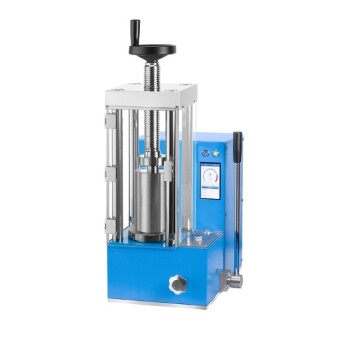
Electric Lab Cold Isostatic Press CIP Machine for Cold Isostatic Pressing
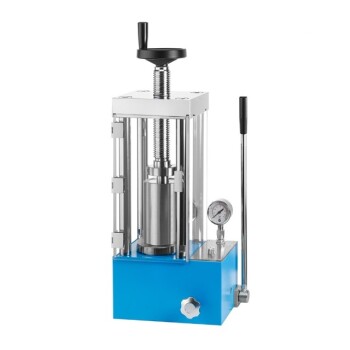
Manual Cold Isostatic Pressing Machine CIP Pellet Press
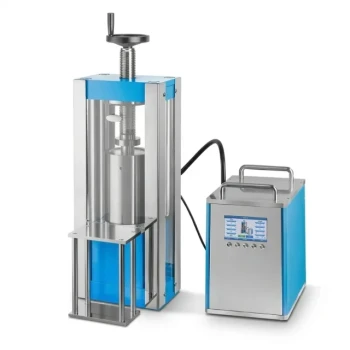
Electric Split Lab Cold Isostatic Press CIP Machine for Cold Isostatic Pressing
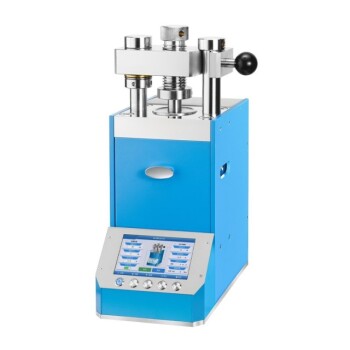
Automatic Lab Cold Isostatic Press CIP Machine Cold Isostatic Pressing
Vacuum Cold Trap Chiller Indirect Cold Trap Chiller