Knowledge Purpose of CIP in c-LLZO ceramic pellets? Achieve >90% Density & Superior Uniformity with Cold Isostatic Pressing
Author avatar

Tech Team · Kintek Solution

Updated 2 days ago

Purpose of CIP in c-LLZO ceramic pellets? Achieve >90% Density & Superior Uniformity with Cold Isostatic Pressing


The primary purpose of using a cold isostatic press (CIP) is to apply uniform, omnidirectional pressure to c-LLZO nanopowders to form a highly dense "green body." By utilizing fluid pressure (often ranging from 60 MPa to 200 MPa), CIP eliminates internal pores and maximizes particle contact, which is a critical prerequisite for achieving final relative densities exceeding 90% in the sintered ceramic electrolyte.

Core Takeaway Standard uniaxial pressing often leaves internal gradients and voids that hinder ceramic performance. CIP solves this by applying isotropic pressure to create a uniform microstructure, reducing the diffusion distance between particles and enabling successful densification during sintering without the need for external hot pressing.

The Mechanics of Isostatic Densification

Creating Isotropic Pressure

Unlike standard hydraulic presses that apply force from a single direction (uniaxial), a CIP uses a liquid medium to apply pressure from all directions simultaneously.

This ensures that the c-LLZO powder is compressed evenly, resulting in a green compact with superior structural homogeneity.

Eliminating Internal Pores

The application of high fluid pressure forces particles into the smallest available voids.

This process drastically reduces porosity within the "green body" (the compacted powder before heating), creating a solid foundation that is free of the density gradients common in dry pressing.

Enhancing Microstructural Uniformity

CIP creates a consistent internal structure where particles are packed tightly and evenly.

This uniformity is essential for c-LLZO ceramics, as structural inconsistencies in the green phase can lead to cracks or warping during the high-temperature sintering phase.

Impact on Sintering and Performance

Reducing Diffusion Distances

By packing particles closer together, CIP significantly reduces the diffusion distance required for atomic bonding.

This proximity allows the material to densify more efficiently when heat is applied, facilitating easier grain growth and connection.

Enabling Pressureless Sintering

A well-compacted green body allows for effective sintering at temperatures around 1000°C without requiring additional pressure.

Because the CIP process achieves such high initial density, it eliminates the need for complex and expensive hot pressing equipment during the final heating stage.

Understanding the Operational Context

The Distinction Between Green and Sintered Density

It is critical to understand that CIP increases the density of the green body, not the final ceramic directly.

CIP is a preparatory step; it sets the stage for the sintering furnace to do its job effectively. Without this high-quality pre-compaction, the furnace cannot achieve the target relative density of >90%.

Process Dependencies

CIP is rarely the very first step in the formation process.

Typically, powders are first lightly shaped using a laboratory hydraulic press (e.g., at 6–10 MPa) to form a basic pellet shape before being subjected to the much higher pressures of the CIP for final densification.

Making the Right Choice for Your Goal

If your primary focus is achieving maximum ionic conductivity: Prioritize CIP to ensure the relative density exceeds 90%, as porosity is the enemy of ion transport.

If your primary focus is process efficiency: Use CIP to create sufficiently dense green bodies so you can utilize standard sintering furnaces rather than investing in hot-pressing equipment.

If your primary focus is structural integrity: Rely on the isotropic nature of CIP to prevent density gradients that cause cracking and warping during the final firing.

The success of your c-LLZO electrolyte depends not just on the material chemistry, but on the mechanical uniformity achieved before the furnace ever turns on.

Summary Table:

Feature Benefit of CIP for c-LLZO Impact on Final Ceramic
Pressure Type Isotropic (Uniform, All Directions) Eliminates density gradients & internal voids
Green Body Density High compaction (60 - 200 MPa) Foundation for >90% final relative density
Particle Proximity Reduced diffusion distances Facilitates efficient grain growth during sintering
Sintering Method Enables pressureless sintering Removes the need for expensive hot-pressing
Structural Result Homogeneous microstructure Prevents cracking, warping, and ion-blocking pores

Optimize Your Solid-State Battery Research with KINTEK

Achieving the perfect c-LLZO ceramic electrolyte requires more than just chemistry—it demands mechanical precision. KINTEK specializes in high-performance laboratory equipment designed to help you reach >90% relative density and maximum ionic conductivity.

Our comprehensive range includes:

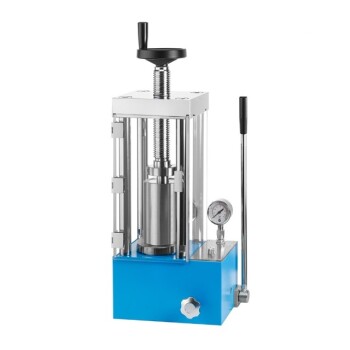
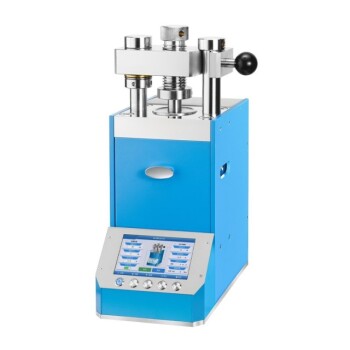
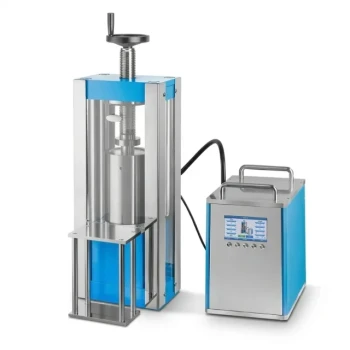
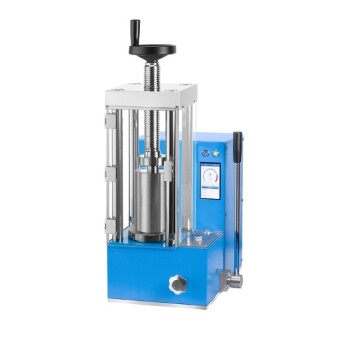
  • Cold Isostatic Presses (CIP): For superior green body uniformity and densification.
  • Hydraulic Presses: Precision pellet and hot presses for initial shaping.
  • High-Temperature Furnaces: Muffle, vacuum, and atmosphere furnaces for perfect sintering.
  • Essential Consumables: High-purity ceramics, crucibles, and milling systems.

Whether you are refining solid-state electrolytes or developing advanced materials, our experts are here to provide the right tools for your breakthrough.

Contact KINTEK Experts Today to discuss your laboratory requirements!

Related Products

People Also Ask

Related Products

Electric Split Lab Cold Isostatic Press CIP Machine for Cold Isostatic Pressing

Electric Split Lab Cold Isostatic Press CIP Machine for Cold Isostatic Pressing

Split cold isostatic presses are capable of providing higher pressures, making them suitable for testing applications that require high pressure levels.

Automatic Lab Cold Isostatic Press CIP Machine Cold Isostatic Pressing

Automatic Lab Cold Isostatic Press CIP Machine Cold Isostatic Pressing

Efficiently prepare samples with our Automatic Lab Cold Isostatic Press. Widely used in material research, pharmacy, and electronic industries. Provides greater flexibility and control compared to electric CIPs.

Cold Isostatic Pressing Machine CIP for Small Workpiece Production 400Mpa

Cold Isostatic Pressing Machine CIP for Small Workpiece Production 400Mpa

Produce uniformly high-density materials with our Cold Isostatic Press. Ideal for compacting small workpieces in production settings. Widely used in powder metallurgy, ceramics, and biopharmaceutical fields for high-pressure sterilization and protein activation.

Manual High Temperature Heated Hydraulic Press Machine with Heated Plates for Lab

Manual High Temperature Heated Hydraulic Press Machine with Heated Plates for Lab

The High Temperature Hot Press is a machine specifically designed for pressing, sintering and processing materials in a high temperature environment. It is capable of operating in the range of hundreds of degrees Celsius to thousands of degrees Celsius for a variety of high temperature process requirements.

Automatic High Temperature Heated Hydraulic Press Machine with Heated Plates for Lab

Automatic High Temperature Heated Hydraulic Press Machine with Heated Plates for Lab

The High Temperature Hot Press is a machine specifically designed for pressing, sintering and processing materials in a high temperature environment. It is capable of operating in the range of hundreds of degrees Celsius to thousands of degrees Celsius for a variety of high temperature process requirements.

Laboratory Hydraulic Press Lab Pellet Press Machine for Glove Box

Laboratory Hydraulic Press Lab Pellet Press Machine for Glove Box

Controlled environment lab press machine for glove box. Specialized equipment for material pressing and shaping with high precision digital pressure gauge.

Automatic Laboratory Hydraulic Pellet Press Machine for Lab Use

Automatic Laboratory Hydraulic Pellet Press Machine for Lab Use

Experience efficient sample preparation with our Automatic Lab Press Machine. Ideal for material research, pharmacy, ceramics, and more. Features a compact size and hydraulic press functionality with heating plates. Available in various sizes.

Automatic Heated Hydraulic Press Machine with Heated Plates for Laboratory Hot Press 25T 30T 50T

Automatic Heated Hydraulic Press Machine with Heated Plates for Laboratory Hot Press 25T 30T 50T

Efficiently prepare your samples with our Automatic Heated Lab Press. With a pressure range up to 50T and precise control, it's perfect for various industries.

Heated Hydraulic Press Machine with Integrated Manual Heated Plates for Lab Use

Heated Hydraulic Press Machine with Integrated Manual Heated Plates for Lab Use

Efficiently process heat-pressing samples with our Integrated Manual Heated Lab Press. With a heating range up to 500°C, it's perfect for various industries.

Rubber Vulcanizer Vulcanizing Machine Plate Vulcanizing Press for Lab

Rubber Vulcanizer Vulcanizing Machine Plate Vulcanizing Press for Lab

The Plate vulcanizing press is a kind of equipment used in the production of rubber products, mainly used for the vulcanization of rubber products. Vulcanization is a key step in rubber processing.

Single Punch Electric Tablet Press Machine TDP Tablet Punching Machine

Single Punch Electric Tablet Press Machine TDP Tablet Punching Machine

The electric tablet punching machine is a laboratory equipment designed for pressing various granular and powdery raw materials into discs and other geometric shapes. It is commonly used in pharmaceutical, healthcare products, food, and other industries for small batch production and processing. The machine is compact, lightweight, and easy to operate, making it suitable for use in clinics, schools, laboratories, and research units.

Single Punch Tablet Press Machine and Mass Production Rotary Tablet Punching Machine for TDP

Single Punch Tablet Press Machine and Mass Production Rotary Tablet Punching Machine for TDP

Rotary tablet punching machine is an automatic rotating and continuous tableting machine. It is mainly used for tablet manufacturing in the pharmaceutical industry, and is also suitable for industrial sectors such as food, chemicals, batteries, electronics, ceramics, etc. to compress granular raw materials into tablets.

Single Punch Electric Tablet Press Machine Laboratory Powder Tablet Punching TDP Tablet Press

Single Punch Electric Tablet Press Machine Laboratory Powder Tablet Punching TDP Tablet Press

The single-punch electric tablet press is a laboratory-scale tablet press suitable for corporate laboratories in pharmaceutical, chemical, food, metallurgical and other industries.

Vacuum Hot Press Furnace Machine for Lamination and Heating

Vacuum Hot Press Furnace Machine for Lamination and Heating

Experience clean and precise lamination with Vacuum Lamination Press. Perfect for wafer bonding, thin-film transformations, and LCP lamination. Order now!

Metallographic Specimen Mounting Machine for Laboratory Materials and Analysis

Metallographic Specimen Mounting Machine for Laboratory Materials and Analysis

Precision metallographic mounting machines for labs—automated, versatile, and efficient. Ideal for sample prep in research and quality control. Contact KINTEK today!

Laboratory Sterilizer Lab Autoclave Herbal Powder Sterilization Machine for Plant

Laboratory Sterilizer Lab Autoclave Herbal Powder Sterilization Machine for Plant

The herbal powder sterilization autoclave machine for Chinese medicine uses saturated steam for effective sterilization. It utilizes the heat and penetrative properties of steam, achieves sterilization after heat preservation, and maintains a good drying effect with a dedicated drying system.

Laboratory Test Sieves and Vibratory Sieve Shaker Machine

Laboratory Test Sieves and Vibratory Sieve Shaker Machine

Efficiently process powders, granules, and small blocks with a high-frequency vibration sieve. Control vibration frequency, screen continuously or intermittently, and achieve accurate particle size determination, separation, and classification.

Lab Plastic PVC Calender Stretch Film Casting Machine for Film Testing

Lab Plastic PVC Calender Stretch Film Casting Machine for Film Testing

The cast film machine is designed for the molding of polymer cast film products and has multiple processing functions such as casting, extrusion, stretching, and compounding.

Small Lab Rubber Calendering Machine

Small Lab Rubber Calendering Machine

Small lab rubber calendering machine is used for producing thin, continuous sheets of plastic or rubber materials. It is commonly employed in laboratories, small-scale production facilities, and prototyping environments to create films, coatings, and laminates with precise thickness and surface finish.

Small Injection Molding Machine for Lab Use

Small Injection Molding Machine for Lab Use

The small injection molding machinehas fast and stable movements; good controllability and repeatability, super energy saving; the product can be automatically dropped and formed; the machine body is low, convenient for feeding, easy to maintain, and no height restrictions on the installation site.


Leave Your Message