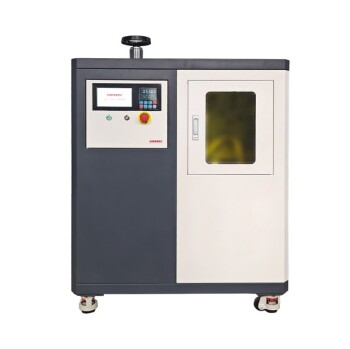
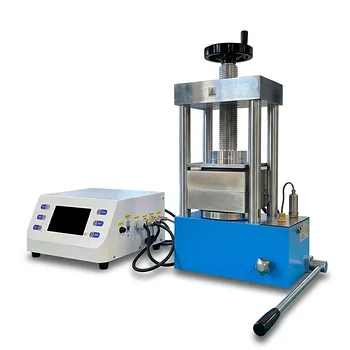
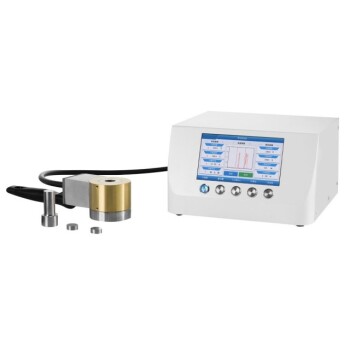
The primary significance of using a cold isostatic press (CIP) in LLZO processing is its ability to create a sufficiently dense "green body" to permit sintering without simultaneous mechanical pressure. By applying high isotropic pressure (approximately 200 MPa) through a liquid medium, CIP minimizes the distance between particles, which is the decisive factor in achieving high densification at 1000°C using only standard heating elements.
Core Insight While standard hydraulic pressing creates the basic shape, it often leaves internal voids that prevent full densification during pressureless sintering. CIP overcomes this by maximizing particle contact density at room temperature, effectively removing the need for complex and expensive hot-pressing equipment to achieve high ionic conductivity.
The Mechanism of Densification
Increasing Green Body Density
Standard laboratory hydraulic presses typically apply uniaxial pressure, often around 10 MPa. While this provides structural integrity and shape, it frequently results in uneven density gradients.
In contrast, a Cold Isostatic Press (CIP) utilizes a liquid medium to apply pressure from all directions simultaneously. This isotropic pressure creates a significantly more uniform and tightly packed structure before heating ever begins.
Reducing Diffusion Distances
The critical advantage of the CIP process is the reduction of diffusion distances between individual LLZO particles.
Sintering is fundamentally a diffusion-driven process. By forcing particles closer together physically (increasing relative density), the material requires less energy and time for atoms to diffuse across grain boundaries.
This proximity allows the material to sinter effectively at 1000°C without the assistance of external mechanical force.
Comparing Sintering Strategies
The Pressureless Advantage
The primary reference indicates that CIP is a gateway to pressureless sintering.
Without CIP, achieving high density often requires hot-press sintering or induction hot pressing. These methods, noted in the supplementary references, apply mechanical pressure and heat simultaneously to force densification and eliminate pores.
By using CIP, you essentially front-load the densification work. This allows you to use simpler, standard furnaces rather than specialized hot-pressing equipment, significantly lowering equipment complexity and cost.
Microstructural Uniformity
Beyond simple density, CIP improves the uniformity of the microstructure.
Uneven density in a green pellet leads to uneven shrinkage during firing. By standardizing the internal pressure, CIP helps ensure the final ceramic body maintains its shape and structural integrity, reducing the risk of warping or cracking during the high-temperature phase.
Understanding the Trade-offs
Equipment Cost vs. Process Steps
While CIP enables the use of cheaper sintering furnaces, it adds a distinct processing step. You must press the pellet, seal it, CIP it, and then sinter it.
Hot pressing, conversely, combines densification and heating into a single—albeit more expensive—step. As noted in the supplementary data, hot pressing is highly effective at ensuring relative densities exceed 95% rapidly.
If your facility lacks hot-pressing capabilities, CIP is an essential enabler. If you already possess hot-pressing equipment, CIP may be a redundant step for certain workflows.
Making the Right Choice for Your Goal
To determine if CIP is the right step for your specific LLZO fabrication process, consider your equipment constraints and performance targets:
- If your primary focus is cost-efficiency and equipment simplicity: Adopt CIP to achieve high density using standard pressureless sintering furnaces, avoiding the capital investment of hot presses.
- If your primary focus is minimizing process steps: Utilize hot-press sintering to combine shaping and densification into a single cycle, ensuring >95% density through simultaneous heat and pressure.
Ultimately, CIP acts as a critical equalizer, allowing standard laboratory setups to produce high-performance electrolytes that would otherwise require industrial-grade hot-pressing machinery.
Summary Table:
| Feature | Standard Hydraulic Pressing | Cold Isostatic Pressing (CIP) | Hot-Press Sintering |
|---|---|---|---|
| Pressure Direction | Uniaxial (One direction) | Isotropic (All directions) | Uniaxial + Heat |
| Green Body Density | Moderate (May have voids) | High (Uniformly packed) | N/A (Direct Sintering) |
| Sintering Method | Requires external pressure | Pressureless Sintering | Simultaneous Pressure/Heat |
| Equipment Complexity | Low | Medium | High |
| Key Benefit | Basic shaping | Lowers sintering cost | Fastest densification |
Elevate Your Solid-State Battery Research with KINTEK
Achieving theoretical density in LLZO electrolytes requires precision at every stage. KINTEK specializes in high-performance laboratory equipment designed to bridge the gap between material synthesis and scalable production. Whether you are looking to implement Cold Isostatic Pressing (CIP) to enable cost-effective pressureless sintering or require advanced Hot-Press Sintering systems for rapid densification, we have the solution.
Our value to your laboratory:
- Precision Pressing: A wide range of hydraulic presses and isostatic presses for uniform green body preparation.
- Thermal Excellence: High-temperature muffle and vacuum furnaces optimized for LLZO sintering.
- Comprehensive Support: From milling systems to ceramic crucibles, we provide the tools necessary for high ionic conductivity.
Don't let equipment limitations hinder your innovation. Contact KINTEK today to find the perfect pressing and sintering solution for your research goals!
Related Products
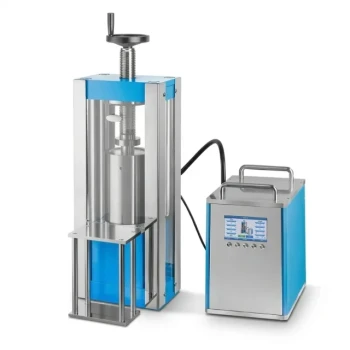
- Electric Split Lab Cold Isostatic Press CIP Machine for Cold Isostatic Pressing
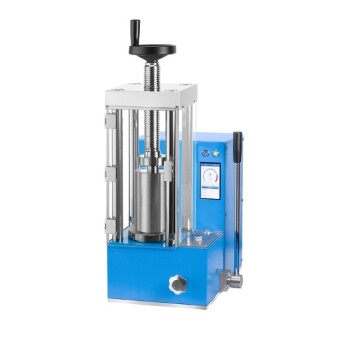
- Electric Lab Cold Isostatic Press CIP Machine for Cold Isostatic Pressing
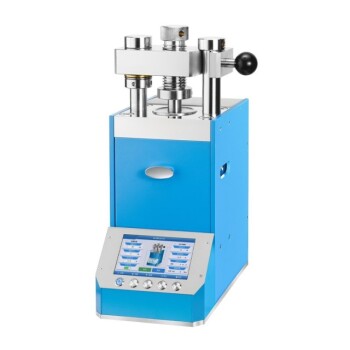
- Automatic Lab Cold Isostatic Press CIP Machine Cold Isostatic Pressing
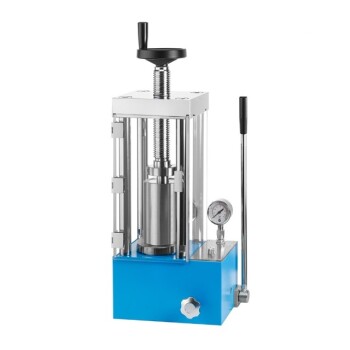
- Manual Cold Isostatic Pressing Machine CIP Pellet Press
- Warm Isostatic Press for Solid State Battery Research
People Also Ask
- How is isostatic pressing equipment utilized to integrate lithium metal anodes during solid-state battery assembly?
- How does isostatic pressing equipment enhance lithium metal anode contact? Optimize Your Solid-State Battery Assembly
- What is the meaning of isostatic pressing? Achieve Uniform Density in Complex Parts
- What is isostatic pressing method for ceramics? Achieve Uniform Density for Complex Parts
- What role does cold isostatic pressing play in the formation of feed rods for single crystal growth? Ensure Stability.