Cold Isostatic Pressing (CIP) is employed as a secondary treatment to correct the non-uniformities inherent in initial dry pressing. By utilizing a liquid medium to apply isotropic high pressure (typically around 150 MPa) to the Magnesium Aluminum Spinel (MgAl2O4) green body, this process significantly enhances relative density and eliminates internal density gradients. This step is critical for minimizing defects and ensuring the material achieves the high density required for transparency during the final sintering stage.
Core Takeaway Initial dry pressing establishes shape, but CIP establishes the internal structure necessary for high-performance ceramics. By equalizing pressure from all directions, CIP transforms a standard green body into a highly uniform preform capable of achieving transparency after sintering.
The Limitations of Initial Shaping
The Mechanics of Dry Pressing
Initial dry pressing is typically a uniaxial process. It applies pressure from a single direction to form the powder into a specific shape.
The Density Gradient Problem
Because friction exists between the powder particles and the die walls, uniaxial pressing creates uneven density distributions. Parts of the green body may be tightly packed while others remain porous, creating density gradients.
Consequences for Sintering
If these gradients remain, the material will shrink unevenly during the final heating process. This leads to warping, cracking, and distinct localized defects that compromise the integrity of the MgAl2O4.
How CIP Optimizes the Green Body
Applying Isotropic Pressure
Unlike the directional force of a dry press, a Cold Isostatic Press submerges the green body in a liquid medium. This allows high pressure (e.g., 150 MPa to 220 MPa) to be applied equally from every angle simultaneously.
Eliminating Internal Defects
This multi-directional pressure crushes remaining agglomerates and collapses the pores that survived the initial press. The result is a substantial reduction in internal density gradients.
Maximizing Relative Density
The CIP process significantly increases the overall packing density of the powder particles. A higher initial "green" density reduces the amount of shrinkage required during sintering, making the final process more controllable.
Enabling Transparency
For Magnesium Aluminum Spinel, optical transparency is often a primary goal. Transparency requires near-perfect density with zero porosity; CIP provides the uniform foundation necessary to achieve this state during sintering.
Understanding the Trade-offs
Dimensional Control Challenges
While CIP improves density, it can alter the precise dimensions achieved during the initial dry press. The flexible molds used in CIP and the high shrinkage rates mean tolerances may be looser than with rigid die pressing alone.
Processing Complexity
CIP adds a distinct batch processing step to the manufacturing workflow. It requires specialized equipment and additional handling time compared to a simple "press and sinter" approach.
Surface Finish Considerations
The flexible bag or mold used in CIP can imprint a texture onto the surface of the green body. This may necessitate additional machining or finishing steps if a smooth surface is required prior to sintering.
Making the Right Choice for Your Goal
Whether you strictly require CIP depends on the final application of your Magnesium Aluminum Spinel ceramic.
- If your primary focus is Optical Transparency: You must use CIP to eliminate density gradients, as even minor inhomogeneity will cause scattering and haze in the final product.
- If your primary focus is Net-Shape Accuracy: You may need to machine the green body after the CIP step, as the isostatic compression will significantly shrink the dimensions formed during the initial dry press.
CIP is the bridge between a shaped powder compact and a defect-free, high-performance ceramic component.
Summary Table:
| Feature | Initial Dry Pressing | Cold Isostatic Pressing (CIP) |
|---|---|---|
| Pressure Direction | Uniaxial (Single direction) | Isotropic (All directions) |
| Density Uniformity | Low (Creates density gradients) | High (Eliminates gradients) |
| Material Integrity | Potential for warping/cracking | Uniform shrinkage during sintering |
| Primary Goal | Initial shaping and form | Internal structure and density optimization |
| Key Outcome | Porous green body | High-density preform for transparency |
Elevate Your Material Performance with KINTEK
Don't let density gradients compromise the transparency and integrity of your Magnesium Aluminum Spinel ceramics. KINTEK specializes in advanced laboratory solutions, offering high-precision isostatic presses (CIP/HIP), hydraulic pellet presses, and high-temperature furnaces designed to meet the rigorous demands of advanced material research.
Whether you are developing transparent ceramics, battery components, or high-performance alloys, our comprehensive portfolio—from crushing and milling systems to vacuum furnaces and cooling solutions—provides the reliability your lab requires.
Ready to achieve near-perfect density? Contact our technical experts today to find the perfect CIP system for your application!
Related Products
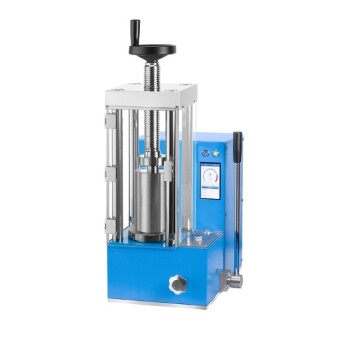
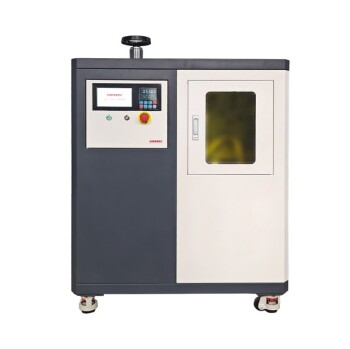
- Electric Lab Cold Isostatic Press CIP Machine for Cold Isostatic Pressing
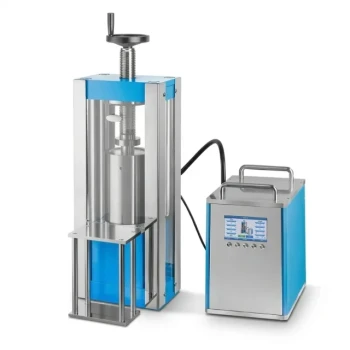
- Electric Split Lab Cold Isostatic Press CIP Machine for Cold Isostatic Pressing
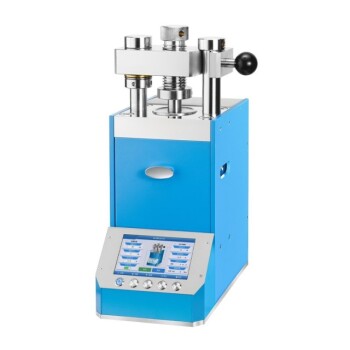
- Automatic Lab Cold Isostatic Press CIP Machine Cold Isostatic Pressing
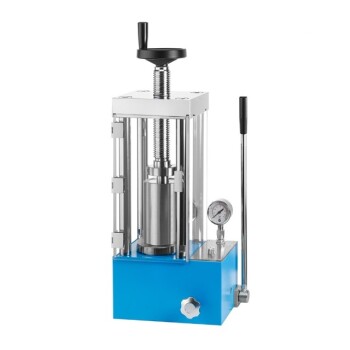
- Manual Cold Isostatic Pressing Machine CIP Pellet Press
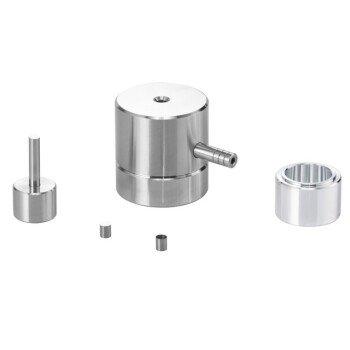
- Isostatic Molding Pressing Molds for Lab
People Also Ask
- What role does cold isostatic pressing play in the formation of feed rods for single crystal growth? Ensure Stability.
- What is isostatic pressing method for ceramics? Achieve Uniform Density for Complex Parts
- In what ways does Cold Isostatic Pressing (CIP) enhance LiFePO4 battery performance? Boost Density and Conductivity
- How does Cold Isostatic Pressing (CIP) benefit SiC ceramic reactors? Achieve Flawless Material Integrity
- Why is a cold isostatic press advantageous for Argyrodite sulfide solid-state batteries? Achieve Optimal Densification