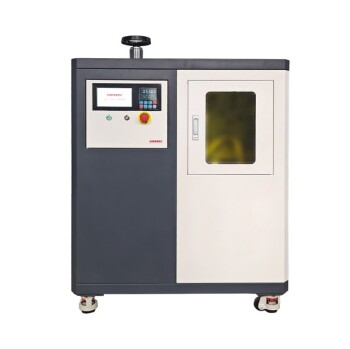
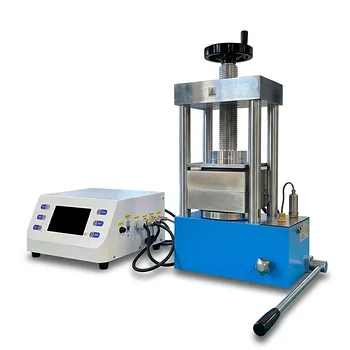
The critical function of a Cold Isostatic Press (CIP) in the preparation of LSTH perovskite solid electrolytes is to apply high-pressure isotropic force to convert mixed raw powders into a dense, uniform "green body." By exerting pressure of up to 200 MPa from all directions, CIP eliminates microscopic voids and ensures the material achieves sufficient density and structural integrity before it undergoes high-temperature heating.
Core Takeaway CIP is not merely a shaping tool; it is a foundational densification step that eliminates internal defects and lowers interfacial impedance, ensuring the material shrinks predictably during sintering and delivers optimal lithium-ion diffusion in the final battery.
Achieving Structural Integrity Before Firing
Uniform Densification via Isotropic Pressure
Unlike conventional pressing which applies force from one direction, CIP applies uniform pressure from all sides. This isotropic application, reaching up to 200 MPa, forces the raw powder particles to pack together tightly and evenly, regardless of the part's geometry.
Eliminating Internal Defects
The intense pressure serves to mechanically interlock the powder particles, effectively closing microscopic voids within the material. Removing these voids at the green body stage is critical to preventing cracks or structural failures during the subsequent high-temperature calcination.
Facilitating Consistent Chemical Reactions
The primary reference indicates that a dense green body is a prerequisite for consistent chemical reactions. By minimizing the distance between particles, CIP ensures that the precursors react uniformly during the calcination stage, leading to a pure and stable LSTH phase.
Enhancing Manufacturing Efficiency
Ensuring Predictable Shrinkage
Because the density of the green body is uniform throughout its volume, the material shrinks evenly during sintering. This predictability is vital for maintaining tight tolerances and prevents the warping or distortion that often occurs with unevenly packed powders.
Green Strength for Handling
CIP produces parts with high "green strength," meaning the unfired part is robust enough to be handled and machined without crumbling. This durability permits in-process treatment and reduces production costs by minimizing waste due to breakage during handling.
Handling Complex Geometries
CIP enables the production of large, complicated, and "near-net" shapes that require minimal post-processing. It is particularly effective for parts with large aspect ratios (greater than 2:1), maintaining uniform density where other pressing methods would result in density gradients.
Impact on Battery Performance
Lowering Interfacial Impedance
By eliminating voids at the interface between the electrode and the solid electrolyte, CIP increases the active contact area. This tight physical contact significantly lowers interfacial impedance, which is often a bottleneck in solid-state battery performance.
Improving Lithium-Ion Diffusion
The densification achieved through CIP directly correlates to improved diffusion efficiency. A denser electrolyte structure with fewer voids creates a more continuous pathway for lithium ions, ultimately boosting the rate performance of the battery.
Understanding the Trade-offs
Process Complexity vs. Part Quality
While CIP adds a specific high-pressure step to the manufacturing workflow, it eliminates the costly post-processing often required to correct defects from standard pressing. Manufacturers must weigh the initial setup of high-pressure equipment against the long-term savings gained from reduced rejection rates and "near-net" shaping capabilities.
Making the Right Choice for Your Goal
To optimize your LSTH electrolyte production, consider your specific performance targets:
- If your primary focus is Electrochemical Performance: Prioritize CIP to minimize microscopic voids and lower interfacial impedance for maximum ion conductivity.
- If your primary focus is Manufacturing Reliability: Leverage CIP to achieve high green strength and predictable sintering shrinkage, reducing waste during handling and firing.
The uniformity achieved at the pressing stage defines the ultimate success of the solid-state electrolyte.
Summary Table:
| Feature | Impact on LSTH Green Bodies | Benefit to Solid-State Batteries |
|---|---|---|
| Isotropic Pressure | Uniform densification from all directions | Prevents warping and ensures predictable shrinkage |
| High Pressure (200 MPa) | Elimination of microscopic voids | Higher ion conductivity and lower interfacial impedance |
| Mechanical Interlocking | Increased green strength | Durable handling and reduced production waste |
| Near-Net Shaping | Consistent density in complex geometries | Minimal post-processing and high manufacturing precision |
Precision Densification for Next-Gen Energy Storage
Elevate your solid-state battery research with KINTEK’s high-performance laboratory equipment. Whether you are developing LSTH perovskite electrolytes or advanced battery architectures, our specialized Cold Isostatic Presses (CIP) and isostatic hydraulic presses ensure your green bodies achieve the structural integrity and density required for superior electrochemical performance.
Our comprehensive portfolio for battery researchers includes:
- Pressing Solutions: Isostatic, pellet, and hot presses for uniform densification.
- Thermal Processing: Muffle, tube, and vacuum furnaces for precise sintering.
- Material Prep: Crushing, milling, and sieving systems for precursor uniformity.
- Laboratory Essentials: High-temperature reactors, ceramic crucibles, and PTFE products.
Don't let internal defects limit your ion diffusion. Contact KINTEK today to optimize your production workflow and discover how our advanced material processing tools can drive your innovation forward.
Related Products
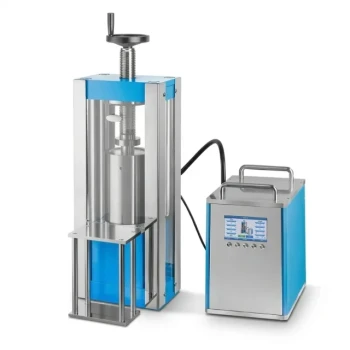
- Electric Split Lab Cold Isostatic Press CIP Machine for Cold Isostatic Pressing
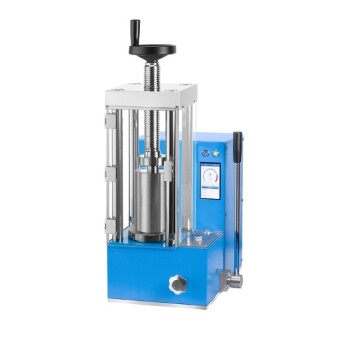
- Electric Lab Cold Isostatic Press CIP Machine for Cold Isostatic Pressing
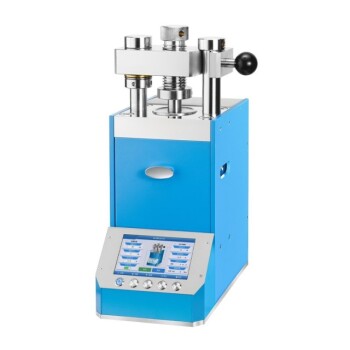
- Automatic Lab Cold Isostatic Press CIP Machine Cold Isostatic Pressing
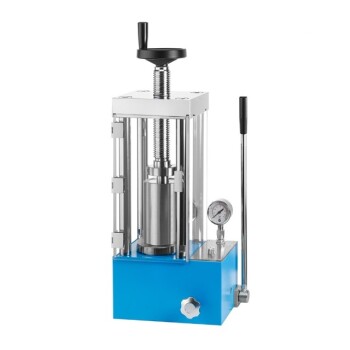
- Manual Cold Isostatic Pressing Machine CIP Pellet Press
- Warm Isostatic Press for Solid State Battery Research
People Also Ask
- How is isostatic pressing equipment utilized to integrate lithium metal anodes during solid-state battery assembly?
- How does isostatic pressing equipment enhance lithium metal anode contact? Optimize Your Solid-State Battery Assembly
- What is the meaning of isostatic pressing? Achieve Uniform Density in Complex Parts
- What is isostatic pressing method for ceramics? Achieve Uniform Density for Complex Parts
- What role does cold isostatic pressing play in the formation of feed rods for single crystal growth? Ensure Stability.