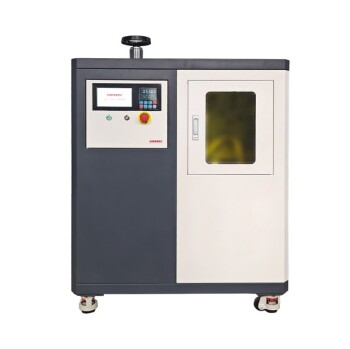
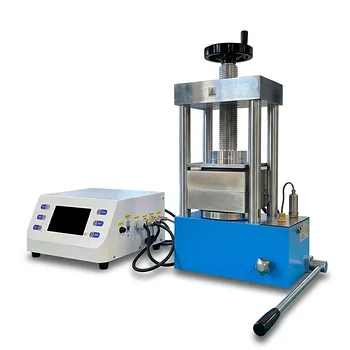
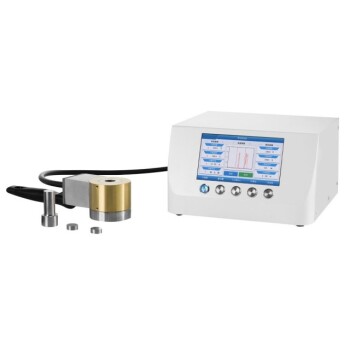
A Cold Isostatic Press (CIP) is essential for NaSICON fabrication because it eliminates the internal density gradients created by standard uniaxial pressing. While uniaxial pressing applies force in only one direction, CIP utilizes a liquid medium to apply high, uniform pressure—typically around 207 MPa—from all directions simultaneously. This secondary densification step is critical for maximizing "green density," which serves as the foundation for the material's final structural strength and electrochemical performance.
The Core Insight Uniaxial pressing creates uneven packing within a ceramic powder, leading to defects during firing. CIP corrects this by applying isotropic (uniform) pressure, ensuring the consistent shrinkage and pore-free structure required for high ionic conductivity.
The Limitations of Uniaxial Pressing
The Density Gradient Problem
Uniaxial pressing involves compacting powder in a rigid die using force from a single axis (top and bottom).
This single-direction force often creates uneven friction between the powder and the die walls. Consequently, the resulting "green body" (the unfired part) develops regions of varying density, with the center often being less dense than the edges.
Why This Fails High-Performance Ceramics
For advanced ceramics like NaSICON, density inconsistencies are fatal to performance.
If the green body has uneven density, it will shrink unevenly during the final high-temperature sintering process. This leads to warping, cracking, and—most critically—microstructural pores that interrupt the flow of ions.
How CIP Solves the Density Challenge
The Mechanism of Isostatic Pressure
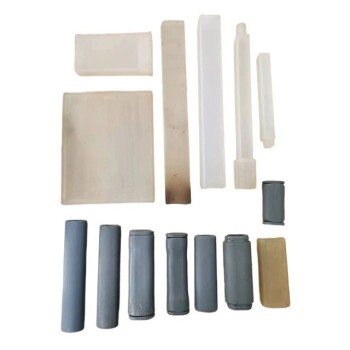
CIP submerges the pre-pressed sample (often sealed in a flexible mold like latex) into a liquid medium within a pressure vessel.
The hydraulic pressure is applied equally from every angle, rather than just one. This "isotropic" application forces the ceramic particles to pack together much more tightly and uniformly than a mechanical piston ever could.
Eliminating Gradients
Because the pressure is omnidirectional, it neutralizes the density variations left behind by the initial uniaxial press.
This homogenization ensures that the particle packing is consistent throughout the entire volume of the material, regardless of its shape or aspect ratio.
Maximizing Green Density
The process significantly increases the overall density of the green body.
Achieving a high green density is a prerequisite for success in the final firing stage. The closer the particles are packed now, the less porous the final ceramic will be.
The Critical Impact on Sintering and Performance
Ensuring Uniform Shrinkage
When a CIP-processed green body is fired, it shrinks uniformly because the particle spacing is consistent.
This stability allows for precise control over the finished product's dimensions and prevents structural failure during the transition from green body to sintered ceramic.
Determining Ionic Conductivity
The ultimate goal of NaSICON is to conduct ions efficiently.
The primary reference confirms that the green density achieved via CIP is the determining factor for the material's final ionic conductivity. By creating a pore-free, high-strength ceramic, CIP ensures there are continuous pathways for ion transport, maximizing the material's utility.
Understanding the Trade-offs
Process Complexity
CIP introduces an additional step in the manufacturing workflow.
It requires distinct equipment (pressure vessels and liquid handling systems) and additional consumables (flexible molds or bags) compared to a simple "press and fire" approach.
Cycle Time Considerations
While CIP improves the quality of the final part, it is a batch process that can impact production throughput.
However, for high-performance materials, this trade-off is generally accepted because the rejection rate of non-CIP parts due to cracking or poor conductivity would likely be much higher.
Making the Right Choice for Your Project
While uniaxial pressing shapes the powder, CIP is the quality assurance step that makes the material functional.
- If your primary focus is Maximum Ionic Conductivity: You must use CIP to eliminate pores that block ion pathways.
- If your primary focus is Structural Integrity: You must use CIP to prevent cracking and warping caused by differential shrinkage during sintering.
- If your primary focus is Complex Geometry: CIP allows for the uniform densification of long or thin parts (high aspect ratios) that uniaxial pressing cannot stabilize.
In summary, CIP is not merely a densification step; it is the process that homogenizes the material structure to unlock the specific electrochemical properties required of NaSICON.
Summary Table:
| Feature | Uniaxial Pressing | Cold Isostatic Pressing (CIP) |
|---|---|---|
| Pressure Direction | Single axis (top/bottom) | Isotropic (all directions) |
| Pressure Medium | Rigid steel die | Liquid (hydraulic) |
| Density Distribution | Gradients (uneven) | Uniform/Homogeneous |
| Shrinkage Control | Risk of warping/cracking | Precise, uniform shrinkage |
| Final Performance | Lower ionic conductivity | Optimized ionic conductivity |
Elevate Your Material Research with KINTEK
Precision is the foundation of high-performance ceramics like NaSICON. At KINTEK, we specialize in advanced laboratory equipment designed to help you achieve zero-defect results. Whether you need a high-pressure Cold Isostatic Press (CIP) for secondary densification or Hydraulic Presses (pellet, hot, isostatic) for initial shaping, our solutions ensure maximum green density and structural integrity.
Beyond pressing, our portfolio includes High-Temperature Furnaces (Muffle, Vacuum, Tube) for sintering, Crushing and Milling Systems, and PTFE/Ceramic Consumables tailored for demanding research environments. Don't let density gradients compromise your electrochemical performance.
Contact KINTEK today to discuss your project requirements!
Related Products
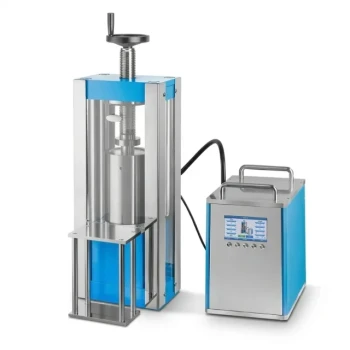
- Electric Split Lab Cold Isostatic Press CIP Machine for Cold Isostatic Pressing
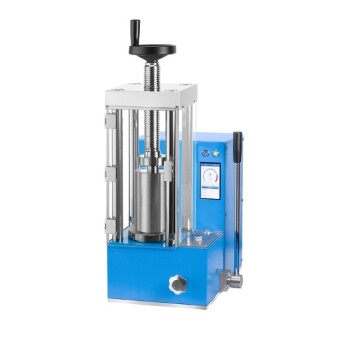
- Electric Lab Cold Isostatic Press CIP Machine for Cold Isostatic Pressing
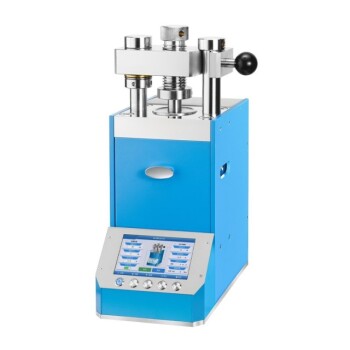
- Automatic Lab Cold Isostatic Press CIP Machine Cold Isostatic Pressing
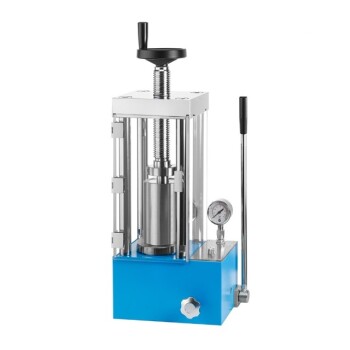
- Manual Cold Isostatic Pressing Machine CIP Pellet Press
- Warm Isostatic Press for Solid State Battery Research
People Also Ask
- How is isostatic pressing equipment utilized to integrate lithium metal anodes during solid-state battery assembly?
- How does isostatic pressing equipment enhance lithium metal anode contact? Optimize Your Solid-State Battery Assembly
- What is the meaning of isostatic pressing? Achieve Uniform Density in Complex Parts
- What is isostatic pressing method for ceramics? Achieve Uniform Density for Complex Parts
- What role does cold isostatic pressing play in the formation of feed rods for single crystal growth? Ensure Stability.