Cold Isostatic Press (CIP) technology acts as a mechanical reinforcement tool that suppresses lithium dendrite growth by densifying the polymer electrolyte and unifying its contact points. By subjecting the material to high pressure, CIP increases the electrolyte's mechanical puncture strength—specifically raising it from approximately 500g to 540g—which creates a tougher physical barrier against lithium penetration.
Core Takeaway CIP technology mitigates the risk of battery short-circuits by enhancing the structural integrity of the electrolyte. It acts as a densification method that transforms the electrolyte into a more uniform shield, delaying the penetration of metallic lithium spikes.
Enhancing Mechanical Puncture Strength
Creating a Tougher Physical Barrier
The primary mechanism by which CIP suppresses dendrites is the reinforcement of the polymer electrolyte.
Dendrites are metallic lithium spikes that grow during charging; if the electrolyte is too soft, these spikes easily pierce through it.
Quantifiable Resistance Gains
CIP treatment directly increases the force required to puncture the electrolyte material.
Data indicates that CIP can raise the mechanical puncture strength from approximately 500g to 540g. This increased resistance makes it physically more difficult for dendrites to force their way through the separator layer.
Improving Interfacial Uniformity
Eliminating Structural Weak Points
Beyond raw strength, CIP significantly improves interfacial uniformity within the battery stack.
Dendrites tend to nucleate and grow rapidly in areas where contact is poor or pressure is uneven.
Blocking Non-Uniform Deposition
By creating a homogeneous interface, CIP encourages lithium to deposit evenly across the surface rather than concentrating at specific points.
This physical uniformity blocks the erratic, non-uniform deposition of metallic lithium that typically initiates dendrite formation.
Understanding the Limitations
Delay vs. Elimination
It is critical to note that CIP is described as delaying battery short-circuits, rather than completely eliminating the possibility.
While it enhances safety, it functions as a mechanical deterrent that extends the timeline of failure rather than removing the root cause of dendrite generation.
The Limits of Incremental Strength
The increase in puncture strength (approx. 8%) is a significant operational improvement but represents an incremental enhancement.
Engineers should view CIP as a critical processing step for optimization, but it must be part of a broader safety strategy rather than a standalone cure-all for dendrite issues.
Making the Right Choice for Your Project
To determine if CIP is the right solution for your solid-state battery development, consider your specific performance targets:
- If your primary focus is Safety: CIP effectively increases the mechanical threshold required for a short circuit to occur, providing a more robust physical buffer.
- If your primary focus is Manufacturing Quality: CIP ensures a consistent, uniform interface between layers, reducing variability in lithium deposition.
Summary: CIP leverages isostatic pressure to mechanically upgrade the electrolyte, turning it into a stronger, more uniform barrier that actively resists the physical penetration of lithium dendrites.
Summary Table:
| Feature | Effect of CIP Technology | Impact on Dendrite Growth |
|---|---|---|
| Puncture Strength | Increases from ~500g to 540g | Physically resists lithium penetration |
| Interfacial Uniformity | Creates homogeneous contact points | Blocks non-uniform lithium deposition |
| Material Density | Higher electrolyte densification | Reduces structural weak points |
| Battery Safety | Delays short-circuit occurrence | Extends life and improves reliability |
Maximize Your Solid-State Battery Performance with KINTEK
Take your battery research to the next level with KINTEK’s precision Cold Isostatic Press (CIP) systems. As specialists in advanced laboratory equipment, we provide the high-pressure technology necessary to eliminate structural weak points and enhance the puncture strength of your polymer electrolytes.
Whether you are refining battery interfaces or scaling high-temperature furnace processes, KINTEK offers a comprehensive range of isostatic presses, hydraulic pellet presses, and vacuum furnaces designed for the rigorous demands of material science.
Ready to suppress dendrite growth and ensure manufacturing quality? Contact our technical experts today to find the perfect CIP solution for your laboratory.
Related Products
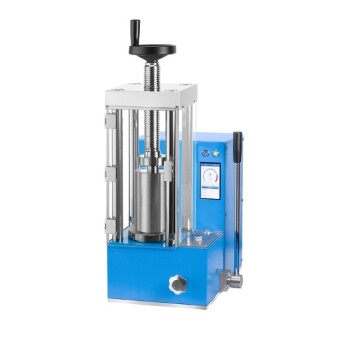
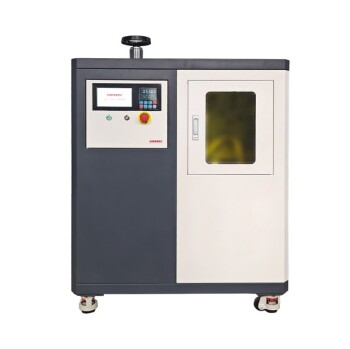
- Electric Lab Cold Isostatic Press CIP Machine for Cold Isostatic Pressing
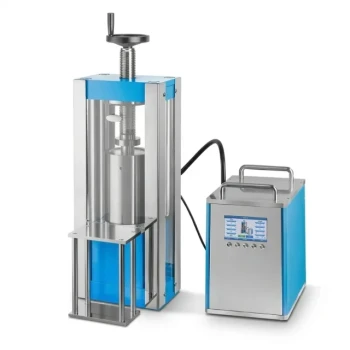
- Electric Split Lab Cold Isostatic Press CIP Machine for Cold Isostatic Pressing
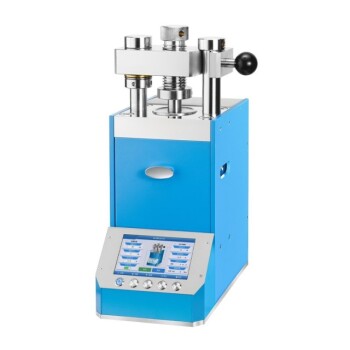
- Automatic Lab Cold Isostatic Press CIP Machine Cold Isostatic Pressing
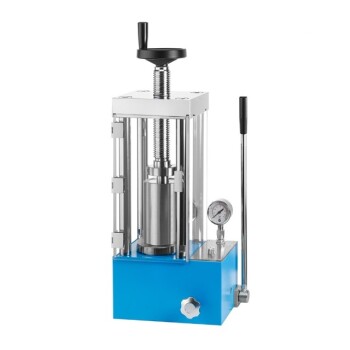
- Manual Cold Isostatic Pressing Machine CIP Pellet Press
- Isostatic Molding Pressing Molds for Lab
People Also Ask
- What role does cold isostatic pressing play in the formation of feed rods for single crystal growth? Ensure Stability.
- What is isostatic pressing method for ceramics? Achieve Uniform Density for Complex Parts
- In what ways does Cold Isostatic Pressing (CIP) enhance LiFePO4 battery performance? Boost Density and Conductivity
- How does Cold Isostatic Pressing (CIP) benefit SiC ceramic reactors? Achieve Flawless Material Integrity
- Why is a cold isostatic press advantageous for Argyrodite sulfide solid-state batteries? Achieve Optimal Densification