The Cold Isostatic Press (CIP) acts as the decisive hydraulic engine for integrating metallic lithium into porous ceramic frameworks. Its significance lies in its ability to apply high, uniform hydraulic pressure (specifically 71 MPa) to force ductile lithium into the microscopic pores of the LLZO skeleton, ensuring deep infiltration without shattering the brittle ceramic.
By leveraging isotropic pressure, CIP circumvents the mechanical limitations of standard pressing methods. It effectively drives soft lithium up to 12 micrometers deep into the 3D ceramic structure, creating the tight physical contact required for high-performance composite anodes while preserving the macro-integrity of the film.
The Mechanics of Isotropic Integration
Harnessing Hydraulic Pressure
CIP functions by applying pressure from all directions simultaneously, known as isotropic pressure.
Unlike uniaxial pressing, which applies force from only the top and bottom, CIP uses a fluid medium to exert uniform force across the entire surface area of the materials.
Exploiting Lithium Ductility
Metallic lithium is inherently ductile, meaning it can deform under stress without breaking.
Under the 71 MPa of pressure generated by the CIP, the lithium behaves almost plastically, flowing like a viscous fluid.
This allows the metal to squeeze into the complex, microscopic pore network of the LLZO ceramic skeleton.
Achieving Deep Structural Filling
The primary goal of this process is deep impregnation, not just surface coating.
The hydraulic force pushes the lithium up to 12 micrometers into the ceramic framework.
This depth is critical for establishing a robust three-dimensional conductive network within the anode.
Resolving the Brittleness Challenge
Protecting the Ceramic Skeleton
LLZO (Lithium Lanthanum Zirconium Oxide) is a ceramic, making it inherently brittle and prone to fracture.
Traditional mechanical pressing concentrates stress at specific points, which would easily crack or crush the delicate porous film.
Uniform Stress Distribution
Because CIP applies pressure via a fluid, the stress is distributed perfectly evenly across the complex geometry of the porous structure.
This uniformity ensures that while the lithium is forced into the voids, the ceramic skeleton itself is supported from all sides.
This prevents the macro-integrity of the film from being compromised during the filling process.
Optimizing Anode Fabrication
To maximize the effectiveness of your composite anode preparation, consider these factors regarding the CIP process:
- If your primary focus is interfacial resistance: Rely on CIP to maximize the surface area contact between the lithium and LLZO, eliminating voids that impede ion flow.
- If your primary focus is mechanical yield: Use the isotropic nature of CIP to process thinner, more fragile ceramic films that would otherwise break under mechanical pressure.
The Cold Isostatic Press effectively solves the "hard-soft" interface problem, allowing distinct materials to form a unified composite without sacrificing structural stability.
Summary Table:
| Feature | Impact on LLZO/Li Composite Preparation |
|---|---|
| Pressure Type | Isotropic (Uniform 71 MPa) prevents ceramic fracturing |
| Infiltration Depth | Drives ductile lithium up to 12 μm into 3D pores |
| Material Synergy | Resolves the "hard-soft" interface between brittle LLZO and soft Li |
| Performance Gain | Lowers interfacial resistance by eliminating voids and gaps |
| Structural Safety | Preserves macro-integrity of thin, fragile ceramic films |
Elevate Your Battery Research with KINTEK Precision
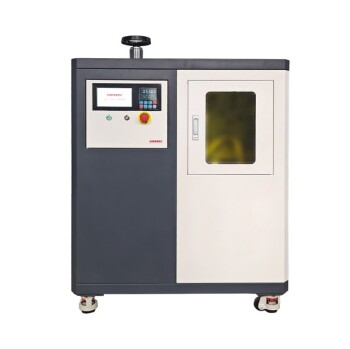
Unlock the full potential of your solid-state battery materials with KINTEK’s advanced Cold Isostatic Presses (CIP). Specifically designed to handle the delicate integration of metallic lithium and ceramic frameworks like LLZO, our isostatic systems provide the uniform pressure necessary to achieve deep structural filling without compromising brittle skeletons.
From high-performance hydraulic pellet and isostatic presses to specialized battery research tools and consumables, KINTEK specializes in providing laboratory equipment that bridges the gap between material innovation and mechanical reality. Our comprehensive portfolio also includes high-temperature furnaces, autoclaves, and crushing systems tailored for the most demanding research environments.
Ready to optimize your composite anode fabrication and achieve superior interfacial contact? Contact KINTEK today to discuss your project requirements!
Related Products
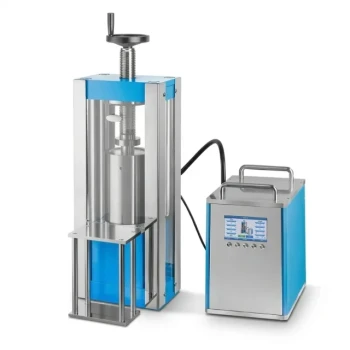
- Electric Split Lab Cold Isostatic Press CIP Machine for Cold Isostatic Pressing
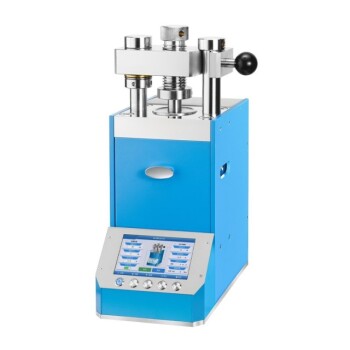
- Automatic Lab Cold Isostatic Press CIP Machine Cold Isostatic Pressing
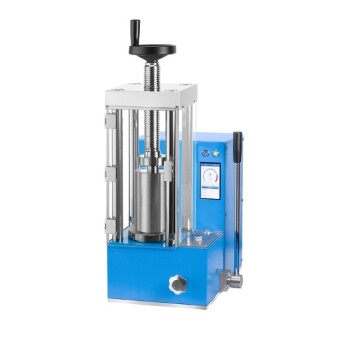
- Electric Lab Cold Isostatic Press CIP Machine for Cold Isostatic Pressing
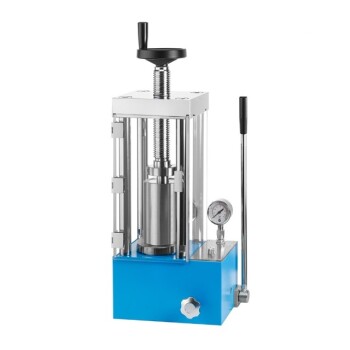
- Manual Cold Isostatic Pressing Machine CIP Pellet Press
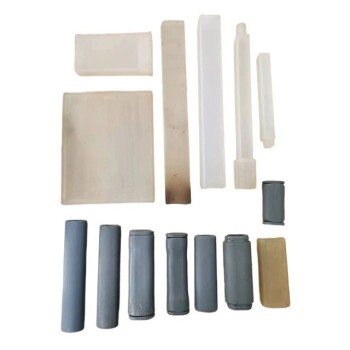
- Isostatic Molding Pressing Molds for Lab
People Also Ask
- How is isostatic pressing equipment utilized to integrate lithium metal anodes during solid-state battery assembly?
- How does isostatic pressing equipment enhance lithium metal anode contact? Optimize Your Solid-State Battery Assembly
- What is the meaning of isostatic pressing? Achieve Uniform Density in Complex Parts
- What is isostatic pressing method for ceramics? Achieve Uniform Density for Complex Parts
- What role does cold isostatic pressing play in the formation of feed rods for single crystal growth? Ensure Stability.