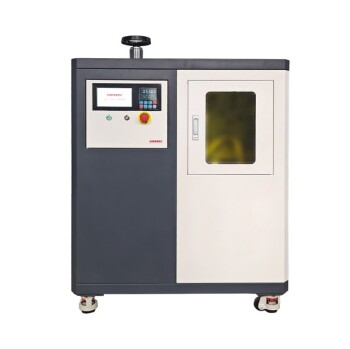
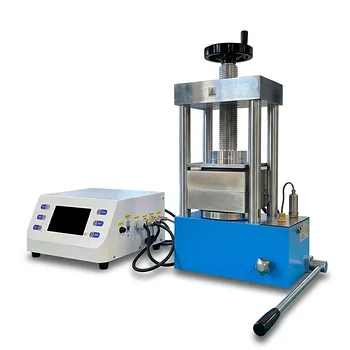
Cold Isostatic Pressing (CIP) offers a distinct structural advantage over uniaxial pressing by applying high, omnidirectional pressure—often up to 2000 bar—through a liquid medium.
For nickel-alumina composites, specifically those with significant ceramic reinforcement (e.g., 30 wt.%), this method is superior because it creates uniform density throughout the part. Unlike uniaxial pressing, which suffers from friction-induced density gradients, CIP enhances the mechanical interlocking between particles, resulting in a stronger "green body" and significantly reduced deformation during the final sintering phase.
Core Takeaway While uniaxial pressing struggles with die-wall friction and uneven compaction, CIP utilizes hydrostatic pressure to eliminate density gradients. This ensures that composite materials shrink predictably and maintain structural integrity, especially in components with challenging geometries like long, thin rods.
Eliminating Density Gradients
The Limitation of Uniaxial Pressing
In traditional uniaxial pressing, pressure is applied in a single direction. This creates friction against the die walls, leading to uneven density distribution.
Consequently, the center of the part often differs in density from the edges. This variation creates internal stresses that can lead to cracking or warping later in the process.
The Omnidirectional Advantage of CIP
CIP submerges the mold in a liquid medium to apply pressure equally from every direction. This "isostatic" approach ensures that every millimeter of the nickel-alumina powder is compressed with the same force.
This effectively eliminates the density gradients that plague uniaxial methods. The result is a homogeneous internal structure that is critical for high-performance composites.
Enhancing Composite Integrity
Mechanical Interlocking
For composite materials, such as nickel reinforced with alumina, particle adhesion is critical. The high pressure of industrial CIP fosters significant mechanical interlocking between the metal and ceramic phases.
This is particularly beneficial for mixtures containing around 30 wt.% ceramic reinforcement. The intense, uniform pressure forces the particles to lock together more effectively than unidirectional force allows.
Superior Green Strength
The "green body" refers to the compacted part before it is fired or sintered. CIP produces green bodies with significantly higher strength compared to uniaxial pressing.
This increased strength allows for safer handling and machining of the part before sintering. It reduces the risk of the component crumbling or sustaining damage during transfer between processing stages.
Geometry and Aspect Ratios
Handling Large Aspect Ratios
Uniaxial pressing becomes unreliable when creating long, thin parts (high aspect ratios), typically failing at ratios greater than 3:1 due to friction losses.
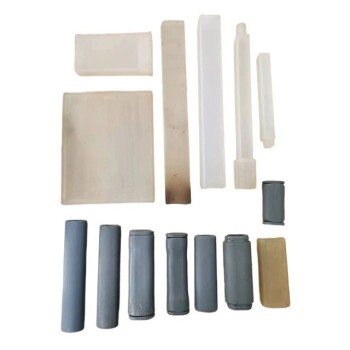
CIP excels in this area, easily accommodating aspect ratios greater than 2:1. It allows for the production of long rods or pellets without the density variations that would cause a uniaxial part to break.
Reducing Sintering Deformation
Because the green body has a uniform density, it shrinks evenly during the sintering (firing) process.
This uniformity prevents the distortion and cracking that often occur when a part with uneven density is heated. The result is a final product that retains its intended shape with high fidelity.
Understanding the Trade-offs
Dimensional Tolerance vs. Uniformity
While CIP offers superior density, it offers less direct dimensional control than uniaxial pressing. Because flexible molds are used, achieving a precise outer diameter often requires trial and error or post-process machining.
Uniaxial pressing, by contrast, uses rigid dies that guarantee specific dimensions, provided the density gradients are acceptable for the application.
Production Speed
Uniaxial pressing is generally faster and better suited for high-volume production of simple, small shapes. CIP is a slower batch process, making it better suited for high-value, complex, or structurally critical components.
Making the Right Choice for Your Goal
To select the correct equipment for your nickel-alumina application, evaluate your specific constraints:
- If your primary focus is Structural Integrity: Choose CIP to ensure uniform density and prevent cracking during sintering.
- If your primary focus is High Aspect Ratios: Choose CIP to produce long, thin components (rods/tubes) without density gradients.
- If your primary focus is High-Volume Speed: Choose Uniaxial pressing, provided the parts are small and simple enough to tolerate minor density variations.
By removing the variable of uneven pressure, Cold Isostatic Pressing transforms the production of nickel-alumina composites from a game of chance into a predictable, high-quality process.
Summary Table:
| Feature | Uniaxial Pressing | Cold Isostatic Pressing (CIP) |
|---|---|---|
| Pressure Direction | Single axis (Unidirectional) | Omnidirectional (Hydrostatic) |
| Density Distribution | Uneven (Friction-induced gradients) | Highly uniform throughout |
| Aspect Ratios | Limited (typically < 3:1) | High (suitable for long rods/tubes) |
| Green Strength | Moderate | Superior (mechanical interlocking) |
| Sintering Result | Risk of warping/cracking | Even shrinkage & high fidelity |
| Production Speed | High (ideal for simple shapes) | Moderate (batch process for high-value) |
Elevate Your Material Performance with KINTEK Precision
Ready to eliminate density gradients and achieve superior structural integrity for your nickel-alumina composites? KINTEK specializes in advanced laboratory equipment, including high-performance hydraulic presses (isostatic, pellet, and hot) and specialized crushing/milling systems tailored for high-tech material research.
Whether you are developing complex composites or high-temperature ceramics, our comprehensive portfolio—from CIP systems and high-temperature furnaces to battery research tools and crucibles—provides the reliability your lab demands. Our experts are here to help you select the ideal equipment to optimize your sintering outcomes and green body strength.
Contact KINTEK Today to Discover Your Ideal Pressing Solution
References
- Vayos Karayannis, A. Moutsatsou. Synthesis and Characterization of Nickel-Alumina Composites from Recycled Nickel Powder. DOI: 10.1155/2012/395612
This article is also based on technical information from Kintek Solution Knowledge Base .
Related Products
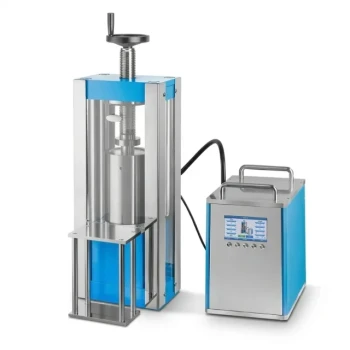
- Electric Split Lab Cold Isostatic Press CIP Machine for Cold Isostatic Pressing
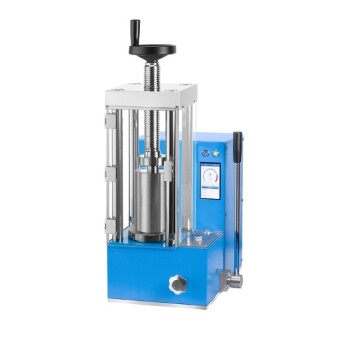
- Electric Lab Cold Isostatic Press CIP Machine for Cold Isostatic Pressing
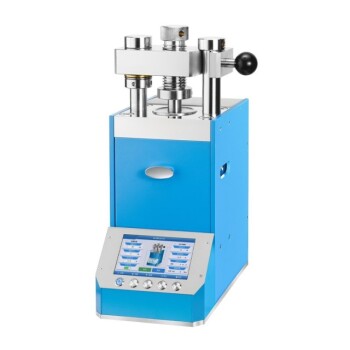
- Automatic Lab Cold Isostatic Press CIP Machine Cold Isostatic Pressing
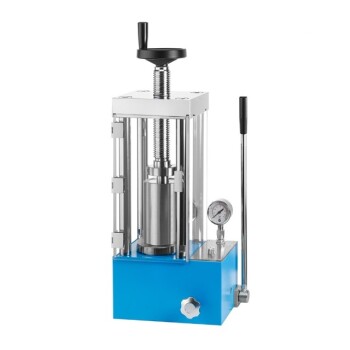
- Manual Cold Isostatic Pressing Machine CIP Pellet Press
- Warm Isostatic Press for Solid State Battery Research
People Also Ask
- How is isostatic pressing equipment utilized to integrate lithium metal anodes during solid-state battery assembly?
- How does isostatic pressing equipment enhance lithium metal anode contact? Optimize Your Solid-State Battery Assembly
- What is the meaning of isostatic pressing? Achieve Uniform Density in Complex Parts
- What is isostatic pressing method for ceramics? Achieve Uniform Density for Complex Parts
- What role does cold isostatic pressing play in the formation of feed rods for single crystal growth? Ensure Stability.