Knowledge What are the functions of stainless steel capsules in HIP synthesis of Li2MnSiO4? Key Roles in Crystal Growth
Author avatar

Tech Team · Kintek Solution

Updated 3 weeks ago

What are the functions of stainless steel capsules in HIP synthesis of Li2MnSiO4? Key Roles in Crystal Growth


Stainless steel capsules serve as hermetic isolation vessels that enable the synthesis of Li2MnSiO4 under extreme conditions. They function primarily to seal ball-milled precursor powders, protecting them from the external pressure-transmitting media while allowing the isostatic transfer of high gas pressure directly to the sample.

Core Insight: The capsule does not merely contain the sample; it acts as a reactor. By creating a closed high-pressure microenvironment, the capsule allows residual moisture within the precursors to transform into a supercritical fluid, facilitating crystal synthesis at lower temperatures.

Mechanical Functions of the Capsule

Isolation from the Environment

The primary mechanical function of the stainless steel capsule is contamination control.

During the HIP process, the furnace is filled with a pressure-transmitting medium, typically an inert gas like argon. The capsule prevents this gas from infiltrating the porous powder compact, which could inhibit densification or alter the material chemistry.

Isostatic Pressure Transfer

While the capsule acts as a barrier, it must also be malleable enough to transfer force.

As the external gas pressure rises (often exceeding 100 MPa), the stainless steel capsule deforms uniformly. This transmits the isostatic pressure to the internal powders equally from all directions, ensuring uniform density and bonding in the final material.

The Chemical Reaction Microenvironment

Creating a Supercritical Fluid

The most distinct function in this specific synthesis is the creation of a hydrothermal-like environment.

Because the capsule is a closed system, any residual moisture present in the precursor powders is trapped. Under the high temperature and pressure of the HIP process, this trapped moisture converts into a supercritical fluid.

Facilitating Low-Temperature Synthesis

This supercritical fluid is not a byproduct to be eliminated; it is an active synthesis aid.

The fluid enhances the reaction kinetics of the materials inside the capsule. This mechanism allows the crystallization of Li2MnSiO4 to occur at temperatures lower than those required by conventional solid-state synthesis methods.

Understanding the Trade-offs

The Consumable Nature of the Capsule

It is critical to recognize that these capsules are single-use consumables.

Because the capsule undergoes significant plastic deformation to transfer pressure to the powder, it cannot be reused. This adds a material cost and a preparation step (machining, filling, and welding) to every single batch produced.

Moisture Management Complexity

While residual moisture helps form the supercritical fluid, precision is required.

There is a delicate balance between having enough moisture to facilitate the reaction and having too much, which could potentially over-pressurize the capsule or lead to unwanted phases. The encapsulation process locks in the initial state of the powder, removing the ability to adjust the atmosphere once the process begins.

Optimizing Your Synthesis Strategy

To leverage the full potential of stainless steel capsules in HIP synthesis, consider the following strategic adjustments:

  • If your primary focus is Purity: Ensure high-integrity welding of the capsule to guarantee absolute isolation from the pressure medium.
  • If your primary focus is Reaction Efficiency: Do not aggressively dry your precursors; allow controlled residual moisture to remain to enable the supercritical fluid mechanism.

The effectiveness of your Li2MnSiO4 synthesis relies not just on the pressure applied, but on the precise chemical microenvironment you engineer inside the steel capsule.

Summary Table:

Function Description Benefit to Synthesis
Isolation Hermetic sealing against argon gas Prevents contamination and preserves chemistry
Pressure Transfer Malleable deformation under high load Ensures uniform density via isostatic force
Microenvironment Traps residual precursor moisture Creates supercritical fluid for faster kinetics
Thermal Efficiency Lower synthesis temperatures Enables crystallization below solid-state norms

Elevate Your Advanced Material Synthesis with KINTEK

Precision in Hot Isostatic Pressing (HIP) requires more than just pressure—it requires the right environment. KINTEK specializes in high-performance laboratory equipment, including isostatic presses, high-temperature furnaces, and crushing and milling systems designed to optimize your Li-ion battery research and advanced ceramic production.

From high-temperature high-pressure reactors to essential PTFE and ceramic consumables, our comprehensive portfolio ensures your lab achieves uniform density and superior material purity.

Ready to optimize your synthesis strategy? Contact our technical experts today to discover how KINTEK can enhance your research efficiency and material quality.

Related Products

People Also Ask

Related Products

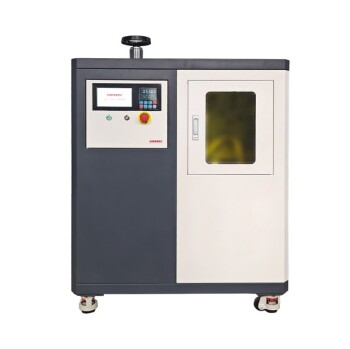
Warm Isostatic Press WIP Workstation 300Mpa for High Pressure Applications

Warm Isostatic Press WIP Workstation 300Mpa for High Pressure Applications

Discover Warm Isostatic Pressing (WIP) - A cutting-edge technology that enables uniform pressure to shape and press powdered products at a precise temperature. Ideal for complex parts and components in manufacturing.

Customizable Laboratory High Temperature High Pressure Reactors for Diverse Scientific Applications

Customizable Laboratory High Temperature High Pressure Reactors for Diverse Scientific Applications

High-pressure lab reactor for precise hydrothermal synthesis. Durable SU304L/316L, PTFE liner, PID control. Customizable volume & materials. Contact us!

Stainless High Pressure Autoclave Reactor Laboratory Pressure Reactor

Stainless High Pressure Autoclave Reactor Laboratory Pressure Reactor

Discover the versatility of Stainless High Pressure Reactor - a safe and reliable solution for direct and indirect heating. Built with stainless steel, it can withstand high temperatures and pressures. Learn more now.

Warm Isostatic Press for Solid State Battery Research

Warm Isostatic Press for Solid State Battery Research

Discover the advanced Warm Isostatic Press (WIP) for semiconductor lamination. Ideal for MLCC, hybrid chips, and medical electronics. Enhance strength and stability with precision.

High Pressure Laboratory Autoclave Reactor for Hydrothermal Synthesis

High Pressure Laboratory Autoclave Reactor for Hydrothermal Synthesis

Discover the applications of Hydrothermal Synthesis Reactor - a small, corrosion-resistant reactor for chemical labs. Achieve rapid digestion of insoluble substances in a safe and reliable way. Learn more now.

Mini SS High Pressure Autoclave Reactor for Laboratory Use

Mini SS High Pressure Autoclave Reactor for Laboratory Use

Mini SS High Pressure Reactor - Ideal for medicine, chemical, and scientific research industries. Programmed heating temp and stirring speed, up to 22Mpa pressure.

Square Bidirectional Pressure Mold for Lab Use

Square Bidirectional Pressure Mold for Lab Use

Discover precision in molding with our Square Bidirectional Pressure Mold. Ideal for creating diverse shapes and sizes, from squares to hexagons, under high pressure and uniform heating. Perfect for advanced material processing.

Visual High-Pressure Reactor for In-Situ Observation

Visual High-Pressure Reactor for In-Situ Observation

The visual high-pressure reactor uses transparent sapphire or quartz glass, maintaining high strength and optical clarity under extreme conditions for real-time reaction observation.

Special Shape Press Mold for Lab

Special Shape Press Mold for Lab

Discover high-pressure special shape press molds for diverse applications, from ceramics to automotive parts. Ideal for precise, efficient molding of various shapes and sizes.

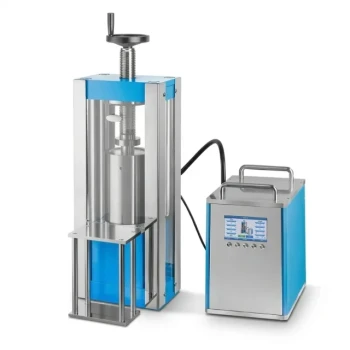
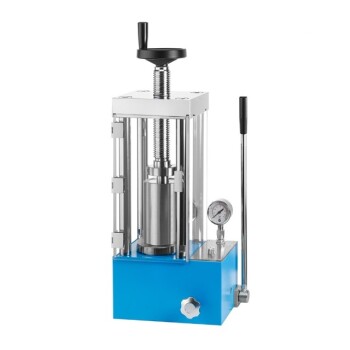
Manual Cold Isostatic Pressing Machine CIP Pellet Press

Manual Cold Isostatic Pressing Machine CIP Pellet Press

Lab Manual Isostatic Press is a high-efficient equipment for sample preparation widely used in material research, pharmacy, ceramics, and electronic industries. It allows for precision control of the pressing process and can work in a vacuum environment.

Automatic Lab Cold Isostatic Press CIP Machine Cold Isostatic Pressing

Automatic Lab Cold Isostatic Press CIP Machine Cold Isostatic Pressing

Efficiently prepare samples with our Automatic Lab Cold Isostatic Press. Widely used in material research, pharmacy, and electronic industries. Provides greater flexibility and control compared to electric CIPs.

Cold Isostatic Pressing Machine CIP for Small Workpiece Production 400Mpa

Cold Isostatic Pressing Machine CIP for Small Workpiece Production 400Mpa

Produce uniformly high-density materials with our Cold Isostatic Press. Ideal for compacting small workpieces in production settings. Widely used in powder metallurgy, ceramics, and biopharmaceutical fields for high-pressure sterilization and protein activation.

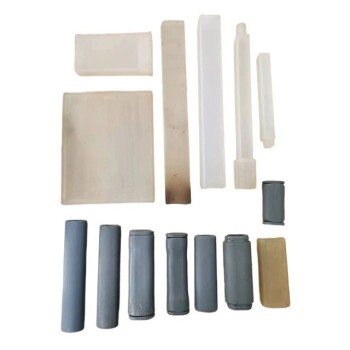
Carbide Lab Press Mold for Laboratory Applications

Carbide Lab Press Mold for Laboratory Applications

Form ultra-hard samples with Carbide Lab Press Mold. Made of Japanese high-speed steel, it has a long service life. Custom sizes available.

XRF & KBR plastic ring lab Powder Pellet Pressing Mold for FTIR

XRF & KBR plastic ring lab Powder Pellet Pressing Mold for FTIR

Get precise XRF samples with our plastic ring lab powder pellet pressing mold. Fast tableting speed and customizable sizes for perfect molding every time.

Cylindrical Press Mold with Scale for Lab

Cylindrical Press Mold with Scale for Lab

Discover precision with our Cylindrical Press Mold. Ideal for high-pressure applications, it molds various shapes and sizes, ensuring stability and uniformity. Perfect for lab use.

Split Chamber CVD Tube Furnace with Vacuum Station Chemical Vapor Deposition System Equipment Machine

Split Chamber CVD Tube Furnace with Vacuum Station Chemical Vapor Deposition System Equipment Machine

Efficient split chamber CVD furnace with vacuum station for intuitive sample checking and quick cooling. Up to 1200℃ max temperature with accurate MFC mass flowmeter control.

915MHz MPCVD Diamond Machine Microwave Plasma Chemical Vapor Deposition System Reactor

915MHz MPCVD Diamond Machine Microwave Plasma Chemical Vapor Deposition System Reactor

915MHz MPCVD Diamond Machine and its multi-crystal effective growth, the maximum area can reach 8 inches, the maximum effective growth area of single crystal can reach 5 inches. This equipment is mainly used for the production of large-size polycrystalline diamond films, the growth of long single crystal diamonds, the low-temperature growth of high-quality graphene, and other materials that require energy provided by microwave plasma for growth.

Microwave Plasma Chemical Vapor Deposition MPCVD Machine System Reactor for Lab and Diamond Growth

Microwave Plasma Chemical Vapor Deposition MPCVD Machine System Reactor for Lab and Diamond Growth

Get high-quality diamond films with our Bell-jar Resonator MPCVD machine designed for lab and diamond growth. Discover how Microwave Plasma Chemical Vapor Deposition works for growing diamonds using carbon gas and plasma.

Optical Water Bath Electrolytic Electrochemical Cell

Optical Water Bath Electrolytic Electrochemical Cell

Upgrade your electrolytic experiments with our Optical Water Bath. With controllable temperature and excellent corrosion resistance, it's customizable for your specific needs. Discover our complete specifications today.

Double Layer Five-Port Water Bath Electrolytic Electrochemical Cell

Double Layer Five-Port Water Bath Electrolytic Electrochemical Cell

Experience optimal performance with our Water Bath Electrolytic Cell. Our double-layer, five-port design boasts corrosion resistance and longevity. Customizable to fit your specific needs. View specs now.


Leave Your Message