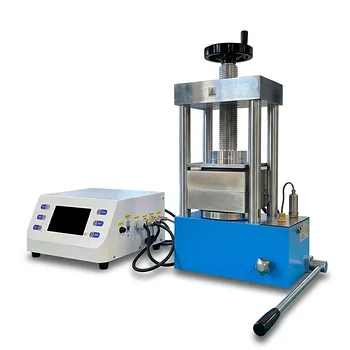
The distinct advantage of using a Cold Isostatic Press (CIP) lies in its ability to apply uniform, high pressure to the ceramic powder through a fluid medium. While traditional uniaxial pressing exerts force from a single axis, CIP applies omnidirectional pressure, effectively eliminating internal density gradients and ensuring the composite material is structurally homogeneous.
By utilizing isotropic hydraulic force, CIP solves the issue of uneven compression common in uniaxial pressing. This structural uniformity is essential for preventing warping or cracking during the sintering process and achieving a high-integrity final ceramic.
The Mechanism of Superior Densification
Omnidirectional Pressure Application
Unlike traditional methods that compress powder vertically, a CIP uses a fluid medium to exert pressure from all sides simultaneously. This allows for the application of uniform high pressure, such as 300 MPa, across the entire surface of the mold.
Eliminating Density Gradients
In uniaxial pressing, friction and directional force often create zones of uneven density within the pellet. CIP mitigates this by applying isotropic pressure, ensuring that every part of the ceramic body is compressed equally.
Increasing Green Body Density
The omnidirectional force significantly increases the packing density of the "green body" (the unfired ceramic). Achieving this high initial density is a prerequisite for reaching high relative densities, such as 95%, in the final product.
Ensuring Structural Integrity
Preventing Sintering Defects
The uniformity achieved during the pressing stage is critical for the subsequent high-temperature treatment. By ensuring a homogeneous internal structure, CIP directly prevents warping or cracking that typically occurs when unevenly dense materials are sintered.
Enhancing Interface Consistency
Using CIP promotes a more uniform internal structure, which can lead to lower interfacial resistance. This is vital for the performance of composite ceramics like Na2Ni2TeO6 and Na2Zn2TeO6, where consistent material properties are required.
Understanding the Risks of Traditional Pressing
The Pitfalls of Uniaxial Pressing
While uniaxial pressing is a standard traditional method, it inherently introduces internal density gradients. These inconsistencies create weak points in the ceramic structure that are prone to failure under thermal stress.
The Consequence of Low Uniformity
Relying solely on uniaxial pressing increases the risk of fabrication failure. Without the isotropic compression of a CIP, the ceramic pellets are significantly more susceptible to structural distortion during the final heating phase.
Making the Right Choice for Your Project
To ensure the successful fabrication of Na2Ni2TeO6 and Na2Zn2TeO6 composite ceramics, consider your specific production goals:
- If your primary focus is structural reliability: Prioritize CIP to eliminate density gradients and prevent the warping or cracking associated with uneven compression.
- If your primary focus is material performance: Use CIP to maximize the packing density of the green body, which is essential for achieving high relative density and low interfacial resistance.
By adopting Cold Isostatic Pressing, you move from simple compression to true structural homogenization, ensuring your ceramic pellets survive the sintering process intact.
Summary Table:
| Feature | Traditional Uniaxial Pressing | Cold Isostatic Pressing (CIP) |
|---|---|---|
| Pressure Direction | Single axis (vertical) | Omnidirectional (isotropic) |
| Internal Density | Uneven (density gradients) | Uniform / Homogeneous |
| Green Body Quality | Lower packing density | Higher packing density |
| Sintering Outcome | Prone to warping/cracking | High structural integrity |
| Interfacial Resistance | Higher / Inconsistent | Lower / Consistent |
Elevate Your Material Research with KINTEK Precision
Don't let density gradients compromise your high-performance ceramics. KINTEK specializes in advanced laboratory solutions, offering professional-grade Cold Isostatic Presses (CIP) and Isostatic Hydraulic Systems designed to eliminate warping and ensure structural homogenization.
Whether you are working with Na2Ni2TeO6 composites or advanced battery research, our comprehensive portfolio—including high-pressure reactors, crushing and milling systems, and precision hydraulic presses—is engineered to meet the rigorous demands of your lab.
Ready to achieve 95%+ relative density in your ceramic pellets? Contact our technical experts today to find the perfect equipment for your specific application.
Related Products
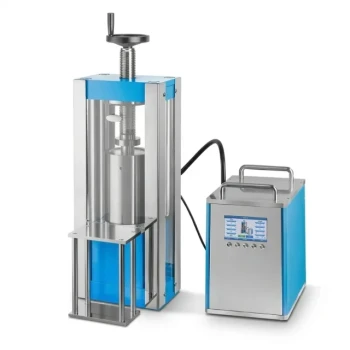
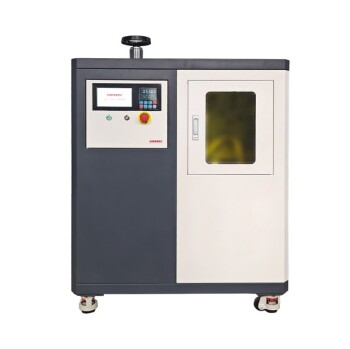
- Electric Split Lab Cold Isostatic Press CIP Machine for Cold Isostatic Pressing
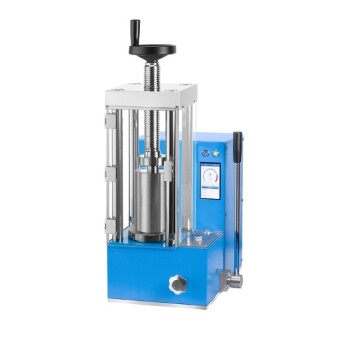
- Electric Lab Cold Isostatic Press CIP Machine for Cold Isostatic Pressing
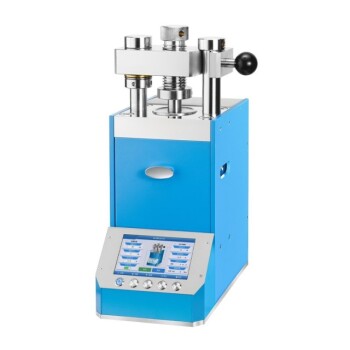
- Automatic Lab Cold Isostatic Press CIP Machine Cold Isostatic Pressing
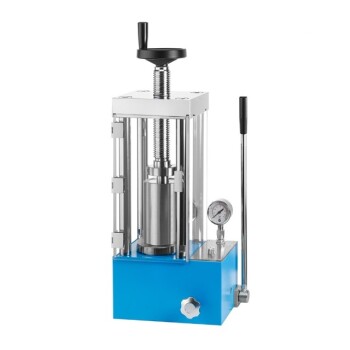
- Manual Cold Isostatic Pressing Machine CIP Pellet Press
- Warm Isostatic Press for Solid State Battery Research
People Also Ask
- How is isostatic pressing equipment utilized to integrate lithium metal anodes during solid-state battery assembly?
- How does isostatic pressing equipment enhance lithium metal anode contact? Optimize Your Solid-State Battery Assembly
- What is the meaning of isostatic pressing? Achieve Uniform Density in Complex Parts
- What is isostatic pressing method for ceramics? Achieve Uniform Density for Complex Parts
- What role does cold isostatic pressing play in the formation of feed rods for single crystal growth? Ensure Stability.