Cold pressing is the preferred fabrication method for Li10SnP2S12 electrolyte pellets because sulfide materials possess a unique malleability that allows them to densify effectively under pressure alone. Unlike oxide-based electrolytes, which require high-temperature sintering to fuse, Li10SnP2S12 is prone to chemical decomposition and unwanted side reactions if exposed to the intense heat of sintering furnaces.
Core Insight: The fabrication choice is dictated by the material's mechanical properties; sulfides are ductile enough to bond at room temperature, whereas high thermal energy compromises their chemical stability.
The Critical Role of Material Ductility
Malleability Eliminates the Need for Heat
The primary reason for using cold pressing is that sulfide solid electrolytes, such as Li10SnP2S12, are inherently soft and malleable.
This mechanical ductility allows the particles to deform plastically when compressed.
Simply applying pressure via a hydraulic press at room temperature is sufficient to close gaps and achieve high density, a process that usually requires heat for harder materials.
The Contrast with Oxide Electrolytes
To understand why cold pressing is specific to sulfides, one must look at oxide solid electrolytes.
Oxides are typically hard and brittle ceramics.
Because they do not deform under pressure, they require high-temperature sintering to facilitate atomic diffusion and densification.
Thermal Stability Concerns
Avoiding Chemical Decomposition
High-temperature sintering furnaces are detrimental to Li10SnP2S12 pellets due to their thermal instability.
Exposing these sulfides to the high temperatures typical of sintering can trigger chemical decomposition.
Preventing Side Reactions
Beyond decomposition, high heat can induce unwanted side reactions within the material or with the processing vessel.
Cold pressing circumvents this risk entirely by keeping the processing environment at room temperature, ensuring the chemical integrity of the electrolyte is preserved.
Understanding the Trade-offs
The Limitations of Room-Temperature Pressing
While cold pressing is superior to sintering for stability, it does have limitations regarding absolute density.
Cold pressing alone may leave residual micro-cracks or pores between particles, which can create grain boundary resistance.
The Nuance of "Hot Pressing"
It is important to distinguish between "sintering furnaces" (high heat) and "hot pressing" (moderate heat).
While high heat is destructive, applying moderate heat (e.g., 180°C) during pressing can induce creep and plastic deformation.
This technique, known as hot pressing, can eliminate pores and significantly increase ionic conductivity compared to cold pressing, without reaching the destructive temperatures of sintering.
Making the Right Choice for Your Goal
When designing a fabrication process for Li10SnP2S12, your equipment choice depends on the balance between material stability and performance optimization.
- If your primary focus is Chemical Stability: Use Cold Pressing to ensure the material densifies without any risk of thermal decomposition or reaction.
- If your primary focus is Maximizing Conductivity: Consider Hot Pressing (at low temperatures) to reduce grain boundary resistance and close micro-cracks, but strictly avoid high-temperature sintering.
Fabricating sulfide electrolytes is about leveraging their mechanical softness to achieve density without using the thermal energy that would destroy them.
Summary Table:
| Feature | Cold Pressing | High-Temperature Sintering |
|---|---|---|
| Suitability | Ideal for Sulfide Electrolytes (Li10SnP2S12) | Best for Hard Oxide Ceramics |
| Mechanism | Plastic deformation & malleability | Atomic diffusion & grain growth |
| Temperature | Room Temperature | High Heat (Often >800°C) |
| Chemical Impact | Preserves material integrity | Risks decomposition & side reactions |
| Pros | Prevents thermal degradation | High absolute density for brittle materials |
Elevate Your Battery Research with KINTEK Precision Equipment
Fabricating high-performance Li10SnP2S12 electrolyte pellets requires the right balance of pressure and thermal control. KINTEK provides the specialized tools you need to optimize your solid-state battery research, from advanced hydraulic presses (pellet, hot, and isostatic) for precise densification to a comprehensive range of laboratory furnaces for materials requiring controlled thermal environments.
Whether you are looking for high-pressure solutions to maximize sulfide conductivity or high-temperature reactors and vacuum furnaces for precursor synthesis, our team is ready to support your lab's specific requirements.
Ready to optimize your fabrication process? Contact KINTEK today for expert guidance and high-quality lab solutions!
Related Products
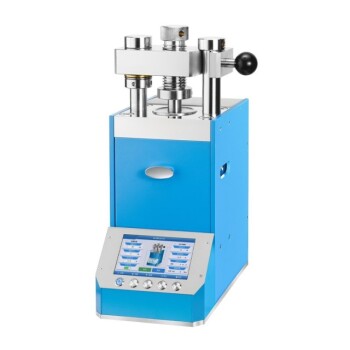
- Automatic Lab Cold Isostatic Press CIP Machine Cold Isostatic Pressing
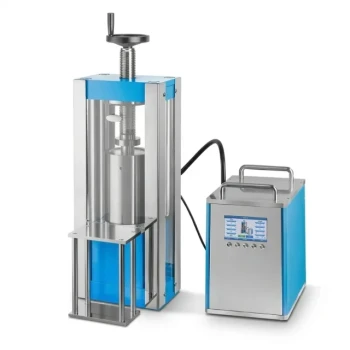
- Electric Split Lab Cold Isostatic Press CIP Machine for Cold Isostatic Pressing
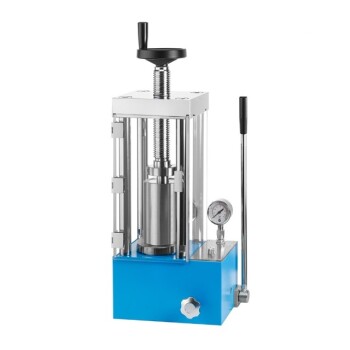
- Manual Cold Isostatic Pressing Machine CIP Pellet Press
- Vacuum Cold Mounting Machine for Sample Preparation
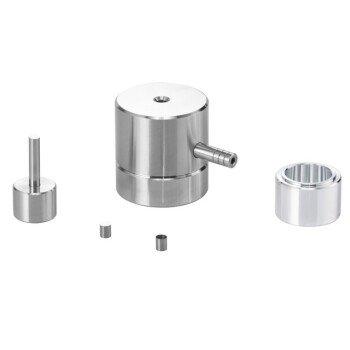
- Ball Press Mold for Lab
People Also Ask
- What is the cold isostatic process? Achieve Uniform Density in Complex Powder Parts
- What is hot and cold isostatic pressing? A Guide to Forming and Densifying Materials
- What role does cold isostatic pressing play in the formation of feed rods for single crystal growth? Ensure Stability.
- What is isostatic pressing method for ceramics? Achieve Uniform Density for Complex Parts
- What are the advantages of isostatic pressing? Achieve Superior Material Integrity and Design Freedom