Isostatic Pressing acts as the fundamental stabilization step in the manufacturing of large-scale Silicon Carbide (SiC) plate heat exchangers and reactors. It applies uniform pressure from all directions to SiC powder, creating a high-density, structurally consistent "green body" capable of surviving the intense heat of sintering without deformation. This process is the prerequisite for achieving the extreme compressive strength and dimensional accuracy required for high-performance industrial ceramics.
Core Takeaway Manufacturing large ceramic components creates significant risks of inconsistent density, which leads to structural failure. Isostatic Pressing mitigates this by applying equal pressure from every angle, eliminating internal gradients to ensure the final product is uniform, crack-free, and dimensionally precise.
The Mechanics of Structural Integrity
Achieving Isotropy Through Uniform Pressure
Unlike standard pressing methods that apply force from a single direction, Isostatic Pressing exerts pressure equally from all sides.
This technique, often implemented as Cold Isostatic Pressing (CIP), ensures that the Silicon Carbide powder is compacted evenly.
The result is a material property known as isotropy, where the material exhibits the same physical properties in every direction.
Elimination of Density Gradients
In large-scale manufacturing, uneven packing of powder leads to weak points.
Isostatic pressing eliminates these density gradients within the "green body" (the unfired ceramic part).
By creating a perfectly uniform internal structure, the process removes the microscopic inconsistencies that eventually become structural flaws.
Critical Benefits for Heat Exchangers
Preventing Deformation and Micro-Cracks
The subsequent phase of manufacturing involves sintering, where the ceramic is fired at high temperatures.
If the green body has uneven density, it will shrink unevenly during firing, causing warping, deformation, or micro-cracks.
Isostatic pressing provides a high-quality, uniform substrate that shrinks predictably, preventing these catastrophic defects in large reactor components.
Ensuring Dimensional Precision
Large plate heat exchangers require complex parts to fit together with tight tolerances.
Because Isostatic Pressing ensures uniform shrinkage, manufacturers can maintain precise dimensional control over the final shape.
This precision is essential for the assembly and sealing of large-scale reactor units.
Maximizing Compressive Strength
Industrial thermal exchange components face immense physical stress.
The high density achieved through this pressing method directly translates to superior compressive strength in the finished SiC plate.
This durability allows the equipment to operate reliably in harsh, high-pressure industrial environments.
Understanding the Manufacturing Implications
The Necessity of the "Green Body"
It is important to recognize that Isostatic Pressing does not produce the final hard ceramic; it produces the "green body."
This intermediate stage is solid but still relatively fragile compared to the sintered product.
The quality of the final reactor depends entirely on the quality of this green body; no amount of sintering can fix a poorly pressed part.
Complexity vs. Reliability
While Isostatic Pressing adds a complex step to the production line, it is non-negotiable for large-scale parts.
Simpler uniaxial pressing methods are faster but create density variations that are unacceptable for large surface areas.
Therefore, the trade-off is accepted: higher manufacturing complexity is exchanged for the guarantee of structural uniformity.
Making the Right Choice for Your Goal
When evaluating manufacturing processes for Silicon Carbide components, focus on your specific performance requirements:
- If your primary focus is Structural Longevity: Prioritize Isostatic Pressing to eliminate micro-cracks and density gradients that lead to premature failure under stress.
- If your primary focus is Assembly and Fit: Rely on this process to ensure uniform shrinkage during sintering, guaranteeing the precise dimensions needed for complex heat exchanger plates.
By standardizing density before the furnace, Isostatic Pressing turns raw powder into reliable, high-performance engineering hardware.
Summary Table:
| Feature | Isostatic Pressing Benefit | Impact on SiC Heat Exchangers |
|---|---|---|
| Pressure Distribution | Uniform (Omnidirectional) | Eliminates internal stress and density gradients |
| Material Property | Isotropy | Consistent physical strength in every direction |
| Sintering Behavior | Predictable Shrinkage | Prevents warping, deformation, and micro-cracks |
| Component Quality | High-Density Green Body | Maximizes compressive strength for high-pressure use |
| Dimensional Control | Tight Tolerances | Ensures perfect fit and sealing for complex plate assemblies |
Elevate Your Material Performance with KINTEK
Precision in large-scale ceramic manufacturing starts with the right equipment. KINTEK specializes in advanced laboratory and industrial solutions, providing the high-performance isostatic presses (cold and hot) and high-temperature furnaces essential for producing defect-free Silicon Carbide components.
Whether you are developing complex plate heat exchangers or robust industrial reactors, our comprehensive portfolio—ranging from crushing systems to isostatic and hydraulic presses—ensures your materials meet the highest standards of density and durability.
Ready to optimize your production quality? Contact KINTEK today to discover how our expertise and equipment can streamline your laboratory or manufacturing workflow.
References
- Martin Roeb, Marc Ferrato. Sulphur based thermochemical cycles: Development and assessment of key components of the process. DOI: 10.1016/j.ijhydene.2013.01.068
This article is also based on technical information from Kintek Solution Knowledge Base .
Related Products
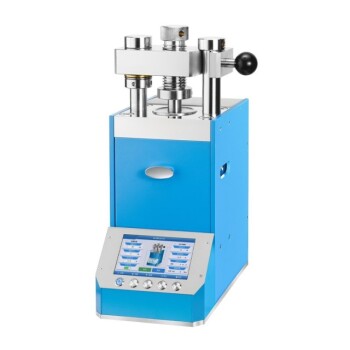
- Warm Isostatic Press for Solid State Battery Research
- Automatic Lab Cold Isostatic Press CIP Machine Cold Isostatic Pressing
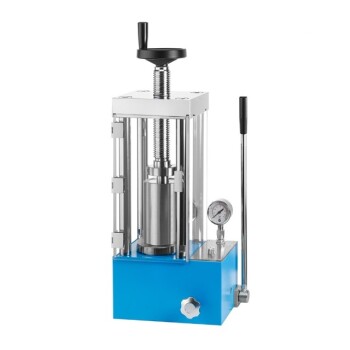
- Manual Cold Isostatic Pressing Machine CIP Pellet Press
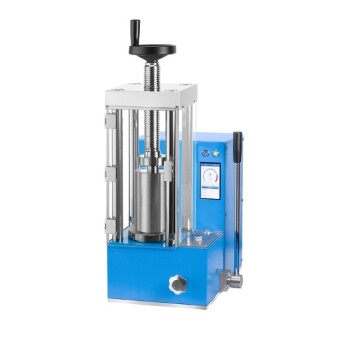
- Electric Lab Cold Isostatic Press CIP Machine for Cold Isostatic Pressing
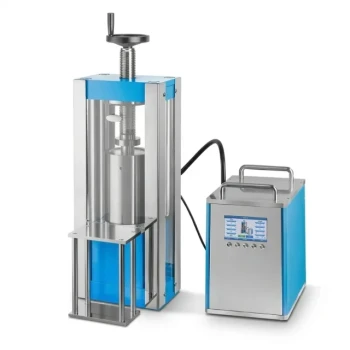
- Electric Split Lab Cold Isostatic Press CIP Machine for Cold Isostatic Pressing
People Also Ask
- What is the temperature of a warm isostatic press? Achieve Optimal Densification for Your Materials
- What is the function of a Warm Isostatic Press (WIP) in all-solid-state pouch cells? Optimize Battery Density
- Why are Warm Isostatic Presses (WIP) necessary for solid-state batteries? Achieve Atomic-Level Contact
- What advantages does a warm isostatic press offer over a traditional uniaxial press for Li6PS5Cl electrolyte sheets?
- How do warm isostatic presses improve dry electrode performance? Enhance ASSB Conductivity with Heat & Pressure