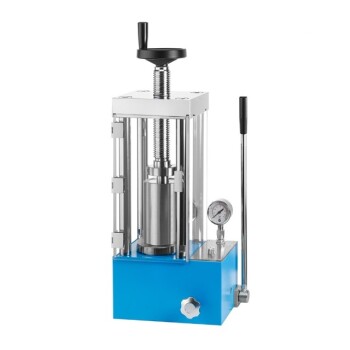
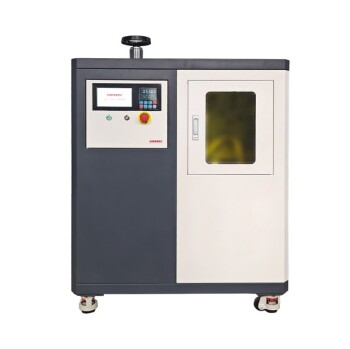
An isostatic press is the standard tool for processing solid electrolyte pellets because it applies uniform, isotropic pressure from all directions to maximize particle packing. By subjecting the powder to high pressure (often exceeding 300 MPa), the press creates a pellet with high relative density (88–92%) and minimal porosity. This mechanical densification is critical for eliminating physical voids that would otherwise distort ionic conductivity measurements.
The Core Insight: Accurate conductivity data requires measuring the material, not the empty space between particles. Isostatic pressing ensures particles are packed so tightly that "grain boundary resistance"—the resistance encountered when ions jump from one particle to another—is minimized, revealing the material's intrinsic performance.
The Physics of Densification
Creating a Uniform Path for Ions
Ionic conductivity measures how well ions move through a solid material. If the material is a loose powder, ions cannot travel effectively because they cannot jump across air gaps.
An isostatic press forces particles together to create a continuous solid network. By eliminating the pores between particles, the machine ensures the electrical current flows through the electrolyte material itself rather than hitting dead ends.
Maximizing Relative Density
To get reliable data, the pellet must approach the density of a single crystal of the same material. The primary reference notes that isostatic pressing allows pellets to reach a relative density of 88–92%.
At this density, the pellet behaves less like a pile of dust and more like a solid block. This high density is the baseline requirement for valid electrochemical testing.
Reducing Grain Boundary Resistance
Even when particles touch, the contact point can be weak, creating high electrical resistance. This is known as grain boundary resistance.
Isostatic pressing applies sufficient force (e.g., 330 kN) to crush these boundaries together. This significantly lowers the impedance at the interface, ensuring the test results reflect the material's chemistry rather than poor particle contact.
Isostatic vs. Uniaxial Pressure
The Problem with Directional Force
Standard laboratory hydraulic presses are often uniaxial, meaning they apply pressure from only the top and bottom.
This creates density gradients; the pellet might be dense in the center but porous at the edges, or vice versa. These internal defects create uneven pathways for ion flow, leading to inconsistent and non-reproducible data.
The Isotropic Advantage
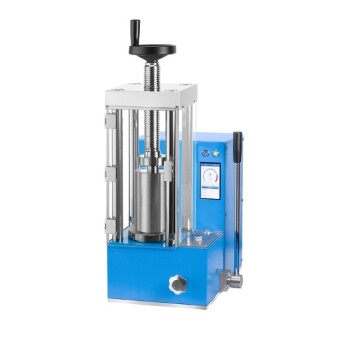
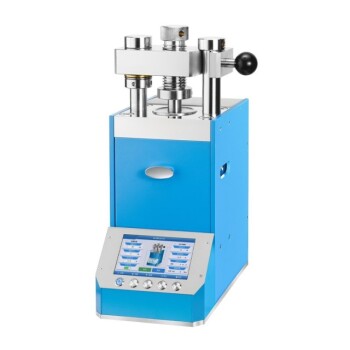
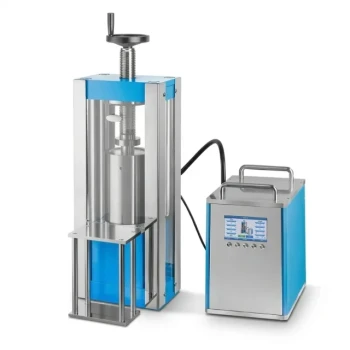
A Cold Isostatic Press (CIP) applies ultra-high pressure uniformly from all sides (omnidirectionally).
This isotropic distribution forces particles into the tightest possible configuration. It effectively eliminates the density gradients common in uniaxial pressing, resulting in a homogenous structure that provides trustworthy conductivity numbers.
Understanding the Trade-offs
Equipment Complexity
Isostatic pressing is generally more complex and time-consuming than standard uniaxial pressing. It often requires sealing samples in flexible molds or bags to transmit the hydraulic pressure evenly.
Material Dependencies
While isostatic pressing improves all powders, its impact varies by material stiffness. Sulfide-based electrolytes, which have a low elastic modulus, densify very easily under pressure. Harder oxide ceramics may still require high-temperature sintering after pressing to achieve the same level of particle connectivity.
"Green Body" Limitations
It is important to remember that a pressed pellet is often still a "green body" (unfired). While high pressure (up to 600 MPa) can mimic the density of a sintered part, it does not chemically fuse the particles. For some rigorous applications, pressing is a preparation step for sintering, not a replacement for it.
Making the Right Choice for Your Goal
To obtain data that helps you understand your material's true potential, apply the following guidelines:
- If your primary focus is determining intrinsic ionic conductivity: Use an isostatic press to maximize density and eliminate porosity artifacts that skew impedance spectroscopy results.
- If your primary focus is rapid screening of multiple materials: A uniaxial hydraulic press may suffice for comparative data, provided you acknowledge the likely higher grain boundary resistance.
- If your primary focus is processing sulfide electrolytes: Leverage the material's softness using high pressure (200–600 MPa) to achieve near-perfect density without heat treatment.
Ultimately, you cannot separate the quality of your conductivity data from the physical density of your test sample.
Summary Table:
| Feature | Uniaxial Pressing | Isostatic Pressing (CIP) |
|---|---|---|
| Pressure Direction | Single axis (top/bottom) | Omnidirectional (isotropic) |
| Relative Density | Lower, inconsistent gradients | High (88–92%) and uniform |
| Sample Homogeneity | Low (density variations) | High (no density gradients) |
| Ionic Path Clarity | Obstructed by air gaps/pores | Continuous solid network |
| Data Reliability | High grain boundary resistance | Accurate intrinsic measurements |
Elevate Your Battery Research with KINTEK Precision
To unlock the true potential of your solid-state electrolytes, sample density is non-negotiable. KINTEK specializes in advanced laboratory equipment, offering a robust range of cold isostatic presses (CIP) and high-pressure hydraulic systems designed specifically for achieving the 90%+ relative density required for precise ionic conductivity measurements.
Whether you are working with soft sulfide electrolytes or hard oxide ceramics, our expertise extends across our entire portfolio—including crushing and milling systems, high-temperature furnaces, and isostatic presses—to ensure your materials are processed without defects. Don't let grain boundary resistance skew your results. Contact KINTEK today to find the perfect densification solution for your lab!
Related Products
- Manual Cold Isostatic Pressing Machine CIP Pellet Press
- Warm Isostatic Press for Solid State Battery Research
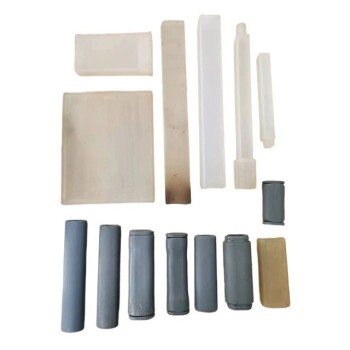
- Isostatic Molding Pressing Molds for Lab
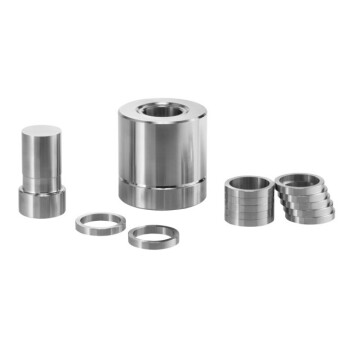
- XRF & KBR steel ring lab Powder Pellet Pressing Mold for FTIR
- XRF & KBR plastic ring lab Powder Pellet Pressing Mold for FTIR
People Also Ask
- What is isostatic pressing method for ceramics? Achieve Uniform Density for Complex Parts
- What is an isostatic press used for? Achieve Uniform Density & Eliminate Defects
- What role does cold isostatic pressing play in the formation of feed rods for single crystal growth? Ensure Stability.
- What is the process of isostatic press? Achieve Uniform Density and Complex Shapes
- Why does the use of an isostatic press for LSGM green bodies lead to a reduction in sintering temperature? Enhance Density