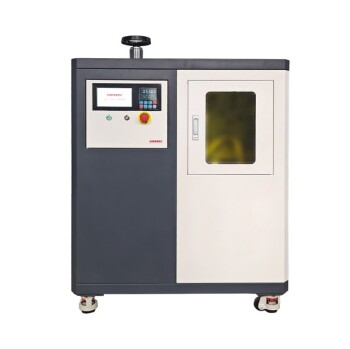
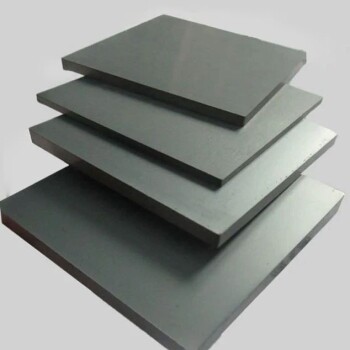
Zirconia ceramic cold isostatic pressing (CIP) is a materials processing technique where static pressure, generated by a fluid or gas, is applied directly to zirconia powder enclosed within an elastic die sleeve. By using a high-pressure pump to pressurize the medium, the process ensures the material is compacted by isotropic pressure, meaning force is applied uniformly from all directions simultaneously.
The Core Value of CIP While standard pressing applies force from only one or two axes, Cold Isostatic Pressing applies uniform pressure from every angle. This results in a material with consistent density throughout, significantly reducing internal stresses and minimizing the risk of cracks or defects during subsequent firing.
The Mechanics of the Process
The Flexible Containment
The process begins by placing the Zirconia powder into a mold made of elastomeric compounds, such as latex, neoprene, urethane, or polyvinyl chloride.
This mold acts as a flexible membrane. Its primary role is to isolate the powder from the liquid pressure medium while having low resistance to deformation.
Isotropic Densification
Once the powder is enclosed, the mold is submerged in a liquid medium inside a pressure vessel.
A high-pressure pump compresses the liquid. Because the liquid surrounds the mold entirely, the pressure is applied equally to every surface of the part.
This eliminates the friction effects typically found in rigid die pressing, as the mold moves with the powder as it compacts.
Formation of the "Green Body"
The result of this process is a "green body"—a compacted solid that is not yet fully sintered (fired).
CIP typically achieves 60% to 80% of the theoretical density. The part becomes a highly compact solid with enough structural integrity to be handled and machined.
Why Use CIP for Zirconia?
Uniform Density and Integrity
The primary advantage of CIP is the elimination of internal stresses.
Because pressure is uniform, the resulting part lacks the density gradients that often cause warping, strains, or laminations in other pressing methods. This is critical for high-performance ceramics like Zirconia, which are often used in demanding environments.
Superior "Green Strength"
Parts processed via CIP exhibit higher green strength than those processed by other methods.
This allows manufacturers to perform pre-machining on the part while it is still in its compacted powder state. Machining the part before the final sintering (hardening) phase reduces the risk of breakage and lowers tooling costs.
Versatility in Shaping
Since the mold is flexible, CIP can produce complex shapes that rigid dies cannot easily replicate.
While there are constraints on the overall size based on the pressure vessel, there is theoretically no limit to the geometry of the part itself, provided the mold can be formed.
Understanding the Trade-offs
Necessity of Post-Processing
CIP is rarely a "net-shape" process. It is a consolidation method used to prepare material for further work.
The compaction stage is typically followed by machining to shape the final product and then sintering. You must account for shrinkage and machining allowances in your workflow.
Size Limitations
While the process is versatile, the physical size of the part is strictly constrained by the dimensions of the pressure vessel.
Furthermore, tall or extremely large parts must be evaluated against the vessel's height-to-diameter ratio limitations.
Making the Right Choice for Your Goal
How to Apply This to Your Project
- If your primary focus is material integrity: CIP is the superior choice for eliminating internal defects, cracks, and uneven density in high-stress components.
- If your primary focus is complex geometry: Use CIP to create intricate shapes that would be impossible or too expensive to produce with rigid tooling.
- If your primary focus is machinability: Rely on CIP to create high-strength green bodies that can be machined into final forms before the costly sintering process.
Zirconia CIP is the definitive method for achieving uniform density and structural reliability in advanced ceramic components.
Summary Table:
| Feature | Cold Isostatic Pressing (CIP) | Standard Die Pressing |
|---|---|---|
| Pressure Direction | Uniform (Isotropic) from all angles | Uniaxial or Biaxial (1-2 axes) |
| Density Distribution | Highly uniform; no density gradients | Variable; higher near the punch |
| Green Strength | High; allows for pre-sintering machining | Moderate to low |
| Complex Shapes | Excellent; flexible molds allow variety | Limited by rigid die geometry |
| Internal Stress | Minimal; reduces cracking risks | Higher due to friction and gradients |
Elevate Your Ceramic Manufacturing with KINTEK Precision
Don't let uneven density and internal stresses compromise your high-performance Zirconia components. KINTEK specializes in advanced laboratory equipment and consumables, providing the industry-leading isostatic presses (cold and hot) and high-pressure systems you need to achieve 80% theoretical density and superior green strength.
Whether you are working on advanced material research or industrial ceramic production, our experts are ready to provide tailored solutions—from milling systems and high-temperature furnaces to specialized PTFE and ceramic consumables.
Ready to optimize your densification process? Contact us today to explore our full range of isostatic pressing solutions!
Related Products
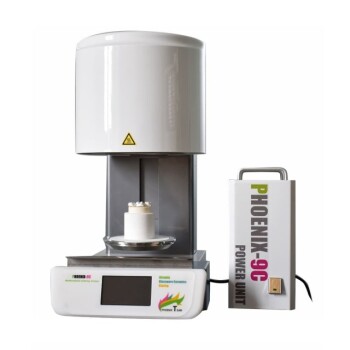
- Dental Porcelain Zirconia Sintering Ceramic Vacuum Press Furnace
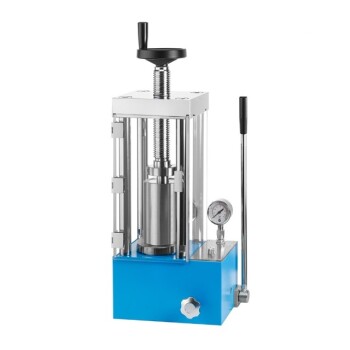
- Manual Cold Isostatic Pressing Machine CIP Pellet Press
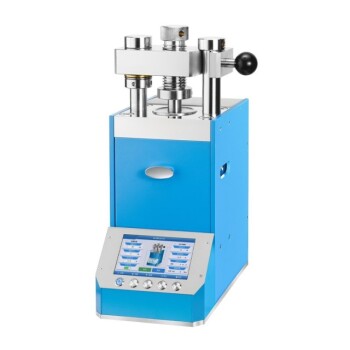
- Automatic Lab Cold Isostatic Press CIP Machine Cold Isostatic Pressing
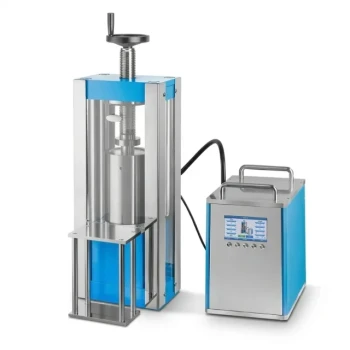
- Electric Split Lab Cold Isostatic Press CIP Machine for Cold Isostatic Pressing
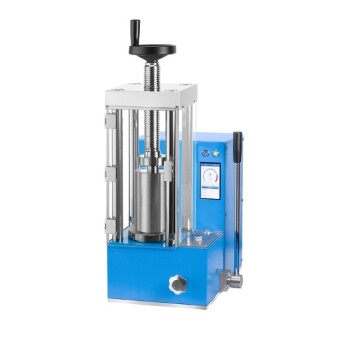
- Electric Lab Cold Isostatic Press CIP Machine for Cold Isostatic Pressing
People Also Ask
- What does sintering do to zirconia? Unlock Its Full Strength and Aesthetic Potential
- What is the shrinkage of zirconia during sintering? Mastering the 20-25% Dimensional Change
- What is the sintering temperature of zirconia ceramic? Mastering the 1400°C-1600°C Thermal Profile
- What is the price of zirconia sintering furnace? Invest in Precision, Not Just a Price Tag
- What factors are important to consider when choosing a dental sintering furnace? Match Your Workflow for Optimal Results