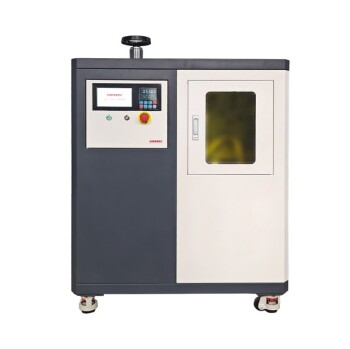
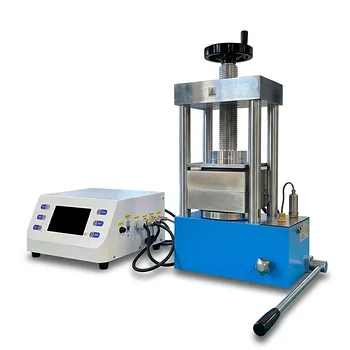
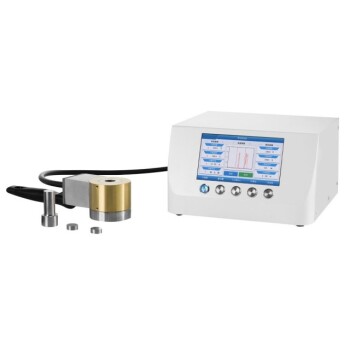
The specific function of a cold isostatic press (CIP) is to apply extremely high, uniform pressure to a pre-formed LiFePO4 "green body" from every direction simultaneously. By utilizing a fluid medium to exert forces often reaching several hundred megapascals, the CIP process eliminates internal density gradients and microscopic pores that standard uniaxial pressing cannot resolve.
Core Takeaway While standard pressing shapes the powder, Cold Isostatic Pressing is the critical densification step that homogenizes the material's internal structure. This uniformity is strictly required to maximize the ionic conductivity and structural integrity of the final sintered battery component.
The Mechanics of Isostatic Densification
Isotropic Pressure Application
Unlike standard hydraulic presses that apply force from a single axis (top-down), a cold isostatic press submerges the sample in a fluid medium.
This allows pressure to be applied isotropically—meaning equally from all directions. This multi-directional force is essential for complex geometries or materials requiring absolute structural uniformity.
Eliminating Internal Defects
The primary goal of this pressure is to target and collapse microscopic voids within the material.
Standard pressing often leaves density gradients, where the center of the material is less dense than the edges. CIP eradicates these inconsistencies, ensuring the "green body" (the unfired material) has a uniform density profile throughout its volume.
Increasing Green Body Density
Before the material is ever heated (sintered), CIP significantly raises its relative density.
A denser green body creates a superior foundation for the sintering process. It minimizes the amount of shrinkage that occurs during heating and reduces the risk of warping or cracking in the final ceramic.
The Impact on Battery Performance
Boosting Ionic Conductivity
The direct result of removing internal pores is a significant improvement in the material's ability to conduct ions.
In LiFePO4 cathodes, ionic conductivity is paramount. A denser, more uniform structure allows lithium ions to move more freely, directly enhancing the electrical performance of the battery.
Lowering Interfacial Impedance
CIP is particularly effective at densifying the interfaces between electrode materials and solid electrolytes.
By maximizing the active contact area and eliminating voids at these junctions, the process lowers interfacial impedance. This reduces the resistance the battery encounters during operation.
Improving Rate Performance
The combined effect of better diffusion and lower resistance leads to better rate performance.
This means the battery can charge and discharge more efficiently, maintaining stability even under higher current demands.
Understanding the Process Dependencies
The Requirement for Pre-forming
You cannot simply place loose LiFePO4 powder directly into a cold isostatic press.
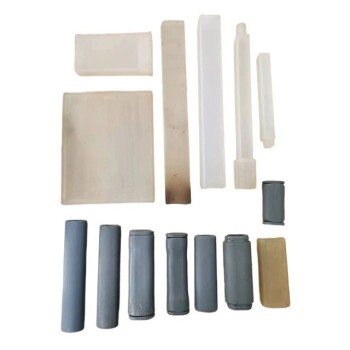
The powder must first be shaped into a preliminary green body using a laboratory hydraulic press. This uniaxial pressing step creates a cylinder or rectangle with enough structural strength to be handled and encapsulated in the rubber molds used for CIP.
The Two-Step Necessity
CIP is a secondary densification step, not a replacement for initial shaping.
It relies on the geometric integrity provided by the initial hydraulic pressing. Skipping the pre-forming stage would result in a loss of shape control, while skipping the CIP stage would result in a final product with inferior conductivity and structural defects.
Making the Right Choice for Your Goal
To maximize the potential of your LiFePO4 material, consider how CIP fits into your specific objectives:
- If your primary focus is Maximum Conductivity: You must utilize CIP to eliminate density gradients, as even minor voids will impede lithium-ion diffusion and increase resistance.
- If your primary focus is Process Efficiency: Acknowledge that CIP adds a secondary step; however, for high-performance battery applications, the trade-off in time is usually necessary to prevent failure during the sintering phase.
Summary: The cold isostatic press transforms a shaped but imperfect powder compact into a high-density, defect-free solid, serving as the essential bridge between raw powder and a high-performance sintered ceramic.
Summary Table:
| Feature | Impact on LiFePO4 Sintering |
|---|---|
| Pressure Application | Isotropic (equal from all directions) to ensure uniform density |
| Defect Removal | Collapses microscopic voids and eliminates internal density gradients |
| Green Body Density | Significantly increases pre-sintering density to reduce shrinkage |
| Electrical Effect | Enhances ionic conductivity and lowers interfacial impedance |
| Structural Integrity | Prevents warping and cracking during the final heating phase |
Elevate Your Battery Research with KINTEK Precision
Achieving the perfect energy density in LiFePO4 requires more than just standard pressing. KINTEK provides the specialized equipment needed for superior material science, from initial laboratory hydraulic presses for pre-forming to advanced cold isostatic presses (CIP) for critical densification.
Our comprehensive range of crushing and milling systems, high-temperature furnaces, and isostatic presses is designed to help researchers and manufacturers eliminate defects and maximize ionic conductivity.
Ready to optimize your sintering process? Contact KINTEK today to discover how our high-pressure solutions and laboratory consumables can enhance your battery performance and structural integrity.
Related Products
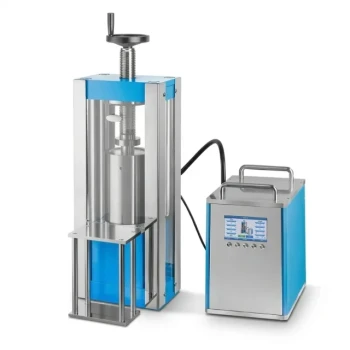
- Electric Split Lab Cold Isostatic Press CIP Machine for Cold Isostatic Pressing
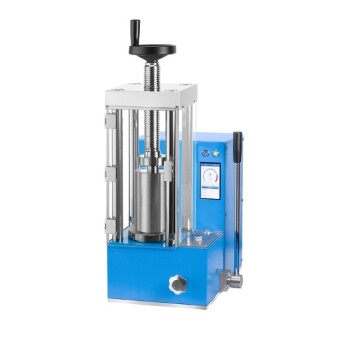
- Electric Lab Cold Isostatic Press CIP Machine for Cold Isostatic Pressing
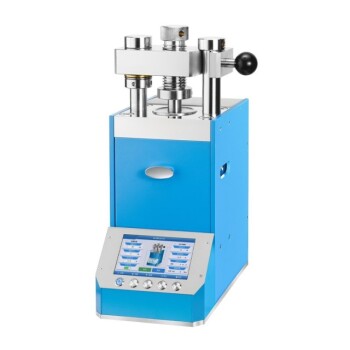
- Automatic Lab Cold Isostatic Press CIP Machine Cold Isostatic Pressing
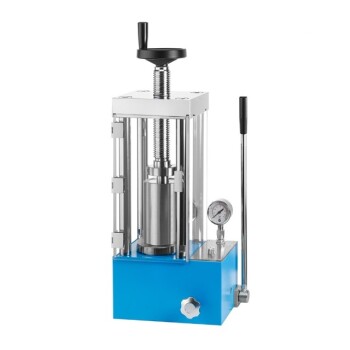
- Manual Cold Isostatic Pressing Machine CIP Pellet Press
- Warm Isostatic Press for Solid State Battery Research
People Also Ask
- How is isostatic pressing equipment utilized to integrate lithium metal anodes during solid-state battery assembly?
- How does isostatic pressing equipment enhance lithium metal anode contact? Optimize Your Solid-State Battery Assembly
- What is the meaning of isostatic pressing? Achieve Uniform Density in Complex Parts
- What is isostatic pressing method for ceramics? Achieve Uniform Density for Complex Parts
- What role does cold isostatic pressing play in the formation of feed rods for single crystal growth? Ensure Stability.