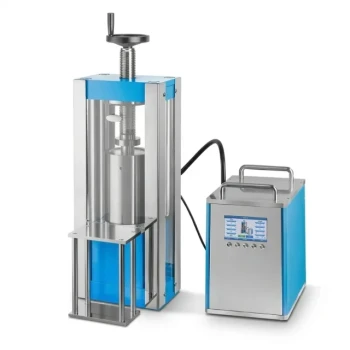
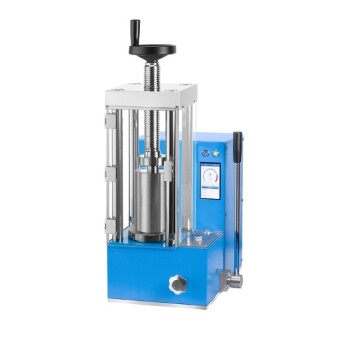
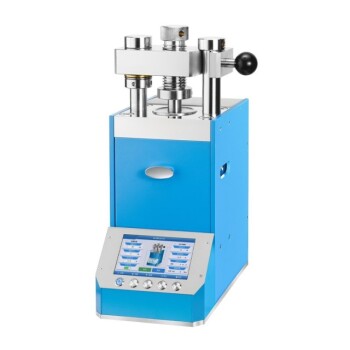
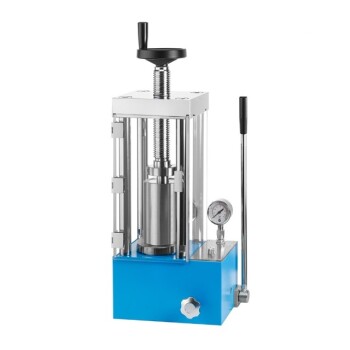
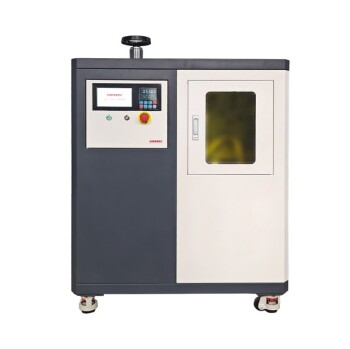
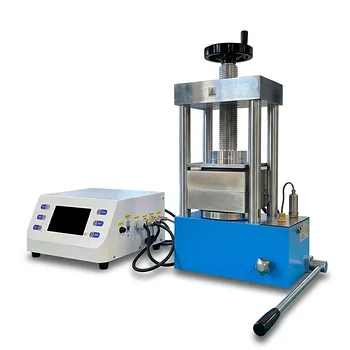
High-pressure consolidation is the fundamental enabler of functional all-solid-state batteries (ASSBs). Using a cold isostatic press (CIP) or a high-pressure die allows for the co-pressing of the cathode, solid electrolyte, and anode layers at immense pressures, such as 300 MPa. This process forces these distinct layers into tight physical contact, significantly reducing solid-solid interfacial resistance and creating a unified, monolithic structure capable of maintaining electrochemical performance during cycling.
Core Takeaway The primary obstacle in solid-state batteries is the high impedance caused by poor contact between solid particles. Cold isostatic pressing overcomes this by mechanically forcing materials to bond at the microscopic level, ensuring efficient ion transport and structural stability without the chemical degradation associated with high-temperature processing.
Reducing Interfacial Resistance
The most immediate impact of high-pressure assembly is the optimization of the boundary where the electrode meets the electrolyte.
Eliminating Interface Voids
In loose powder forms, gaps exist between the cathode material (e.g., LFP) and the sulfide or solid electrolyte particles. By applying high-intensity mechanical pressure, you physically force these particles together. This eliminates air voids that otherwise act as barriers to ionic flow.
Enhancing Ion Transport
Tight physical contact is a prerequisite for efficient operation. The pressure ensures that the interfacial impedance is significantly reduced. This allows ions to move freely between the cathode and the electrolyte, a factor directly linked to the battery's overall electrochemical performance.
Ensuring Structural Integrity and Uniformity
Beyond mere contact, the quality of the pressure application dictates the physical reliability of the battery cell.
Prevention of Density Gradients
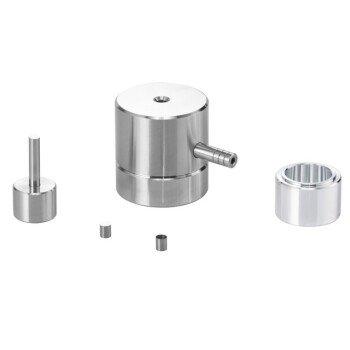
A high-strength stainless steel pressure die is essential to withstand forces of several hundred megapascals. This rigidity ensures pressure is distributed uniformly across the powder surface. Without this uniformity, density gradients can form, leading to weak points where the battery could fail or underperform.
Achieving Geometric Precision
Precision dies ensure that high-loading cathodes achieve a flat, smooth surface and uniform thickness. This prevents stress concentrations that could lead to cracking or delamination (layer separation) during the expansion and contraction of battery cycling.
Mitigation of Dendrite Penetration
For specific chemistries, such as sodium-based systems, the densification process is a safety mechanism. By compressing the electrolyte into a dense pellet and removing grain boundary gaps, the process helps prevent metal dendrites from penetrating the electrolyte layer, thereby avoiding short circuits.
The Advantage of "Cold" Processing
The "Cold" in Cold Isostatic Pressing is just as important as the pressure itself.
Leveraging Material Ductility
Certain electrolytes, such as Argyrodites, possess high ductility. Cold pressing leverages this property, allowing the electrolyte to flow and deform around cathode particles to achieve intimate contact at room temperature.
Avoiding Thermal Degradation
Traditional ceramic processing often requires high-temperature sintering. Cold pressing eliminates this need. By assembling at ambient temperatures, you avoid harmful side reactions that can degrade the chemical activity of the materials. This also significantly reduces the energy requirements of the manufacturing process.
Understanding the Operational Requirements
While high pressure is beneficial, the implementation requires strict adherence to tooling standards to avoid manufacturing defects.
The Necessity of High-Strength Tooling
Standard equipment cannot suffice. The pressure die must be constructed from high-strength materials capable of enduring hundreds of megapascals without deformation. If the die deforms, the geometry of the battery layers becomes compromised, leading to uneven thickness and eventual performance failure.
The Complexity of Process Optimization
Isostatic pressure is not a "one-size-fits-all" solution. The process requires continuous research and optimization to address current limitations. Achieving the perfect balance of pressure to maximize density without crushing active particles is a specific challenge that must be tuned for each unique battery chemistry.
Making the Right Choice for Your Goal
The application of pressure is a tunable variable that changes based on your specific objectives.
- If your primary focus is Electrochemical Performance: Prioritize pressure magnitude (e.g., 300 MPa) to minimize void space and maximize ion conductivity across the solid-solid interface.
- If your primary focus is Cycle Life and Durability: Focus on the precision of the die and pressure uniformity to prevent density gradients and delamination over time.
- If your primary focus is Manufacturing Efficiency: Leverage the cold-pressing capability to eliminate energy-intensive sintering steps and preserve the chemical integrity of sensitive electrolytes.
Mastering the mechanics of pressure is not just about compaction; it is about engineering the microscopic architecture of the battery for maximum efficiency.
Summary Table:
| Impact Factor | Cold Isostatic Pressing (CIP) / High-Pressure Die | Benefit to ASSB Assembly |
|---|---|---|
| Interfacial Resistance | Forces tight physical contact between solid particles | Significantly reduces impedance and improves ion transport |
| Structural Integrity | Eliminates voids and ensures uniform material density | Prevents delamination, cracking, and stress concentrations |
| Material Safety | Operates at room temperature (Cold Processing) | Avoids thermal degradation and harmful chemical side reactions |
| Safety Mechanism | Creates high-density electrolyte pellets | Mitigates dendrite penetration to prevent short circuits |
| Geometric Precision | Uses high-strength precision dies (e.g., 300 MPa) | Ensures flat surfaces and uniform thickness for high-loading cathodes |
Elevate Your Battery Research with KINTEK Precision Solutions
Unlock the full potential of your all-solid-state battery (ASSB) research with KINTEK’s industry-leading compression technology. We specialize in providing the high-performance tools necessary for monolithic battery construction, including:
- Advanced Cold Isostatic Presses (CIP): Achieve uniform densification and eliminate interfacial voids for superior ion conductivity.
- High-Strength Hydraulic Presses: Precision pellet, hot, and isostatic presses designed to withstand the immense pressures (300 MPa+) required for electrolyte consolidation.
- Specialized Tooling: Durable crushing, milling, and high-pressure dies that ensure geometric precision and structural integrity.
From high-temperature furnaces and vacuum systems to essential consumables like PTFE and ceramics, KINTEK is your partner in laboratory excellence. Don't let interfacial resistance hinder your innovation.
Contact Our Experts Today to Find Your Perfect Lab Solution!
Related Products
- Electric Split Lab Cold Isostatic Press CIP Machine for Cold Isostatic Pressing
- Electric Lab Cold Isostatic Press CIP Machine for Cold Isostatic Pressing
- Automatic Lab Cold Isostatic Press CIP Machine Cold Isostatic Pressing
- Manual Cold Isostatic Pressing Machine CIP Pellet Press
- Warm Isostatic Press for Solid State Battery Research
People Also Ask
- How is isostatic pressing equipment utilized to integrate lithium metal anodes during solid-state battery assembly?
- How does isostatic pressing equipment enhance lithium metal anode contact? Optimize Your Solid-State Battery Assembly
- What is the meaning of isostatic pressing? Achieve Uniform Density in Complex Parts
- What is isostatic pressing method for ceramics? Achieve Uniform Density for Complex Parts
- What role does cold isostatic pressing play in the formation of feed rods for single crystal growth? Ensure Stability.