Cold Isostatic Pressing (CIP) functions as the critical densification step in manufacturing Silicon Carbide (SiC) reactor components, transforming loose powder into a solid, high-density "green body." By applying uniform hydraulic pressure from all directions, CIP eliminates internal density gradients, ensuring the final ceramic parts possess the structural integrity required to survive sintering without warping or cracking.
The Core Value of CIP While standard pressing methods often create internal stress, CIP achieves isotropic uniformity. This ensures that as the SiC component shrinks during high-heat sintering, it does so predictably and evenly, preventing the microscopic defects that lead to catastrophic failure in reactor environments.
Achieving Structural Integrity Through Isotropy
Eliminating Density Gradients
The primary contribution of CIP is the application of uniform pressure. Unlike uniaxial pressing, which compresses from top to bottom, CIP exerts equal force from every angle.
This eliminates density gradients—variations in how tightly packed the powder is—ensuring the material is homogenous throughout the entire volume of the component.
Preventing Sintering Defects
Silicon Carbide reactor components must undergo pressureless sintering, a high-temperature process where the material shrinks and hardens. If the green body has uneven density, this shrinkage will be uneven.
CIP provides a high-quality, isotropic substrate that prevents deformation and micro-cracks during this volatile phase, resulting in a reliable finished product.
Enabling Complex and Large-Scale Geometries
Handling High Aspect Ratios
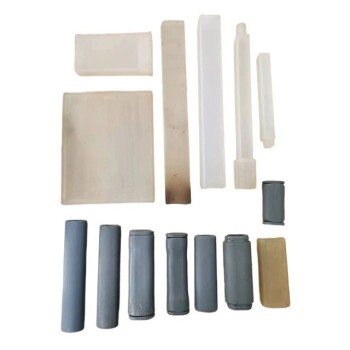
Reactor components often require geometries that are difficult to mold with traditional dies, such as long tubes or rods.
CIP is capable of producing parts with large aspect ratios (greater than 2:1) while maintaining uniform densities, a feat that is often impossible with rigid metal dies.
Near-Net Shape Capabilities
The process allows for the creation of large, complicated, and near-net shapes.
By forming the powder into a shape that closely resembles the final product, manufacturers can significantly reduce the time and material costs associated with post-processing treatments.
High Green Strength for Handling
The compaction achieved by CIP results in a green body with sufficient strength to be handled safely.
This durability permits necessary in-process treatments before final sintering, reducing the risk of damaging the part during transfer and thereby lowering overall production costs.
Understanding the Trade-offs
Precision and Surface Finish
While CIP is excellent for density, it offers less precise dimensional control than metal die compaction.
The flexible elastomeric molds result in a rougher surface finish, often necessitating additional machining or grinding to meet tight reactor tolerances.
Production Speed and Lead Time
CIP is a multi-stage, often manual process involving encapsulation and extraction.
This results in lower production rates and longer lead times compared to automated pressing methods, making it less suitable for massive volume runs of simple shapes.
Making the Right Choice for Your Project
To determine if CIP is the correct manufacturing route for your SiC components, evaluate your specific requirements:
- If your primary focus is structural reliability: CIP is essential for eliminating internal defects and ensuring uniform shrinkage during sintering.
- If your primary focus is complex geometry: CIP is the superior choice for large parts or components with high aspect ratios (long and thin).
- If your primary focus is high-volume speed: You may encounter bottlenecks due to the manual nature of the process and should consider if die compaction is viable.
Ultimately, CIP is the industry standard for high-stakes ceramic applications where internal material integrity cannot be compromised.
Summary Table:
| Feature | CIP Benefit for SiC Manufacturing | Impact on Reactor Performance |
|---|---|---|
| Pressure Distribution | Uniform hydraulic pressure from all directions | Eliminates internal stress and density gradients |
| Sintering Behavior | Predictable, even shrinkage during high heat | Prevents micro-cracks and structural warping |
| Geometry Support | Handles high aspect ratios and complex shapes | Enables production of large tubes and rods |
| Material Strength | High "green strength" before sintering | Facilitates safe handling and pre-sintering machining |
| Shape Precision | Near-net shape forming | Reduces material waste and post-processing costs |
Elevate Your Material Performance with KINTEK
Precision and reliability are non-negotiable in reactor environments. KINTEK specializes in advanced laboratory solutions, including high-performance cold isostatic, hot, and isostatic hydraulic presses designed to produce superior SiC components.
Whether you are scaling battery research, optimizing high-temperature furnaces, or perfecting crushing and milling systems, our comprehensive portfolio—from vacuum and CVD furnaces to technical ceramics and crucibles—is engineered to meet the most rigorous standards.
Ready to eliminate material defects and optimize your production? Contact our technical experts today to discover how KINTEK’s precision equipment can transform your manufacturing process.
References
- Hiroaki Takegami, Shinji Kubo. Development of strength evaluation method of ceramic reactor for iodine-sulfur process and hydrogen production test in Japan Atomic Energy Agency. DOI: 10.1016/j.nucengdes.2019.110498
This article is also based on technical information from Kintek Solution Knowledge Base .
Related Products
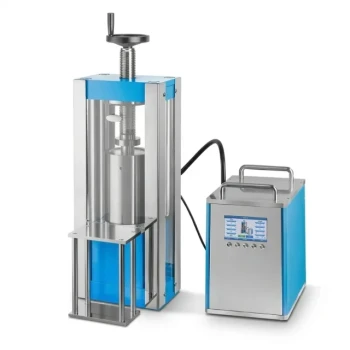
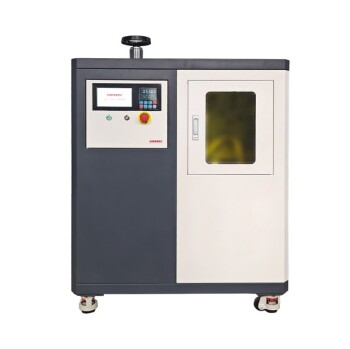
- Electric Split Lab Cold Isostatic Press CIP Machine for Cold Isostatic Pressing
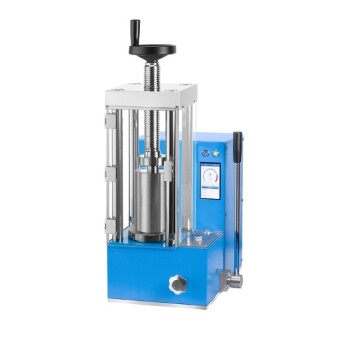
- Electric Lab Cold Isostatic Press CIP Machine for Cold Isostatic Pressing
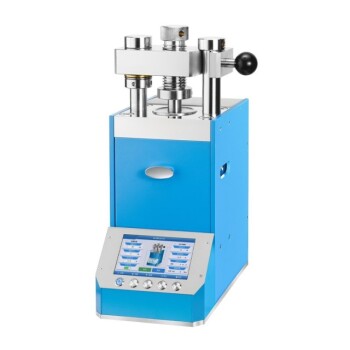
- Automatic Lab Cold Isostatic Press CIP Machine Cold Isostatic Pressing
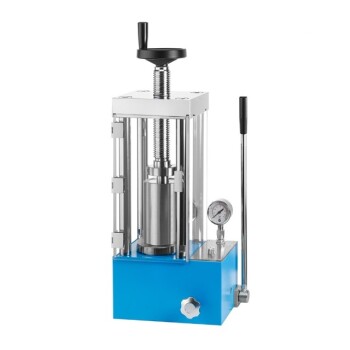
- Manual Cold Isostatic Pressing Machine CIP Pellet Press
- Warm Isostatic Press for Solid State Battery Research
People Also Ask
- How is isostatic pressing equipment utilized to integrate lithium metal anodes during solid-state battery assembly?
- How does isostatic pressing equipment enhance lithium metal anode contact? Optimize Your Solid-State Battery Assembly
- What is the meaning of isostatic pressing? Achieve Uniform Density in Complex Parts
- What is isostatic pressing method for ceramics? Achieve Uniform Density for Complex Parts
- What role does cold isostatic pressing play in the formation of feed rods for single crystal growth? Ensure Stability.