Isostatic pressing offers a distinct manufacturing advantage by decoupling material density from part geometry. Unlike unidirectional pressing, which often creates density gradients, isostatic pressing applies equal pressure from all sides to produce components with exceptional uniformity, high strength, and complex shapes that rigid dies cannot replicate.
The Core Advantage Because pressure is transmitted through a fluid medium from every direction simultaneously, isostatic pressing eliminates the internal voids and density variations common in other methods. This results in parts with uniform shrinkage during firing and superior structural integrity.
Achieving Superior Material Properties
Uniform Density Distribution
The defining characteristic of isostatic pressing is omnidirectional pressure application. Because the powder is compacted equally from all sides, the resulting part features a uniform density distribution throughout its entire volume. This eliminates the "die wall friction" effects seen in mechanical pressing, where density drops off away from the punch.
Low Internal Stress
The process operates with significantly low friction loss. By minimizing the friction between particles and the mold, isostatic pressing reduces internal stresses within the compacted material. This results in a more stable "green" (unfired) part that is less prone to cracking or distortion during subsequent processing.
High Strength and Integrity
Due to the elimination of voids and air pockets, the compacted billets exhibit high strength. The method is particularly effective for achieving high density at lower forming pressures compared to mechanical pressing, ensuring the material properties are consistent and reliable.
Unlocking Complex Geometries
Capability for Irregular Shapes
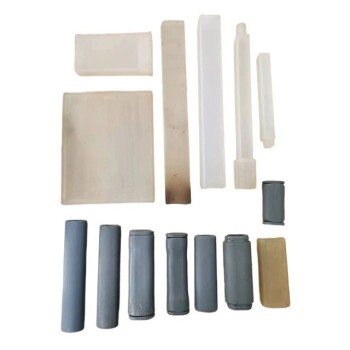
The primary reference highlights the ability to press parts with concave, hollow, and slender profiles. Unlike rigid dies that require straight ejection paths, the flexible molds used in isostatic pressing allow for undercuts and complex geometries that would be impossible to eject from a standard die.
Extreme Aspect Ratios
This method excels at producing parts with high length-to-diameter ratios. It is capable of forming long, thin-walled parts, rods, or tubes with ratios exceeding 200, which would typically buckle or break under unidirectional pressure.
Internal Feature Formation
The process supports the creation of intricate internal shapes. Manufacturers can form components with internal threads, splines, and tapers directly during the pressing stage, reducing the need for expensive post-process machining.
Economic and Process Efficiencies
Reduced Tooling Costs
The cost of the mold is generally lower compared to other methods. The flexible molds (bags) used in isostatic pressing are less expensive to manufacture and maintain than the high-precision rigid dies required for mechanical compaction.
High Material Utilization
This process is highly efficient, minimizing waste. This makes it ideal for processing expensive or difficult-to-compact materials such as superalloys, titanium, tool steels, and beryllium, where material conservation is critical to cost control.
Simplified Processing Steps
Isostatic pressing often reduces the complexity of the overall production line. Parts frequently require lower levels of binder and can often be fired without a dedicated drying step. Furthermore, the high strength of the green compacts allows them to be machined prior to sintering, which is faster and causes less tool wear than machining hardened parts.
Understanding the Trade-offs
While isostatic pressing excels in density and complexity, it is not universally superior for every application.
Dimensional Precision and Surface Finish
Because flexible molds are used, the surface finish and outer dimensional tolerances are generally less precise than those achieved with rigid steel dies. While green machining can correct this, it adds a step to the process for surfaces requiring tight tolerances.
Production Speed Considerations
For simple shapes required in high volumes, traditional uniaxial pressing is often faster. Isostatic pressing, particularly the "wet bag" method, is typically a batch process that may have longer cycle times, making it better suited for complex, high-value, or large parts rather than simple, mass-produced commodities.
Making the Right Choice for Your Goal
To determine if isostatic pressing is the correct solution for your specific application, consider your primary constraints:
- If your primary focus is Geometric Complexity: Choose this method if you need to produce long, slender parts (L/D > 200), hollow forms, or parts with internal threads that cannot be ejected from a rigid die.
- If your primary focus is Material Integrity: Rely on isostatic pressing for critical components requiring absolute uniformity in density and zero internal voids, such as aerospace or medical implants.
- If your primary focus is Cost Efficiency for Low Volumes: Utilize this process to minimize upfront tooling investments, as the flexible molds are significantly cheaper than complex rigid tool steel dies.
Isostatic pressing bridges the gap between design freedom and structural reliability, allowing for the creation of high-performance parts without the limitations of traditional compaction geometry.
Summary Table:
| Advantage Category | Key Benefits | Industrial Impact |
|---|---|---|
| Material Quality | Uniform density, no internal voids, low internal stress | Superior structural integrity and reliable performance |
| Geometric Flexibility | Supports concave, hollow, slender shapes (L/D > 200) | Enables design of complex parts impossible for rigid dies |
| Production Efficiency | Reduced tooling costs, minimal material waste | Cost-effective for expensive alloys and low-volume production |
| Post-Processing | High green strength for easy machining | Faster pre-sintering shaping with reduced tool wear |
Maximize Material Performance with KINTEK Solutions
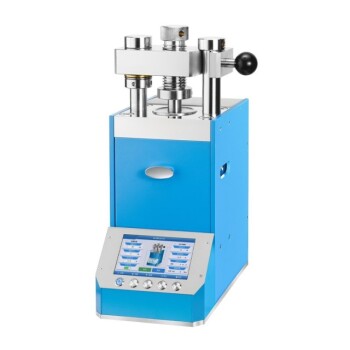
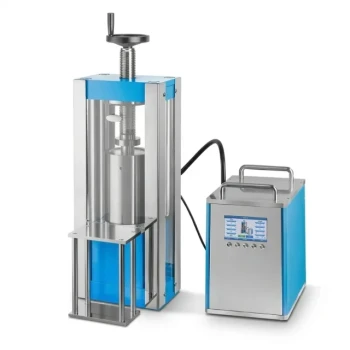
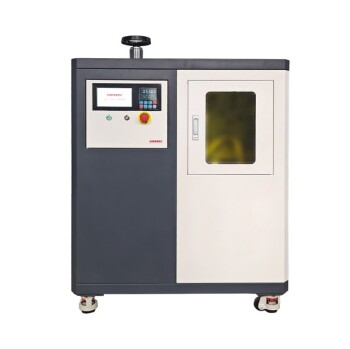
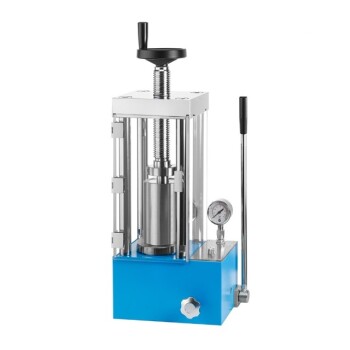
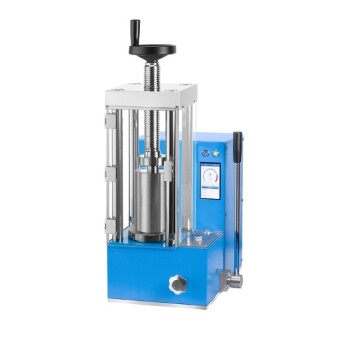
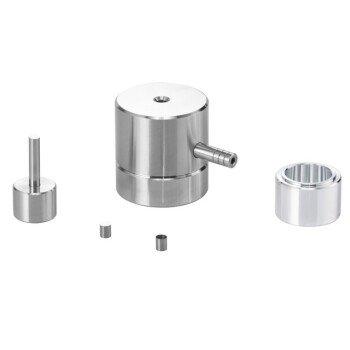
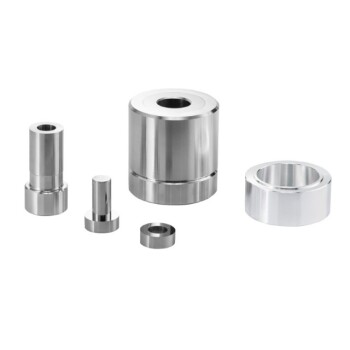
Ready to overcome the limitations of traditional pressing? KINTEK specializes in advanced laboratory equipment, offering high-performance isostatic presses (pellet, hot, and isostatic) alongside our comprehensive range of high-temperature furnaces and crushing systems.
Whether you are working with superalloys, technical ceramics, or battery research, our solutions ensure absolute density uniformity and structural reliability for your most critical components. Contact us today to find the perfect pressing solution for your application and leverage our expertise in precision material engineering.
Related Products
- Automatic Lab Cold Isostatic Press CIP Machine Cold Isostatic Pressing
- Electric Split Lab Cold Isostatic Press CIP Machine for Cold Isostatic Pressing
- Warm Isostatic Press for Solid State Battery Research
- Manual Cold Isostatic Pressing Machine CIP Pellet Press
- Electric Lab Cold Isostatic Press CIP Machine for Cold Isostatic Pressing
People Also Ask
- What is the cold isostatic process? Achieve Uniform Density in Complex Powder Parts
- What is hot and cold isostatic pressing? A Guide to Forming and Densifying Materials
- What role does cold isostatic pressing play in the formation of feed rods for single crystal growth? Ensure Stability.
- What is isostatic pressing method for ceramics? Achieve Uniform Density for Complex Parts
- What are the advantages of isostatic pressing? Achieve Superior Material Integrity and Design Freedom