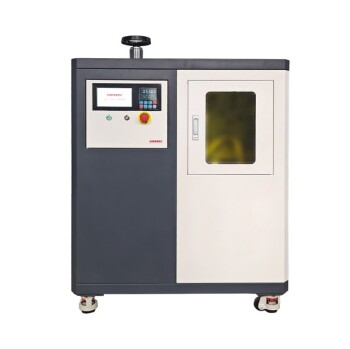
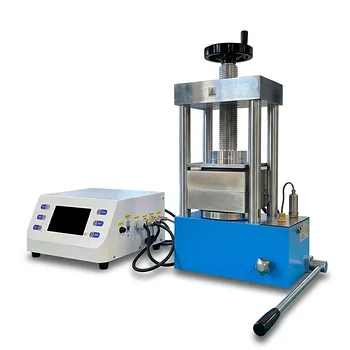
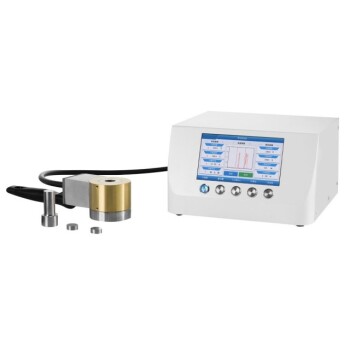
Cold Isostatic Pressing (CIP) acts as the essential preparatory bridge between loose dispersion copper composite powders and the final high-density product. By applying uniform, high-pressure force (typically around 200 MPa to 280 MPa) through a fluid medium, CIP transforms loose powder into a cohesive, high-density solid known as a "green compact" before heat is ever applied.
The primary value of CIP is its ability to eliminate the majority of internal voids and create a uniformly dense "green" body. This provides the structural strength necessary for handling and machining while significantly reducing the time and energy required during the subsequent sintering stage.
Achieving Uniform Density and Structure
The Power of Isotropic Pressure
Unlike conventional pressing which applies force from one direction, CIP utilizes a fluid medium to apply pressure equally from all sides.
This isotropic application ensures that the copper composite powder is compressed uniformly. It prevents the formation of density gradients that often occur with uniaxial pressing, ensuring the material structure is consistent throughout.
Drastic Reduction of Voids
The high pressure forces particles closer together, mechanically interlocking them.
This process significantly reduces the volume of air and voids between the powder particles. According to technical data, this can achieve a "green density" of approximately 90% prior to any heating.
Enabling Manufacturing and Handling
Creating a Robust Green Compact
Loose powder is difficult to handle and shape; CIP turns it into a solid, cohesive unit.
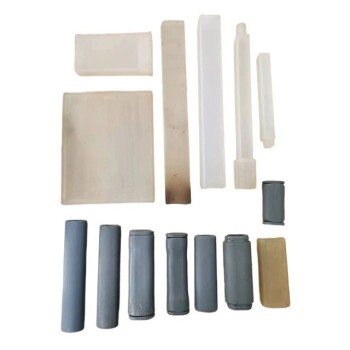
This "green compact" possesses sufficient mechanical strength to be moved and manipulated without crumbling. It provides a stable foundation for the material to maintain its shape during the rigors of the next processing steps.
Pre-Sintering Machinability
One of the distinct advantages of the high green density achieved by CIP is the ability to machine the material before it is fully hardened by sintering.
Because the compact is strong, it can be mechanically machined to fit precise hot-pressing molds. This ensures a perfect fit for the final densification equipment, which is critical for complex geometries.
Optimizing the Sintering Phase
Reducing Sintering Requirements
By doing the "heavy lifting" of densification via mechanical pressure first, CIP reduces the burden on the sintering furnace.
Starting with a high-density compact reduces the time required for vacuum hot pressing. The material is already near its final density, allowing the heat treatment to focus on bonding rather than just volume reduction.
Ensuring Final Product Quality
CIP sets the stage for a superior final microstructure.
By eliminating large pores early, the subsequent vacuum hot pressing can focus on closing residual micro-voids. This two-stage approach—CIP followed by sintering—is essential for achieving near-full density in dispersion copper composites.
Understanding the Trade-offs
It Is Not a Replacement for Sintering
While CIP achieves high density, it does not create the metallurgical bonds required for final strength.
The green compact is mechanically interlocked but lacks chemical bonding. It must still undergo vacuum hot pressing or Hot Isostatic Pressing (HIP) to initiate neck formation between particles and achieve true structural integrity.
Process Complexity
Implementing CIP adds an additional step to the manufacturing workflow compared to direct loose-powder sintering.
However, this added complexity is generally offset by the gains in material uniformity and the reduction in cycle times required for the expensive hot-pressing stage.
Making the Right Choice for Your Goal
- If your primary focus is Dimensional Precision: CIP creates a green body strong enough to be machined to exact tolerances before the material becomes too hard to work with easily.
- If your primary focus is Material Homogeneity: The isotropic pressure of CIP eliminates density gradients, ensuring the copper composite has uniform properties in all directions.
- If your primary focus is Process Efficiency: Utilizing CIP minimizes the dwell time needed in the vacuum hot press, optimizing the throughput of your most energy-intensive equipment.
Ultimately, CIP is not just a shaping tool; it is a density-management strategy that ensures your copper composites are structurally sound before they ever enter the furnace.
Summary Table:
| Feature | Cold Isostatic Pressing (CIP) Benefit |
|---|---|
| Pressure Application | Isotropic (equal from all sides) for zero density gradients |
| Green Density | Achieves ~90% density prior to heating stages |
| Material Handling | Creates a robust 'green compact' suitable for handling/machining |
| Sintering Impact | Reduces furnace dwell time and energy consumption |
| Final Quality | Eliminates internal voids for superior material homogeneity |
Elevate Your Powder Metallurgy with KINTEK Precision
Unlock the full potential of your materials with KINTEK’s high-performance Cold Isostatic Presses (CIP). Whether you are processing dispersion copper composites or advanced ceramics, our equipment ensures uniform density and superior structural integrity for your green compacts.
As experts in laboratory and industrial solutions, KINTEK provides a comprehensive range of equipment, including:
- High-Pressure Solutions: Isostatic presses (cold and hot), hydraulic pellet presses, and crushing/milling systems.
- Thermal Processing: Muffle, vacuum, CVD, and high-temperature atmosphere furnaces.
- Advanced Research Tools: High-pressure reactors, electrolytic cells, and battery research consumables.
Ready to optimize your sintering workflow and reduce cycle times? Contact our technical specialists today to find the perfect CIP solution for your laboratory or production line.
Related Products
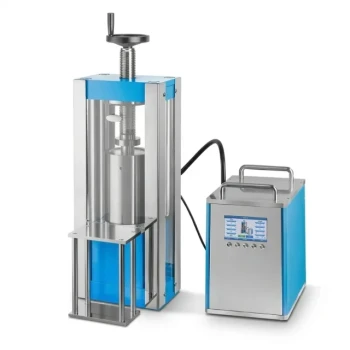
- Electric Split Lab Cold Isostatic Press CIP Machine for Cold Isostatic Pressing
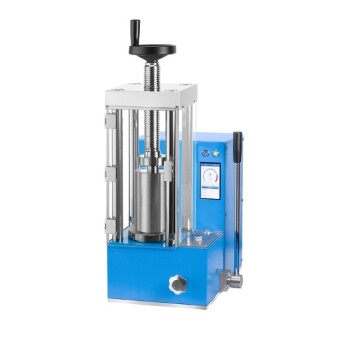
- Electric Lab Cold Isostatic Press CIP Machine for Cold Isostatic Pressing
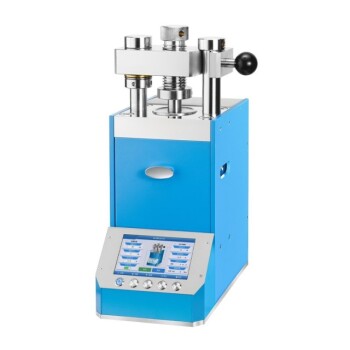
- Automatic Lab Cold Isostatic Press CIP Machine Cold Isostatic Pressing
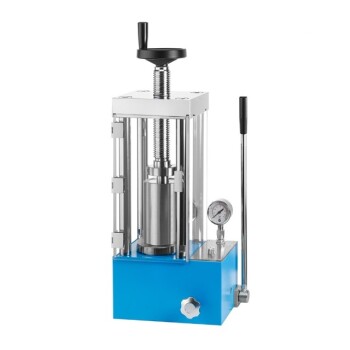
- Manual Cold Isostatic Pressing Machine CIP Pellet Press
- Warm Isostatic Press for Solid State Battery Research
People Also Ask
- How is isostatic pressing equipment utilized to integrate lithium metal anodes during solid-state battery assembly?
- How does isostatic pressing equipment enhance lithium metal anode contact? Optimize Your Solid-State Battery Assembly
- What is the meaning of isostatic pressing? Achieve Uniform Density in Complex Parts
- What is isostatic pressing method for ceramics? Achieve Uniform Density for Complex Parts
- What role does cold isostatic pressing play in the formation of feed rods for single crystal growth? Ensure Stability.