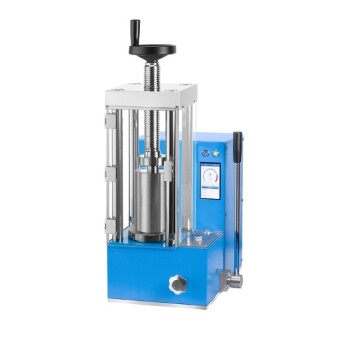
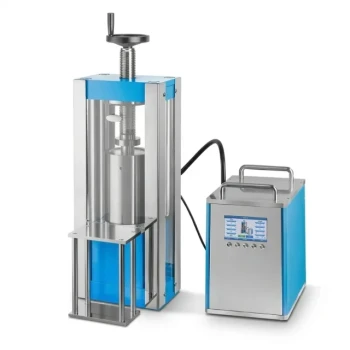
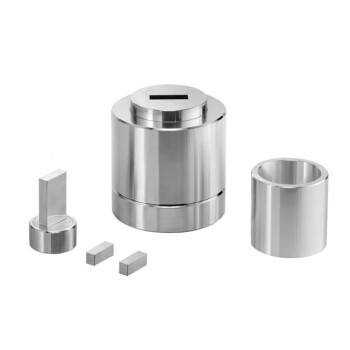
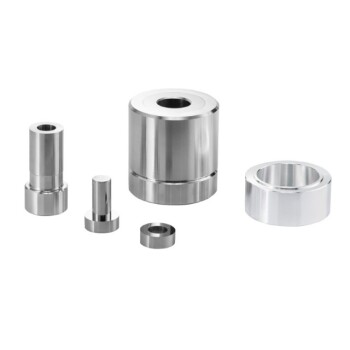
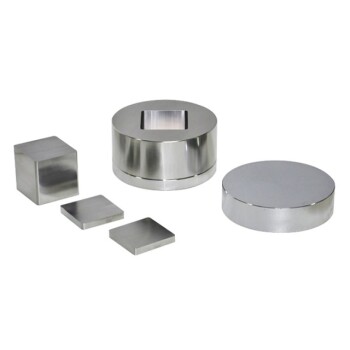
A laboratory isostatic press contributes to the fabrication of LAGP pellets by applying uniform, isotropic pressure to compact the powder from all directions simultaneously. This method is distinct from standard uniaxial pressing because it eliminates density gradients within the "green" (pre-sintered) pellet, creating a homogeneous structure essential for high-performance solid-state electrolytes.
Core Takeaway The primary value of an isostatic press is its ability to produce "green" pellets with near-perfect density uniformity. This structural consistency minimizes internal defects and is a prerequisite for achieving the dense microstructure and superior ion transport required after the final high-temperature sintering process.
The Mechanics of Isostatic Densification
Uniformity Through Isotropic Pressure
Unlike standard hydraulic presses that apply force from a single direction (uniaxial), an isostatic press applies equal pressure to the sample from every side.
This is typically achieved by submerging the sealed sample in a fluid medium within a high-pressure vessel.
For LAGP (Lithium Aluminum Germanium Phosphate) fabrication, this ensures the powder is compacted evenly, regardless of the pellet's geometry.
Creating the "Green" Pellet
The immediate output of the press is a "green" pellet—a compacted but unsintered solid.
The isostatic press forces particles into tight contact, significantly reducing the porosity between LAGP grains.
This step is critical because it establishes the mechanical integrity of the pellet before it is subjected to heat treatment.
Impact on Microstructure and Performance
Minimizing Internal Defects
A major challenge in solid electrolyte fabrication is the presence of voids or cracks.
Isostatic pressing significantly reduces these internal defects compared to other methods.
By eliminating weak points in the green pellet, the press ensures a robust internal structure.
Preparing for Sintering
The densification achieved during pressing directly influences the outcome of the final sintering stage.
For LAGP, the pellets are typically sintered at temperatures around 850°C.
Because the isostatic press creates a uniform density profile, the material shrinks evenly during this heating process, preventing warping or cracking.
Enhancing Ion Transport
The ultimate goal of the fabrication process is efficient ion movement.
A denser microstructure translates to a continuous pathway for lithium ions to move through the electrolyte.
Therefore, the initial compression by the isostatic press is a determining factor in the final ionic conductivity of the battery component.
Understanding the Trade-offs: Isostatic vs. Uniaxial
The Limitation of Uniaxial Pressing
Many laboratory setups use standard hydraulic presses that apply uniaxial force (pressure from top and bottom).
While this creates a compact shape, it often results in density gradients.
The material near the pressing pistons becomes denser than the material in the center of the pellet.
The Isostatic Advantage
Isostatic pressing avoids these gradients entirely.
While uniaxial pressing may be sufficient for basic mechanical testing, isostatic pressing is superior for electrochemical performance where uniform current distribution is required.
It ensures that the entire volume of the pellet contributes equally to ion transport.
Making the Right Choice for Your Goal
To determine if an isostatic press is necessary for your LAGP fabrication process, consider your specific performance requirements.
- If your primary focus is maximizing ionic conductivity: Use isostatic pressing to ensure a defect-free, high-density microstructure that facilitates optimal ion movement.
- If your primary focus is reducing geometric distortion: Use isostatic pressing to prevent warping during the 850°C sintering phase caused by uneven green density.
Isostatic pressing is the definitive method for converting loose LAGP powder into a uniform, high-density ceramic capable of supporting efficient solid-state battery operation.
Summary Table:
| Feature | Uniaxial Pressing | Isostatic Pressing |
|---|---|---|
| Pressure Direction | Single axis (top/bottom) | Isotropic (all directions) |
| Density Profile | Non-uniform (gradients) | Near-perfect uniformity |
| Microstructure | Potential voids/cracks | High homogeneity |
| Post-Sintering | Risk of warping/cracks | Uniform shrinkage/structural integrity |
| Ion Transport | Variable conductivity | Optimized, continuous pathways |
Elevate Your Solid-State Battery Research with KINTEK
Unlock the full potential of your LAGP electrolyte fabrication with KINTEK’s advanced laboratory solutions. As experts in material science equipment, we provide the precision isostatic presses, hydraulic pellet presses, and high-temperature furnaces necessary to achieve superior density and ionic conductivity.
Whether you are scaling battery research or refining ceramic microstructures, KINTEK offers a comprehensive range of crushing and milling systems, vacuum sintering furnaces, and specialized consumables tailored to your laboratory's needs.
Ready to eliminate density gradients and enhance your material performance? Contact our technical team today to find the perfect equipment for your specific application.
Related Products
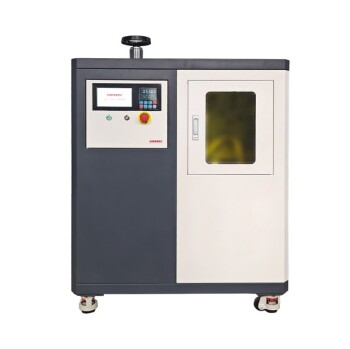
- Warm Isostatic Press for Solid State Battery Research
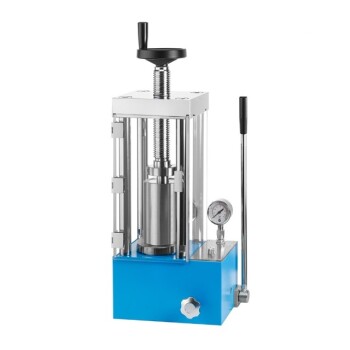
- Manual Cold Isostatic Pressing Machine CIP Pellet Press
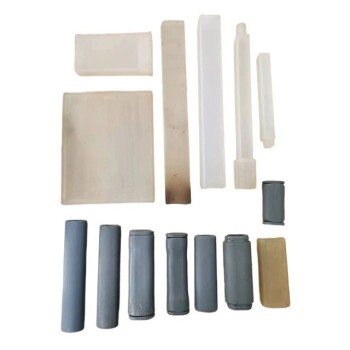
- Isostatic Molding Pressing Molds for Lab
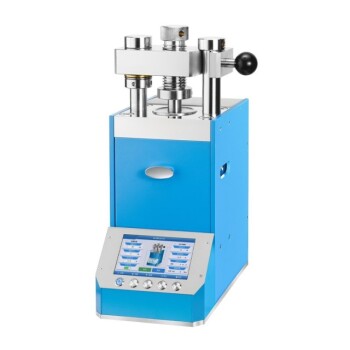
- Automatic Lab Cold Isostatic Press CIP Machine Cold Isostatic Pressing
- Electric Lab Cold Isostatic Press CIP Machine for Cold Isostatic Pressing
People Also Ask
- What is the temperature of a warm isostatic press? Achieve Optimal Densification for Your Materials
- What is the function of a Warm Isostatic Press (WIP) in all-solid-state pouch cells? Optimize Battery Density
- Why are Warm Isostatic Presses (WIP) necessary for solid-state batteries? Achieve Atomic-Level Contact
- What advantages does a warm isostatic press offer over a traditional uniaxial press for Li6PS5Cl electrolyte sheets?
- How do warm isostatic presses improve dry electrode performance? Enhance ASSB Conductivity with Heat & Pressure